Immunosciences Lab., Inc., Los Angeles, CA 90035, USA.
Evid Based Complement Alternat Med. 2011;2011:984965. doi: 10.1093/ecam/nep063. Epub 2011 Jun 16.
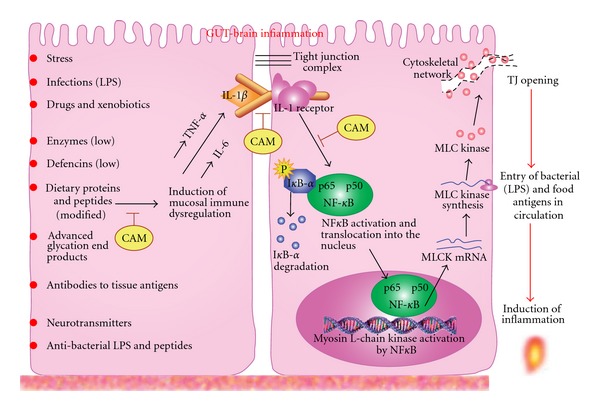
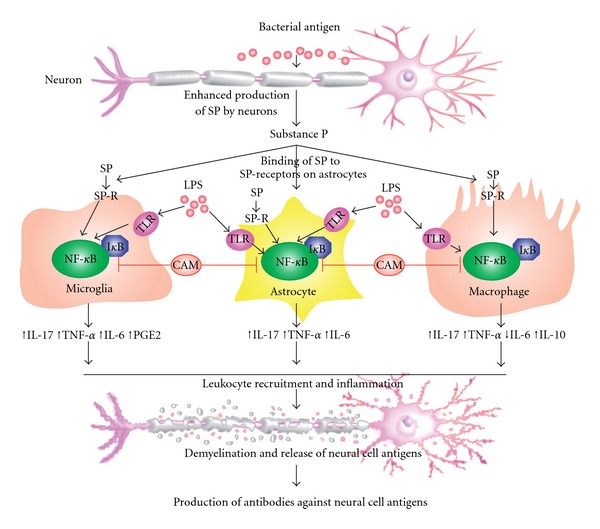
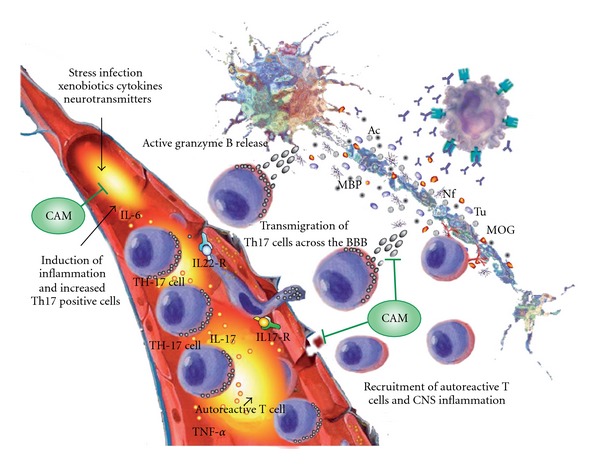
Decades of research went into understanding the role that Th1 autoreactive T-cells play in neuroinflammation. Here we describe another effector population, the IL-17-producing T-helper lineage (Th17), which drives the inflammatory process. Through the recruitment of inflammatory infiltration neutrophils and the activation of matrix metalloproteinases, IL-17, a cytokine secreted by Th17 cells, contributes to blood-brain barrier breakdown and the subsequent attraction of macrophages and monocytes into the nervous system. The entry of cells along with the local production of inflammatory cytokines leads to myelin and axonal damage. This activation of the inflammatory response system is induced by different pathogenic factors, such as gut bacterial endotoxins resulting in progressive neurodegeneration by Th17 cells. Through the understanding of the role of bacterial endotoxins and other pathogenic factors in the induction of autoimmune diseases by Th17 cells, CAM practitioners will be able to design CAM therapies targeting IL-17 activity. Targeted therapy can restore the integrity of the intestinal and blood-brain barriers using probiotics, N-acetyl-cysteine, α-lipoic acid, resveratrol and others for their patients with autoimmunities, in particular those with neuroinflammation and neurodegeneration.
几十年来的研究致力于了解 Th1 自身反应性 T 细胞在神经炎症中所起的作用。在这里,我们描述了另一个效应细胞群,即产生白细胞介素 17 的辅助性 T 细胞(Th17),它驱动着炎症过程。通过招募炎症浸润的中性粒细胞和激活基质金属蛋白酶,Th17 细胞分泌的细胞因子白细胞介素 17 有助于血脑屏障的破坏,并随后吸引巨噬细胞和单核细胞进入神经系统。细胞的进入以及局部产生的炎症细胞因子导致髓鞘和轴突损伤。这种炎症反应系统的激活是由不同的致病因素引起的,例如肠道细菌内毒素,导致 Th17 细胞的进行性神经退行性变。通过了解细菌内毒素和其他致病因素在 Th17 细胞诱导自身免疫性疾病中的作用,补充和替代医学从业者将能够设计针对白细胞介素 17 活性的 CAM 疗法。靶向治疗可以使用益生菌、N-乙酰半胱氨酸、α-硫辛酸、白藜芦醇等恢复肠道和血脑屏障的完整性,为自身免疫患者,特别是那些有神经炎症和神经退行性变的患者提供治疗。