Institute of Human Nutrition and Food Science, Christian-Albrechts-University of Kiel, Germany.
BMC Complement Altern Med. 2011 Jan 3;11:1. doi: 10.1186/1472-6882-11-1.
Both resveratrol and vitamin C (ascorbic acid) are frequently used in complementary and alternative medicine. However, little is known about the underlying mechanisms for potential health benefits of resveratrol and its interactions with ascorbic acid.
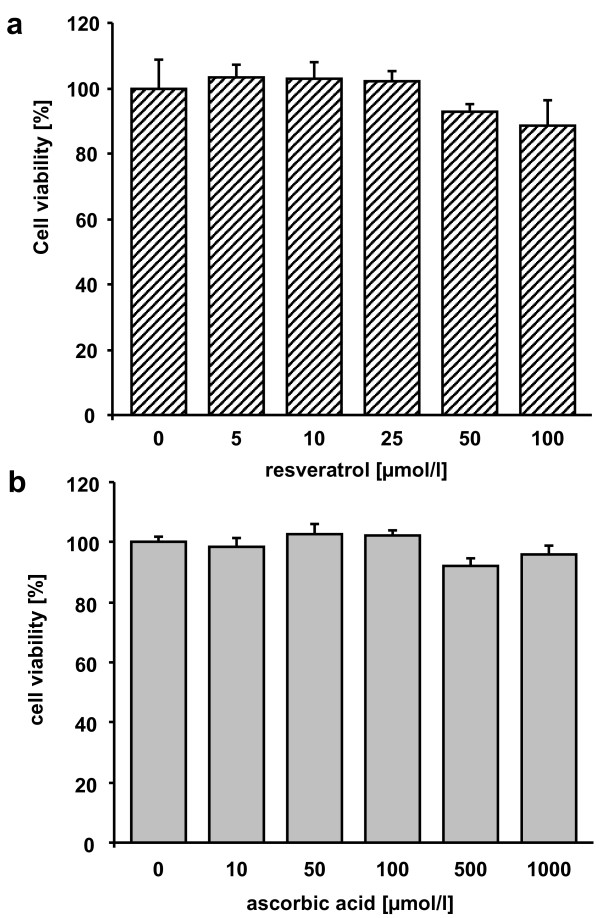
The antioxidant enzymes heme oxygenase-1 and paraoxonase-1 were analysed for their mRNA and protein levels in HUH7 liver cells treated with 10 and 25 μmol/l resveratrol in the absence and presence of 100 and 1000 μmol/l ascorbic acid. Additionally the transactivation of the transcription factor Nrf2 and paraoxonase-1 were determined by reporter gene assays.
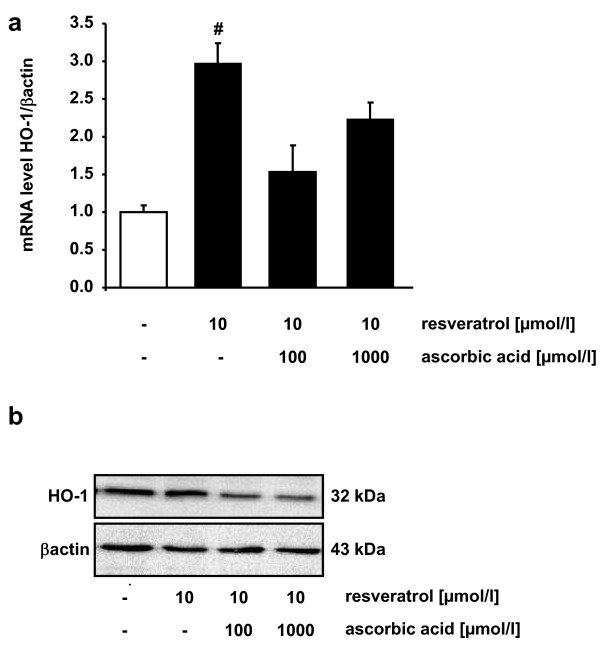
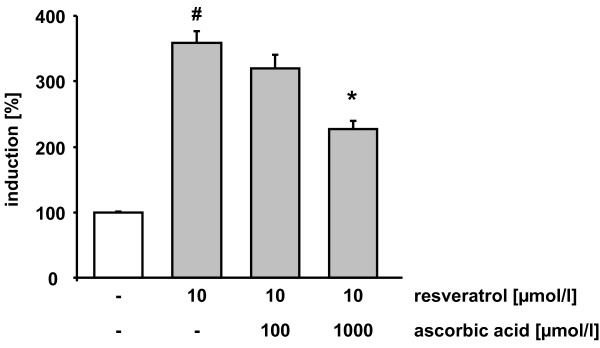
Here, we demonstrate that resveratrol induces the antioxidant enzymes heme oxygenase-1 and paraoxonase-1 in cultured hepatocytes. Heme oxygenase-1 induction by resveratrol was accompanied by an increase in Nrf2 transactivation. Resveratrol mediated Nrf2 transactivation as well as heme oxygenase-1 induction were partly antagonized by 1000 μmol/l ascorbic acid.
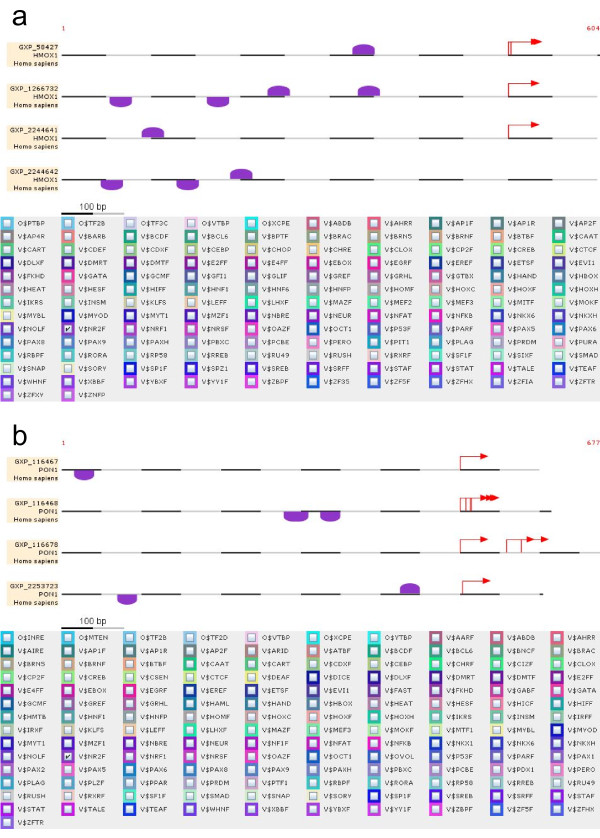
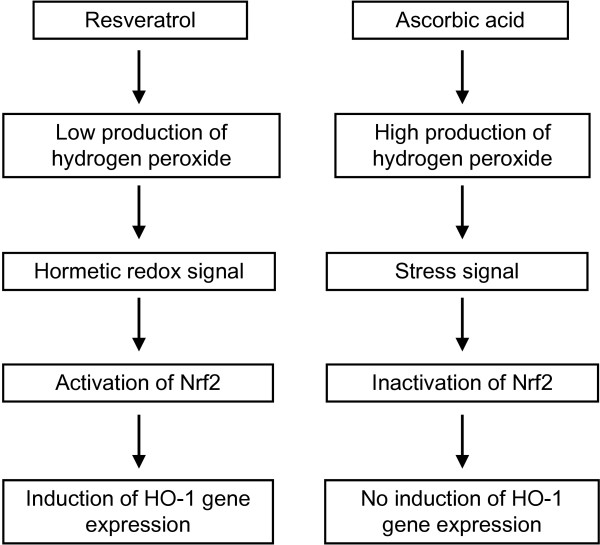
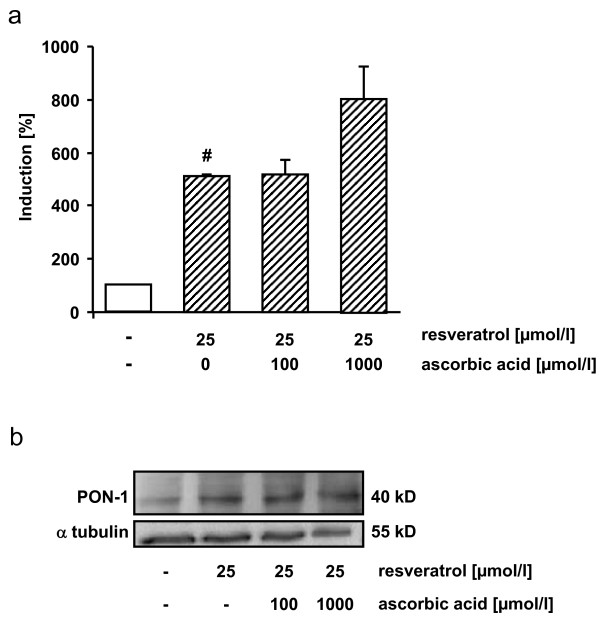
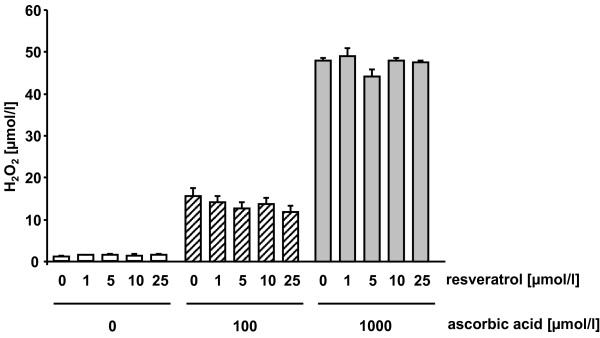
Unlike heme oxygenase-1 (which is highly regulated by Nrf2) paraoxonase-1 (which exhibits fewer ARE/Nrf2 binding sites in its promoter) induction by resveratrol was not counteracted by ascorbic acid. Addition of resveratrol to the cell culture medium produced relatively low levels of hydrogen peroxide which may be a positive hormetic redox-signal for Nrf2 dependent gene expression thereby driving heme oxygenase-1 induction. However, high concentrations of ascorbic acid manifold increased hydrogen peroxide production in the cell culture medium which may be a stress signal thereby disrupting the Nrf2 signalling pathway.
白藜芦醇和维生素 C(抗坏血酸)经常被用于补充和替代医学。然而,对于白藜芦醇潜在的健康益处及其与抗坏血酸的相互作用的潜在机制知之甚少。
在不存在和存在 100 和 1000 μmol/L 抗坏血酸的情况下,分析了 HUH7 肝细胞中 10 和 25 μmol/L 白藜芦醇处理后血红素加氧酶-1 和对氧磷酶-1 的 mRNA 和蛋白水平。此外,通过报告基因测定法测定了转录因子 Nrf2 和对氧磷酶-1 的反式激活。
在这里,我们证明白藜芦醇在培养的肝细胞中诱导抗氧化酶血红素加氧酶-1 和对氧磷酶-1。白藜芦醇诱导血红素加氧酶-1 伴随着 Nrf2 反式激活的增加。白藜芦醇介导的 Nrf2 反式激活以及血红素加氧酶-1 诱导部分被 1000 μmol/L 抗坏血酸拮抗。
与血红素加氧酶-1(受 Nrf2 高度调节)不同,对氧磷酶-1(其启动子中具有较少的 ARE/Nrf2 结合位点)的诱导不受抗坏血酸的拮抗。向细胞培养基中添加白藜芦醇会产生相对较低水平的过氧化氢,这可能是一种正向的有益氧化还原信号,用于 Nrf2 依赖性基因表达,从而驱动血红素加氧酶-1 的诱导。然而,高浓度的抗坏血酸会使细胞培养基中的过氧化氢产生大幅度增加,这可能是一种应激信号,从而破坏 Nrf2 信号通路。