Department of Cognitive Biology, University of Vienna, Vienna, Austria.
PLoS One. 2010 May 12;5(5):e10605. doi: 10.1371/journal.pone.0010605.
Bystander affiliation (post-conflict affiliation from an uninvolved bystander to the conflict victim) may represent an expression of empathy in which the bystander consoles the victim to alleviate the victim's distress ("consolation"). However, alternative hypotheses for the function of bystander affiliation also exist. Determining whether ravens spontaneously offer consolation to distressed partners may not only help us to understand how animals deal with the costs of aggressive conflict, but may also play an important role in the empathy debate.
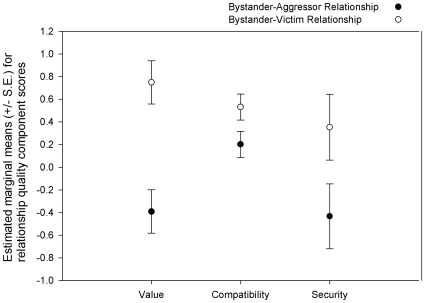
METHODOLOGY/PRINCIPAL FINDINGS: This study investigates the post-conflict behavior of ravens, applying the predictive framework for the function of bystander affiliation for the first time in a non-ape species. We found weak evidence for reconciliation (post-conflict affiliation between former opponents), but strong evidence for both bystander affiliation and solicited bystander affiliation (post-conflict affiliation from the victim to a bystander). Bystanders involved in both interactions were likely to share a valuable relationship with the victim. Bystander affiliation offered to the victim was more likely to occur after intense conflicts. Renewed aggression was less likely to occur after the victim solicited affiliation from a bystander.
CONCLUSIONS/SIGNIFICANCE: Our findings suggest that in ravens, bystanders may console victims with whom they share a valuable relationship, thus alleviating the victims' post-conflict distress. Conversely victims may affiliate with bystanders after a conflict in order to reduce the likelihood of renewed aggression. These results stress the importance of relationship quality in determining the occurrence and function of post-conflict interactions, and show that ravens may be sensitive to the emotions of others.
旁观者结盟(在冲突结束后,一个与冲突无关的旁观者与冲突受害者结盟)可能代表一种同理心的表达,旁观者通过安慰受害者来减轻受害者的痛苦(“安慰”)。然而,旁观者结盟的功能也存在其他替代假设。确定渡鸦是否会自发地安慰痛苦的伴侣,不仅有助于我们了解动物如何应对攻击性冲突的代价,而且可能在同理心辩论中发挥重要作用。
方法/主要发现:本研究应用旁观者结盟功能的预测框架,首次在非类人猿物种中调查了渡鸦的冲突后行为。我们发现了和解(前对手之间的冲突后结盟)的微弱证据,但有强烈的证据表明存在旁观者结盟和请求的旁观者结盟(受害者与旁观者之间的冲突后结盟)。参与这两种互动的旁观者很可能与受害者有有价值的关系。向受害者提供的旁观者结盟更有可能在激烈的冲突后发生。当受害者向旁观者请求结盟时,再次发生攻击的可能性较低。
结论/意义:我们的发现表明,在渡鸦中,旁观者可能会安慰与他们有有价值关系的受害者,从而减轻受害者的冲突后痛苦。相反,受害者可能会在冲突后与旁观者结盟,以降低再次发生攻击的可能性。这些结果强调了关系质量在确定冲突后互动的发生和功能中的重要性,并表明渡鸦可能对他人的情绪敏感。