Yashin Anatoli I, Arbeev Konstantin G, Akushevich Igor, Arbeeva Liubov, Kravchenko Julia, Il'yasova Dora, Kulminski Alexander, Akushevich Lucy, Culminskaya Irina, Wu Deqing, Ukraintseva Svetlana V
Center for Population Health and Aging, Duke University, Durham, NC 27708, USA.
Curr Gerontol Geriatr Res. 2010;2010. doi: 10.1155/2010/381637. Epub 2010 Sep 30.
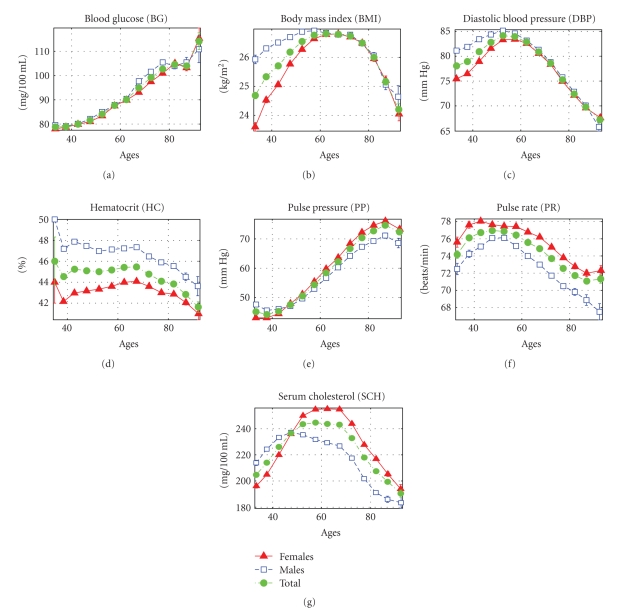
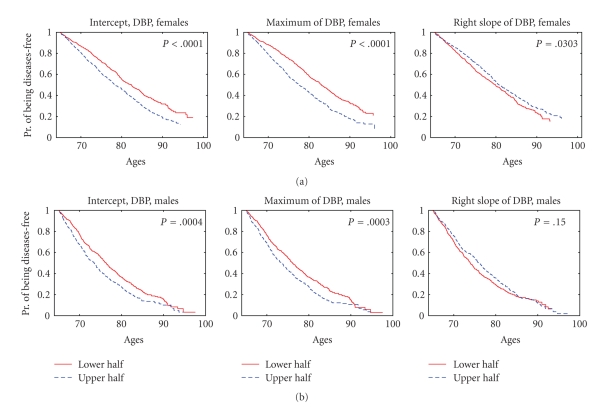
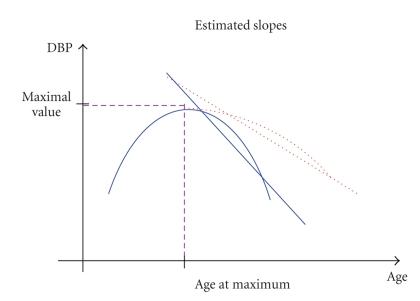
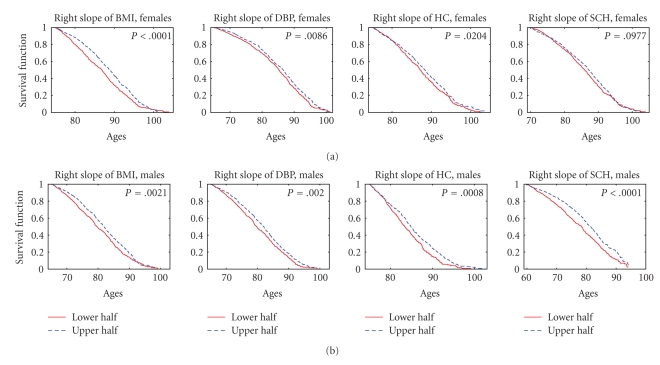
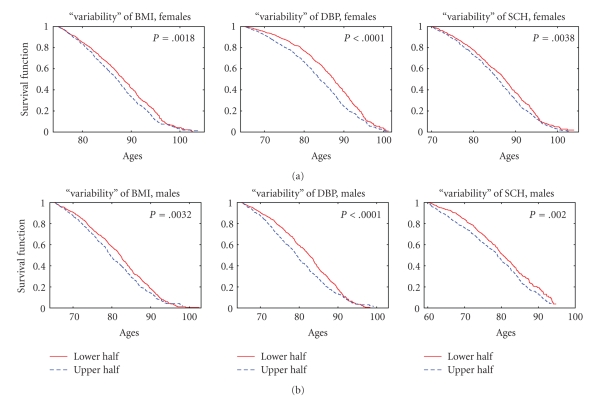
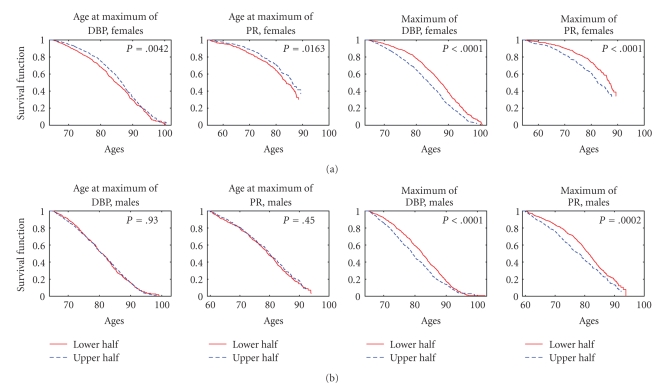
It is well known from epidemiology that values of indices describing physiological state in a given age may influence human morbidity and mortality risks. Studies of connection between aging and life span suggest a possibility that dynamic properties of age trajectories of the physiological indices could also be important contributors to morbidity and mortality risks. In this paper we use data on longitudinal changes in body mass index, diastolic blood pressure, pulse pressure, pulse rate, blood glucose, hematocrit, and serum cholesterol in the Framingham Heart Study participants, to investigate this possibility in depth. We found that some of the variables describing individual dynamics of the age-associated changes in physiological indices influence human longevity and exceptional health more substantially than the variables describing physiological state. These newly identified variables are promising targets for prevention aiming to postpone onsets of common elderly diseases and increase longevity.
从流行病学中众所周知,描述特定年龄生理状态的指标值可能会影响人类发病和死亡风险。对衰老与寿命之间联系的研究表明,生理指标年龄轨迹的动态特性也有可能是发病和死亡风险的重要因素。在本文中,我们使用弗雷明汉心脏研究参与者的体重指数、舒张压、脉压、脉搏率、血糖、血细胞比容和血清胆固醇的纵向变化数据,深入研究这种可能性。我们发现,一些描述生理指标年龄相关变化个体动态的变量比描述生理状态的变量对人类长寿和卓越健康的影响更大。这些新确定的变量是旨在推迟常见老年疾病发病并延长寿命的预防措施的有希望的目标。