Gramann Klaus, Gwin Joseph T, Bigdely-Shamlo Nima, Ferris Daniel P, Makeig Scott
Swartz Center for Computational Neuroscience, Institute for Neural Computation, University of California San Diego La Jolla, CA, USA.
Front Hum Neurosci. 2010 Oct 29;4:202. doi: 10.3389/fnhum.2010.00202. eCollection 2010.
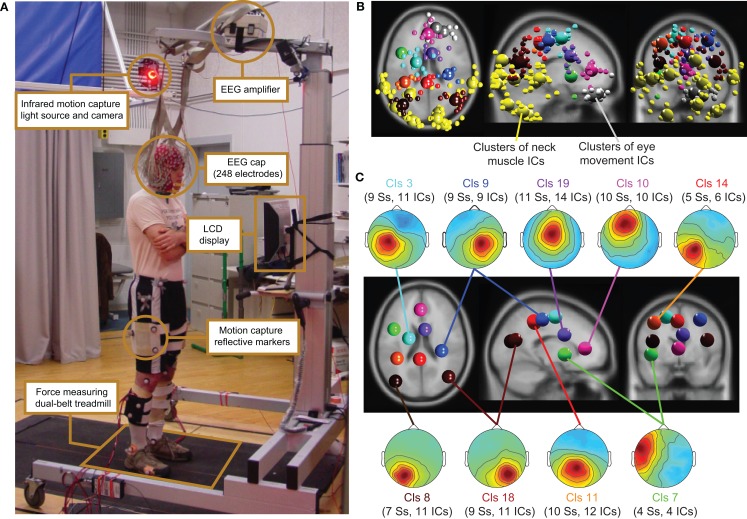
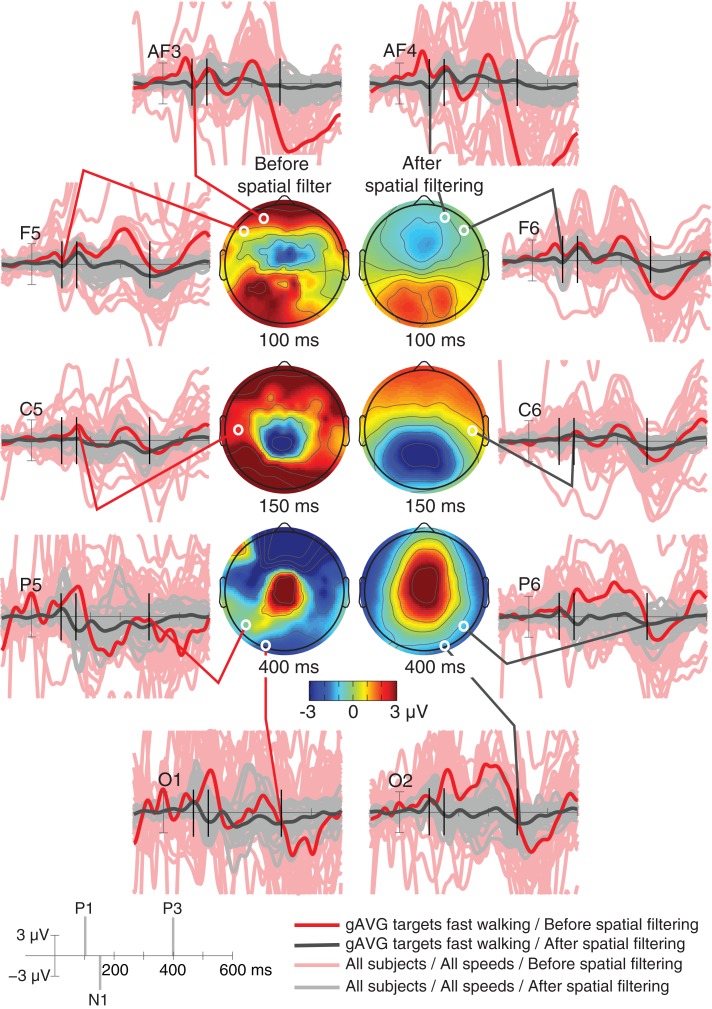
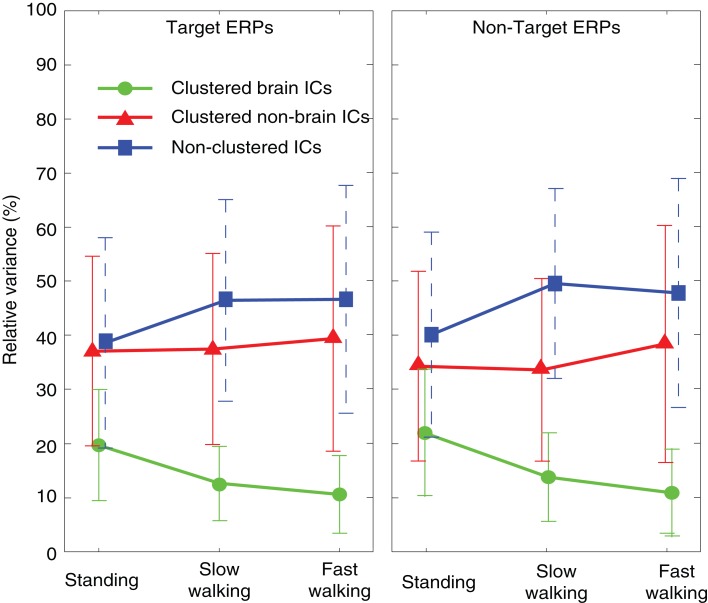
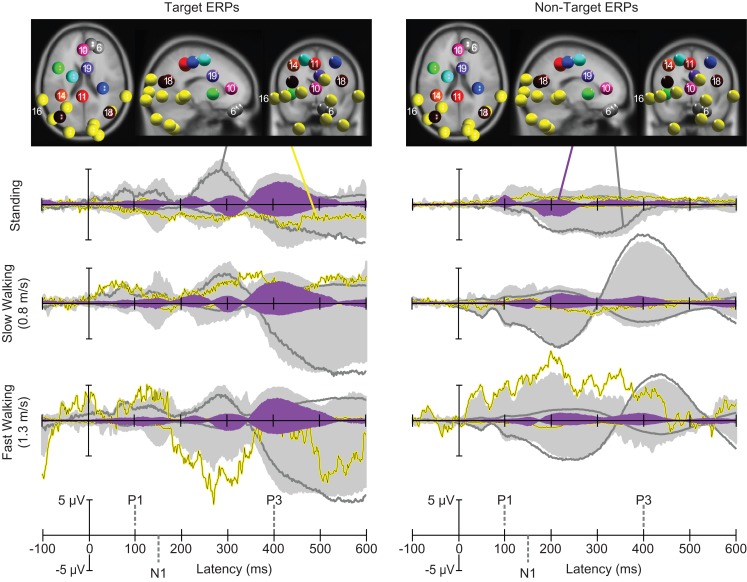
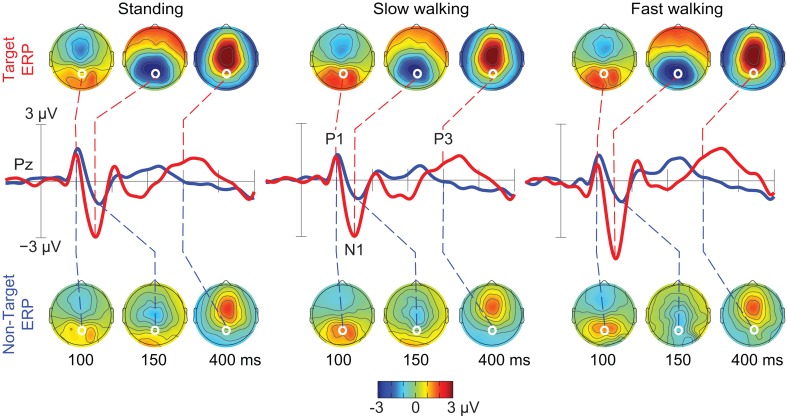
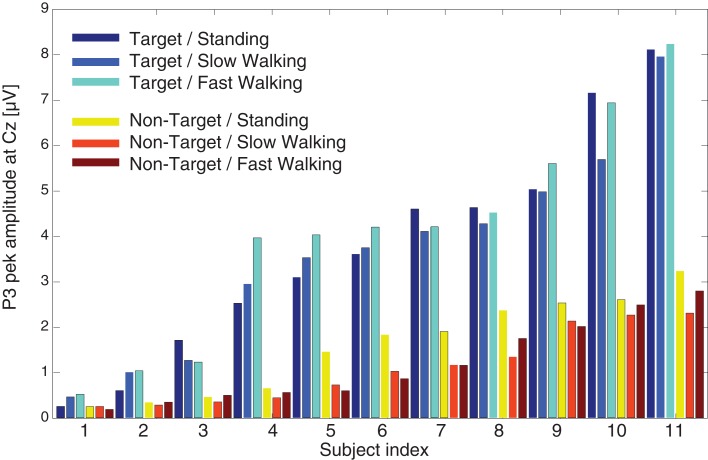
Human cognition has been shaped both by our body structure and by its complex interactions with its environment. Our cognition is thus inextricably linked to our own and others' motor behavior. To model brain activity associated with natural cognition, we propose recording the concurrent brain dynamics and body movements of human subjects performing normal actions. Here we tested the feasibility of such a mobile brain/body (MoBI) imaging approach by recording high-density electroencephalographic (EEG) activity and body movements of subjects standing or walking on a treadmill while performing a visual oddball response task. Independent component analysis of the EEG data revealed visual event-related potentials that during standing, slow walking, and fast walking did not differ across movement conditions, demonstrating the viability of recording brain activity accompanying cognitive processes during whole body movement. Non-invasive and relatively low-cost MoBI studies of normal, motivated actions might improve understanding of interactions between brain and body dynamics leading to more complete biological models of cognition.
人类认知既受身体结构的影响,也受其与环境复杂相互作用的影响。因此,我们的认知与我们自己以及他人的运动行为紧密相连。为了模拟与自然认知相关的大脑活动,我们建议记录人类受试者在执行正常动作时的同步脑动力学和身体运动。在这里,我们通过记录受试者在跑步机上站立或行走时执行视觉Oddball反应任务的高密度脑电图(EEG)活动和身体运动,测试了这种移动脑/身(MoBI)成像方法的可行性。对EEG数据的独立成分分析揭示了视觉事件相关电位,在站立、慢走和快走过程中,这些电位在不同运动条件下没有差异,这表明在全身运动过程中记录伴随认知过程的大脑活动是可行的。对正常、有动机行为进行非侵入性且成本相对较低的MoBI研究,可能会增进对大脑与身体动力学之间相互作用的理解,从而形成更完整的认知生物学模型。