Mao Zhen, Zheng Yuan-Lin, Zhang Yan-Qiu
School of Environment Science and Spatial Informatics, China University of Mining and Technology, Xuzhou 221008, Jiangsu, China; E-Mail:
Int J Mol Sci. 2010 Dec 30;12(1):114-27. doi: 10.3390/ijms12010114.
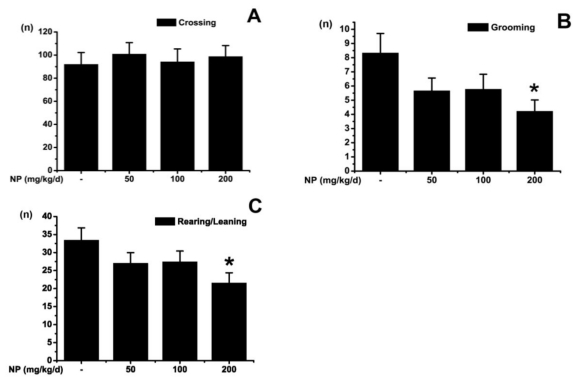
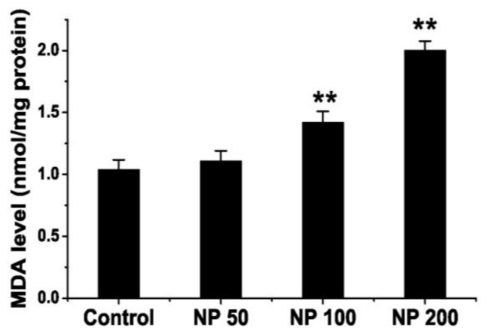
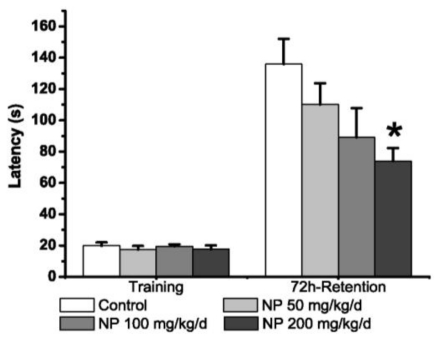
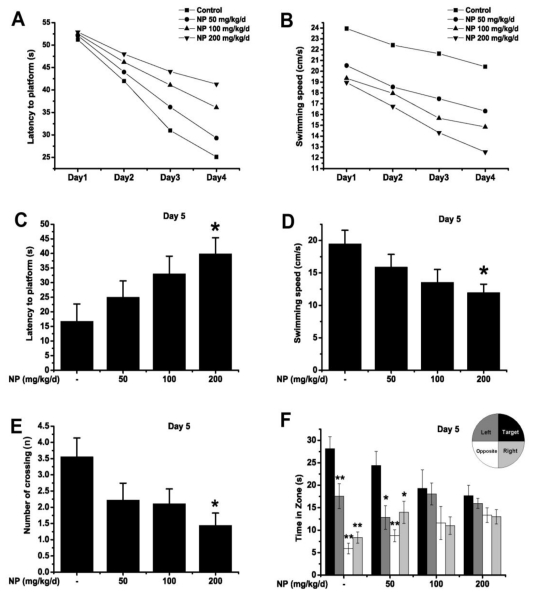
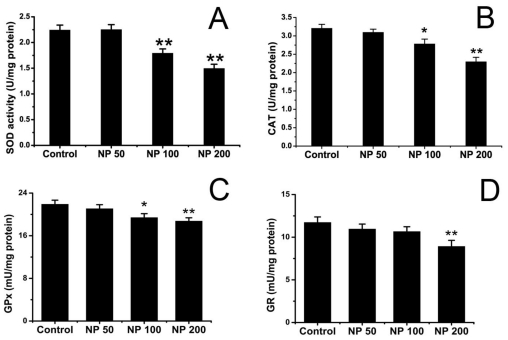
Nonylphenol (NP) is a degradation product of nonylphenol polyethoxylates, which are widely used in the production of industrial and consumer surfactants. The aim of the present study was to evaluate the effect of NP on the antioxidant capacity and cognitive ability of mice. NP was given orally by gavages at doses of 0, 50, 100, and 200 mg kg(-1) d(-1) for 90 days. The results showed that NP significantly decreased the activity of superoxide dismutases (SOD), catalase (CAT), glutathione peroxidase (GPx), and glutathione reductase (GR) and at the same time increased malondialdehyde (MDA) levels in mice brains. Exploration, memory function and ability to learn a novel task were significantly decreased in NP fed mice. These results indicate that chronic high dose of NP exposure has the potential to generate oxidative stress and induce the cognitive impairment in male mice.
壬基酚(NP)是壬基酚聚乙氧基化物的降解产物,壬基酚聚乙氧基化物广泛用于工业和消费品表面活性剂的生产。本研究的目的是评估NP对小鼠抗氧化能力和认知能力的影响。通过灌胃以0、50、100和200 mg kg⁻¹ d⁻¹的剂量口服给予NP,持续90天。结果表明,NP显著降低了小鼠大脑中超氧化物歧化酶(SOD)、过氧化氢酶(CAT)、谷胱甘肽过氧化物酶(GPx)和谷胱甘肽还原酶(GR)的活性,同时增加了丙二醛(MDA)水平。喂食NP的小鼠的探索、记忆功能和学习新任务的能力显著下降。这些结果表明,长期高剂量暴露于NP有可能产生氧化应激并诱导雄性小鼠的认知障碍。