Department of Chemistry & Biochemistry, Stephenson Life Sciences Research Center, University of Oklahoma, Norman, OK 73019, USA.
Biomaterials. 2011 Jul;32(21):4744-52. doi: 10.1016/j.biomaterials.2011.03.030. Epub 2011 Apr 20.
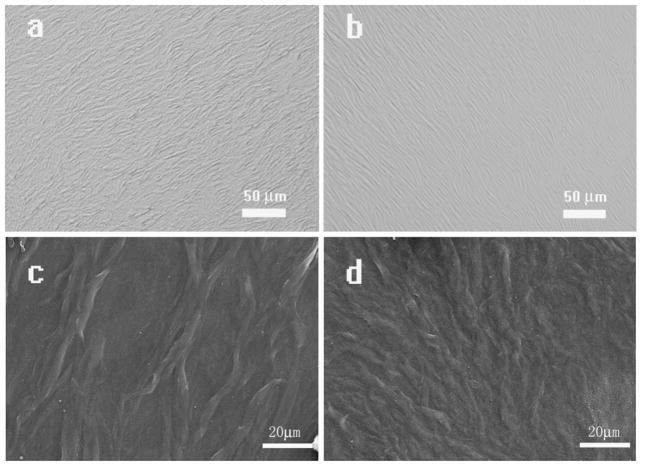
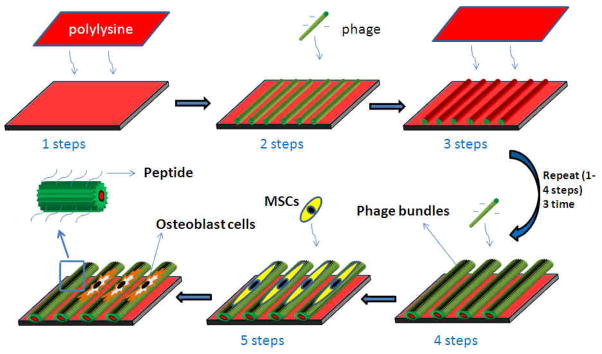
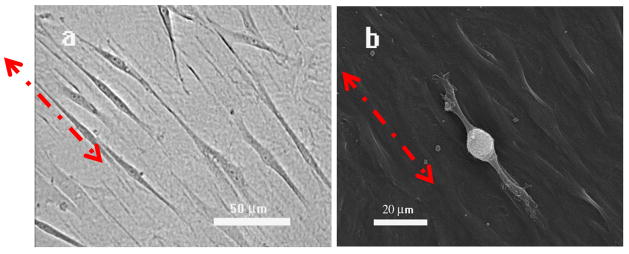
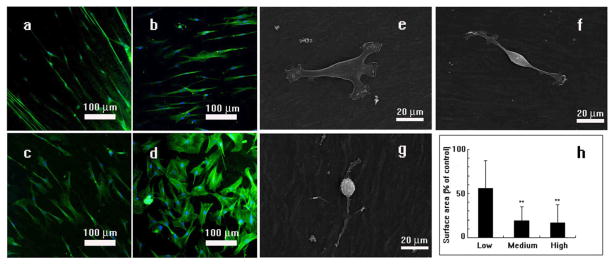
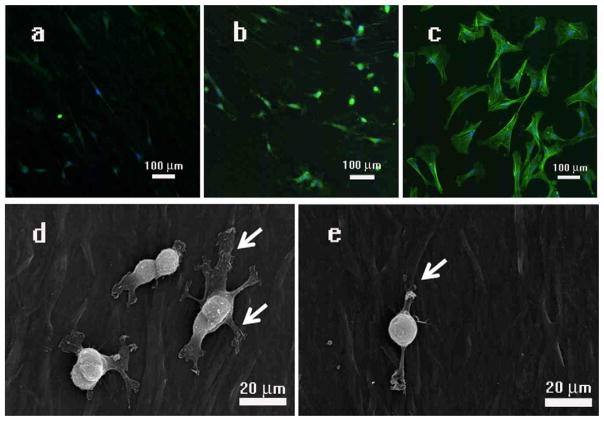
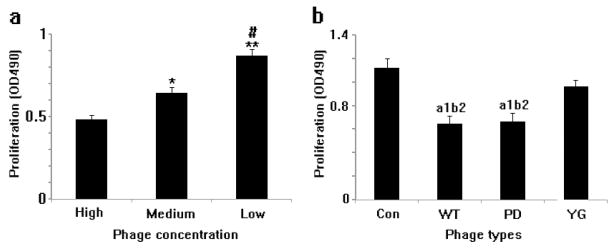
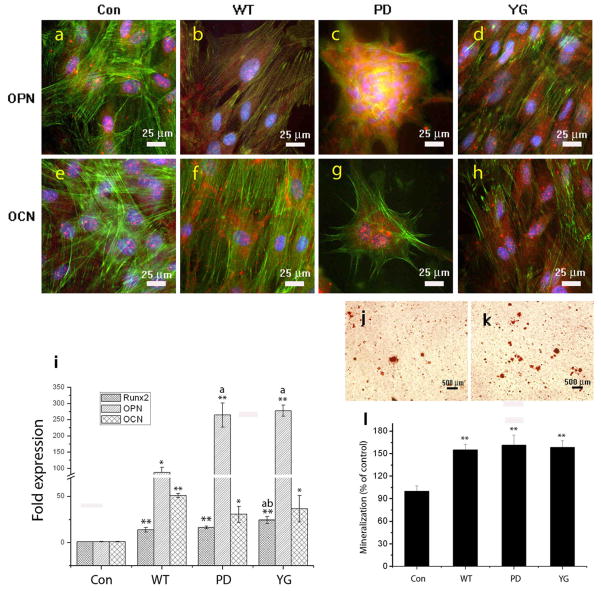
The search for a cell-supporting scaffold with controlled topography and surface chemistry is a constant topic within tissue engineering. Here we have employed M13 phages, which are genetically modifiable biological nanofibers (∼ 880 nm long and ∼ 6.6 nm wide) non-toxic to human beings, to form films for supporting the growth of mesencymal stem cells (MSCs). Films were built from nearly parallel phage bundles separated by grooves. The bundles can guide the elongation and alignment of MSCs along themselves. Phage with peptides displayed on the surface exhibited different control over the fine morphologies and differentiation of the MSCs. When an osteogenic peptide was displayed on the surface of phage, the proliferation and differentiation of MSCs into osteoblasts were significantly accelerated. The use of the grooved phage films allows us to control the proliferation and differentiation of MSCs by simply controlling the concentrations of phages as well as the peptides displayed on the surface of the phages. This work will advance our understanding on the interaction between stem cells and proteins.
在组织工程中,寻找具有可控形貌和表面化学性质的细胞支持支架一直是一个热门话题。在这里,我们使用 M13 噬菌体,这种遗传可修饰的生物纳米纤维(长约 880nm,宽约 6.6nm)对人体无毒,来制备用于支持间充质干细胞(MSCs)生长的薄膜。薄膜由几乎平行的噬菌体束构成,束之间有凹槽隔开。这些束可以引导 MSC 沿着自身的方向伸长和对齐。表面展示有肽的噬菌体对 MSC 的精细形态和分化有不同的控制作用。当噬菌体表面展示成骨肽时,MSC 增殖并向成骨细胞分化的速度显著加快。使用带凹槽的噬菌体薄膜,我们可以通过简单地控制噬菌体的浓度以及噬菌体表面展示的肽的浓度来控制 MSC 的增殖和分化。这项工作将增进我们对干细胞与蛋白质相互作用的理解。