Division of Radiation Oncology, H. Lee Moffitt Cancer Center, Tampa, Florida 33612, USA.
J Appl Clin Med Phys. 2011 Jan 31;12(2):3346. doi: 10.1120/jacmp.v12i2.3346.
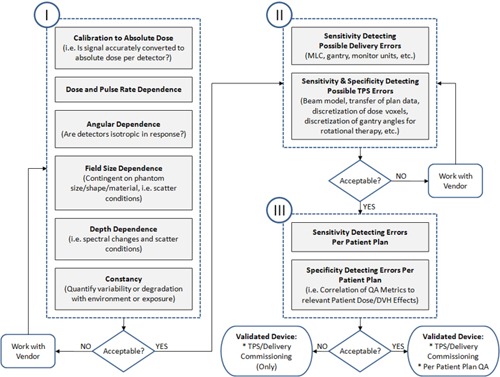
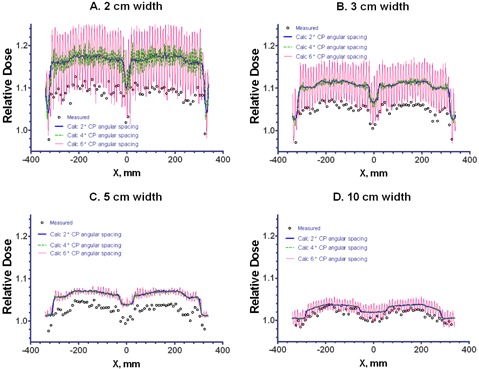
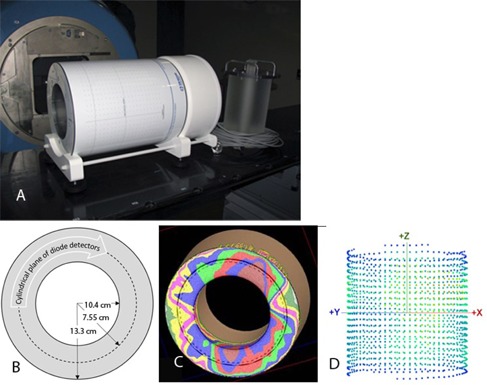
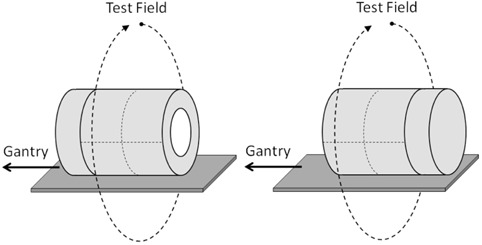
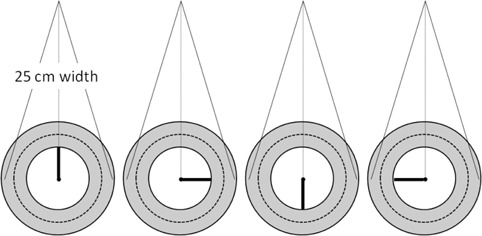
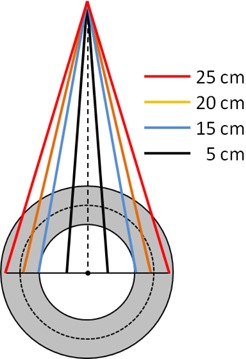
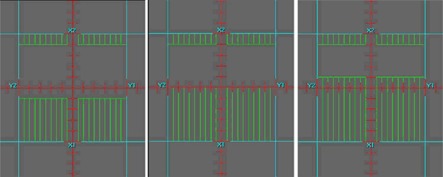
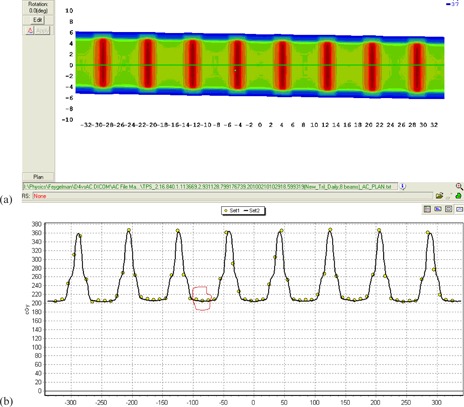
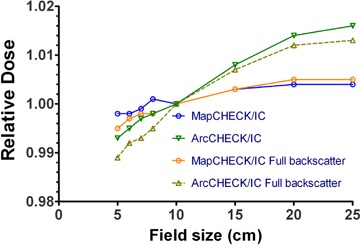
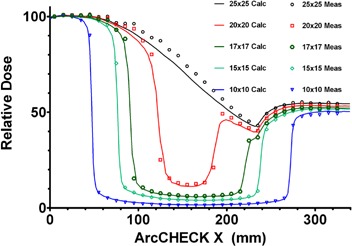
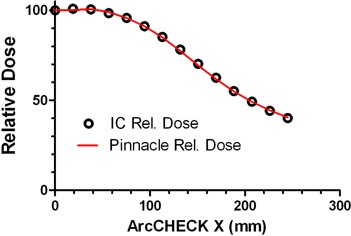
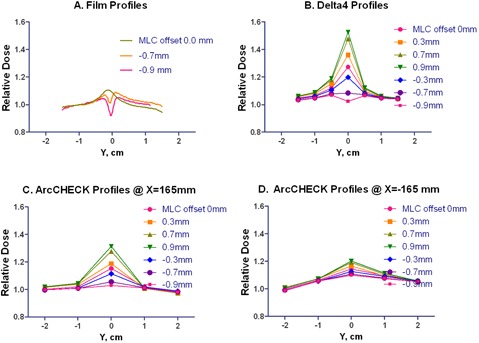
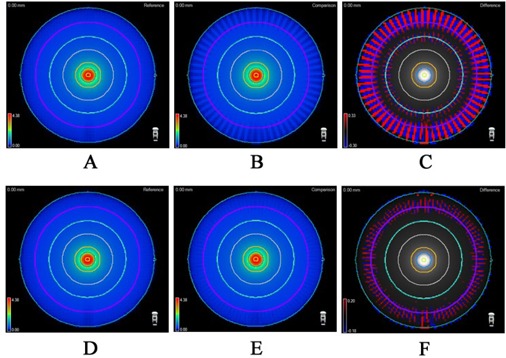
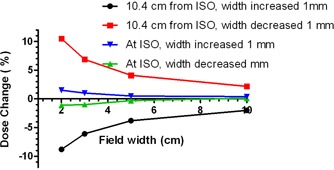
We introduce a logical process of three distinct phases to begin the evaluation of a new 3D dosimetry array. The array under investigation is a hollow cylinder phantom with diode detectors fixed in a helical shell forming an "O" axial detector cross section (ArcCHECK), with comparisons drawn to a previously studied 3D array with diodes fixed in two crossing planes forming an "X" axial cross section (Delta⁴). Phase I testing of the ArcCHECK establishes: robust relative calibration (response equalization) of the individual detectors, minor field size dependency of response not present in a 2D predecessor, and uncorrected angular response dependence in the axial plane. Phase II testing reveals vast differences between the two devices when studying fixed-width full circle arcs. These differences are primarily due to arc discretization by the TPS that produces low passing rates for the peripheral detectors of the ArcCHECK, but high passing rates for the Delta⁴. Similar, although less pronounced, effects are seen for the test VMAT plans modeled after the AAPM TG119 report. The very different 3D detector locations of the two devices, along with the knock-on effect of different percent normalization strategies, prove that the analysis results from the devices are distinct and noninterchangeable; they are truly measuring different things. The value of what each device measures, namely their correlation with--or ability to predict--clinically relevant errors in calculation and/or delivery of dose is the subject of future Phase III work.
我们介绍了一个逻辑过程的三个不同阶段,以开始评估新的 3D 剂量学阵列。正在研究的阵列是一个带有二极管探测器的空心圆柱体模型,探测器固定在一个螺旋壳中,形成一个“O”轴向探测器横截面(ArcCHECK),并与之前研究过的具有固定在两个交叉平面中的二极管的 3D 阵列(Delta⁴)进行比较。ArcCHECK 的第一阶段测试确立了:个体探测器的稳健相对校准(响应均衡)、在二维前代产品中不存在的小场尺寸依赖性以及轴向平面中未校正的角度响应依赖性。第二阶段测试显示,当研究固定宽度全圆弧时,两种设备之间存在巨大差异。这些差异主要是由于 TPS 对ArcCHECK 的外围探测器进行的弧离散化导致的,ArcCHECK 的外围探测器通过率较低,而 Delta⁴ 的通过率较高。对于根据 AAPM TG119 报告建模的测试 VMAT 计划,也观察到类似的但不太明显的影响。两种设备的三维探测器位置非常不同,加上不同的百分比归一化策略的连锁效应,证明了来自两种设备的分析结果是不同的且不可互换的;它们实际上在测量不同的东西。每个设备测量的价值,即它们与计算和/或剂量传递中的临床相关误差的相关性或预测能力,是未来第三阶段工作的主题。