INRA, UMR 1095, Genetics, Diversity and Ecophysiology of Cereals, 234 avenue du Brézet, Clermont-Ferrand, France.
Genome Biol. 2011 Dec 2;12(12):R119. doi: 10.1186/gb-2011-12-12-r119.
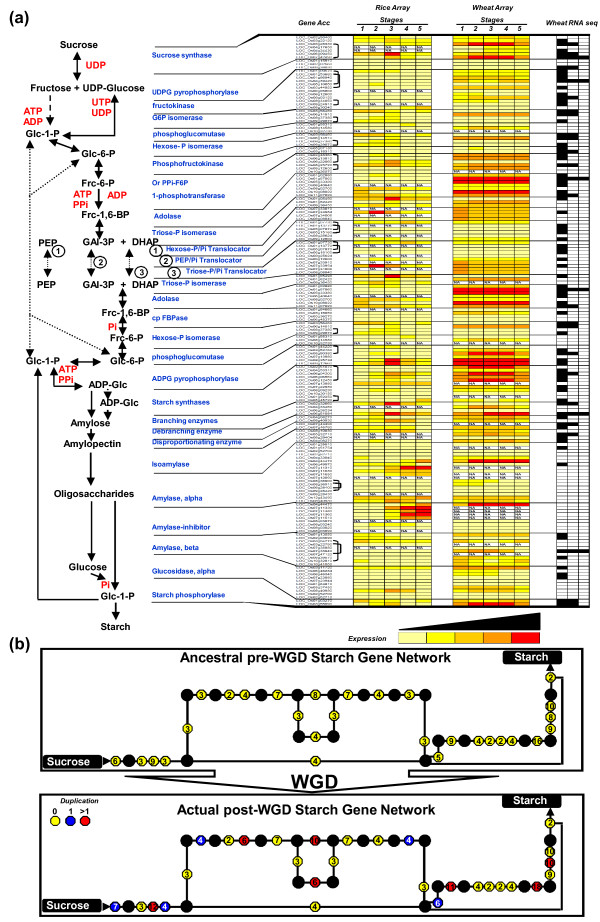
Whole genome duplication is a common evolutionary event in plants. Bread wheat (Triticum aestivum L.) is a good model to investigate the impact of paleo- and neoduplications on the organization and function of modern plant genomes.
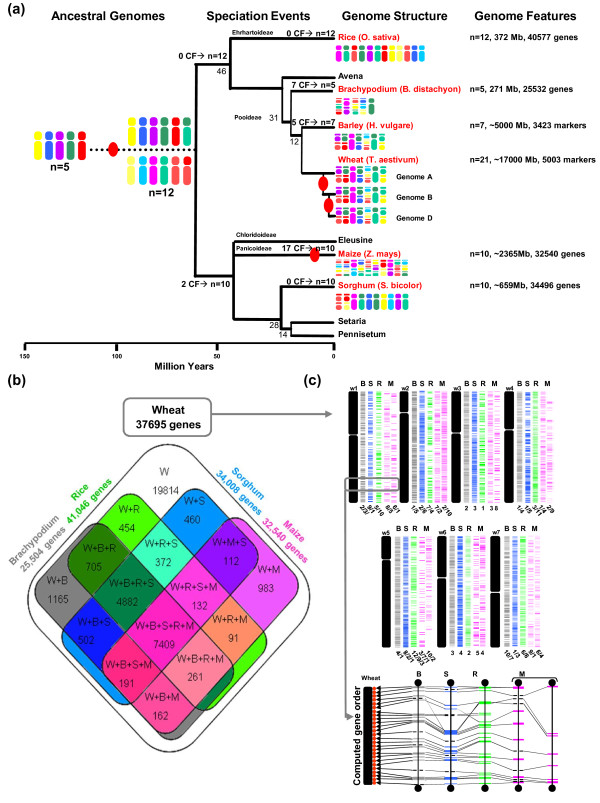
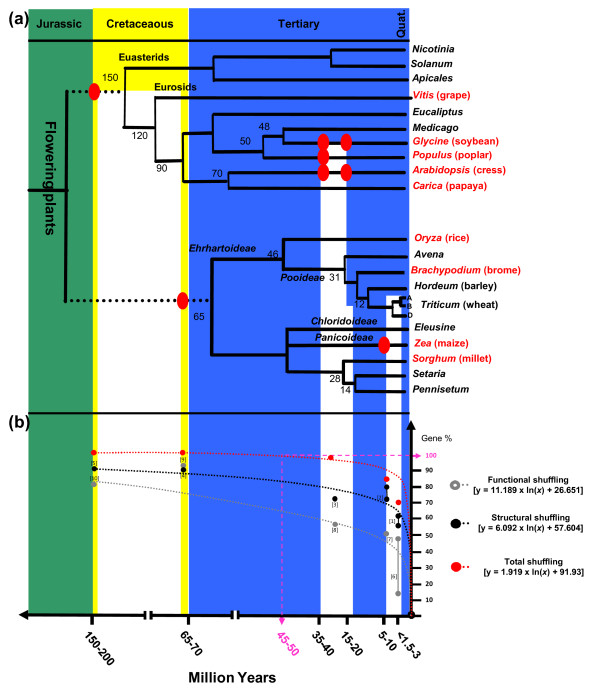
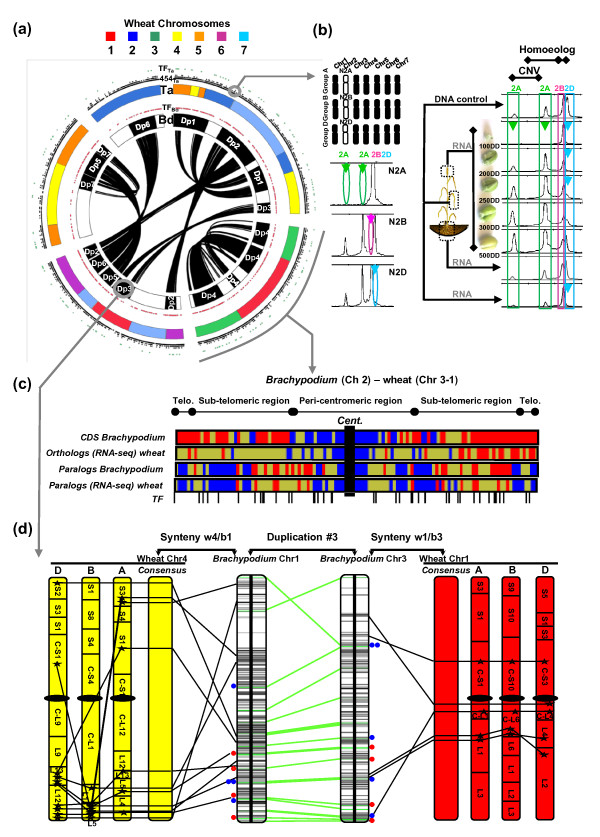
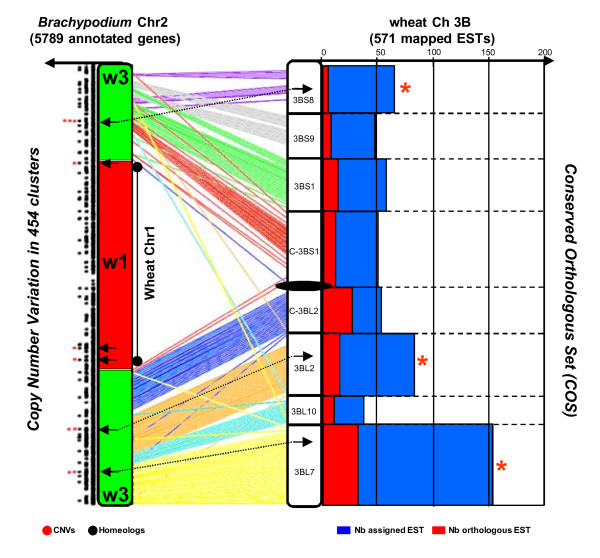
We performed an RNA sequencing-based inference of the grain filling gene network in bread wheat and identified a set of 37,695 non-redundant sequence clusters, which is an unprecedented resolution corresponding to an estimated half of the wheat genome unigene repertoire. Using the Brachypodium distachyon genome as a reference for the Triticeae, we classified gene clusters into orthologous, paralogous, and homoeologous relationships. Based on this wheat gene evolutionary classification, older duplicated copies (dating back 50 to 70 million years) exhibit more than 80% gene loss and expression divergence while recent duplicates (dating back 1.5 to 3 million years) show only 54% gene loss and 36 to 49% expression divergence.
We suggest that structural shuffling due to duplicated gene loss is a rapid process, whereas functional shuffling due to neo- and/or subfunctionalization of duplicates is a longer process, and that both shuffling mechanisms drive functional redundancy erosion. We conclude that, as a result of these mechanisms, half the gene duplicates in plants are structurally and functionally altered within 10 million years of evolution, and the diploidization process is completed after 45 to 50 million years following polyploidization.
全基因组加倍是植物中常见的进化事件。普通小麦(Triticum aestivum L.)是研究古加倍和新加倍对现代植物基因组结构和功能影响的良好模型。
我们通过 RNA 测序对普通小麦灌浆基因网络进行了推断,并鉴定出了一组 37695 个非冗余序列簇,这是前所未有的分辨率,相当于估计的小麦基因组 unigene 库的一半。利用拟南芥基因组作为禾本科的参考,我们将基因簇分类为直系同源、旁系同源和同系同源关系。基于这种小麦基因进化分类,50 到 7000 万年前的古老加倍拷贝(古老加倍拷贝)表现出超过 80%的基因丢失和表达分歧,而 1.5 到 300 万年前的近期加倍拷贝(近期加倍拷贝)仅表现出 54%的基因丢失和 36 到 49%的表达分歧。
我们认为,由于基因丢失导致的结构重排是一个快速的过程,而由于新基因和/或功能冗余的亚功能化导致的功能重排是一个较长的过程,这两种重排机制都导致了功能冗余的侵蚀。我们得出结论,由于这些机制,植物中一半的基因拷贝在 1000 万年的进化过程中在结构和功能上发生了改变,并且在多倍化后 45 到 5000 万年完成了二倍体化过程。