De Luna-Bertos E, Ramos-Torrecillas J, García-Martínez O, Díaz-Rodríguez L, Ruiz C
Biomedical Group, BIO277, Department of Nursing, Faculty of Health Sciences, University of Granada, 18071 Granada, Spain.
ScientificWorldJournal. 2012;2012:834246. doi: 10.1100/2012/834246. Epub 2012 May 2.
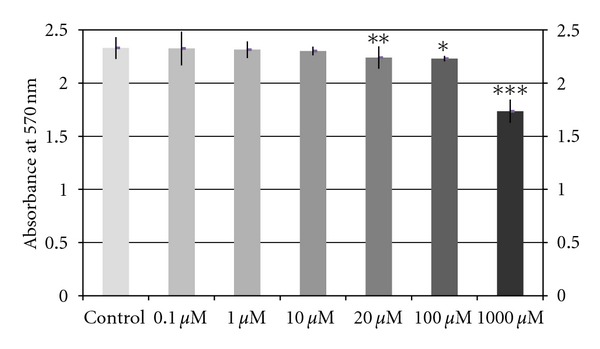
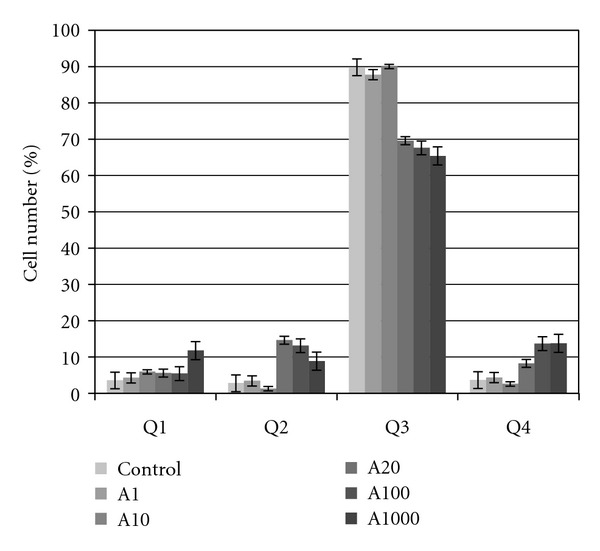
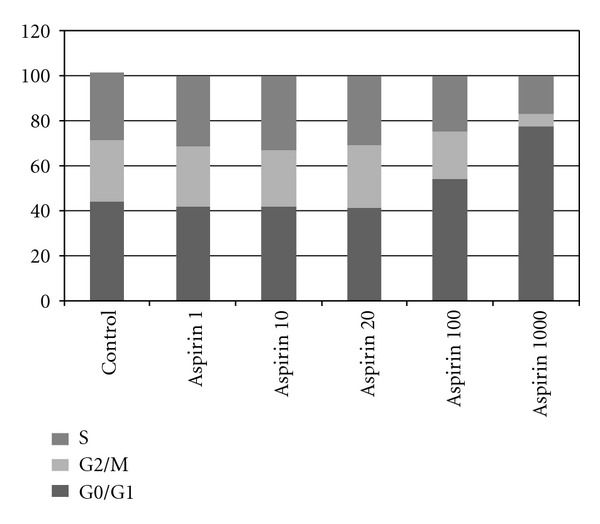
Nonsteroidal anti-inflammatory drugs (NSAIDs) are commonly used in bone tissue repair treatment for their pharmacological action. The objective of this study was to determine the effect of aspirin, on osteoblast growth, using MG63 cell line as osteoblast model. MTT spectrophotometry results showed that 20, 100, and 1000 μM aspirin doses have an inhibitory effect on growth. Cell cycle analysis revealed that aspirin doses of 100 and 1000 μM arrest the cell cycle in phase GO/G1. Parallel apoptosis/necrosis studies showed no changes in comparison to control cells after treatment with 1 or 10 μM aspirin but a significantly increased percentage of cells in apoptosis at doses of 20, 100, and 1000 μM. We highlight that treatment of osteoblast-like cells with 1000 μM aspirin increased not only the percentage of cells in apoptosis but also the percentage of necrotic cells, which was not observed in aspirin treatments at lower doses.
非甾体抗炎药(NSAIDs)因其药理作用而常用于骨组织修复治疗。本研究的目的是使用MG63细胞系作为成骨细胞模型,确定阿司匹林对成骨细胞生长的影响。MTT分光光度法结果显示,20、100和1000μM的阿司匹林剂量对生长有抑制作用。细胞周期分析表明,100和1000μM的阿司匹林剂量使细胞周期停滞在G0/G1期。平行的凋亡/坏死研究表明,与对照细胞相比,用1或10μM阿司匹林处理后没有变化,但在20、100和1000μM剂量下,凋亡细胞的百分比显著增加。我们强调,用1000μM阿司匹林处理成骨样细胞不仅增加了凋亡细胞的百分比,还增加了坏死细胞的百分比,而在较低剂量的阿司匹林处理中未观察到这种情况。