Zhu Jia-Ying, Zhao Ning, Yang Bin
Key Laboratory of Forest Disaster Warning and Control of Yunnan Province, College of Forestry, Southwest Forestry University, Kunming 650224, China.
Comp Funct Genomics. 2012;2012:491748. doi: 10.1155/2012/491748. Epub 2012 Jun 18.
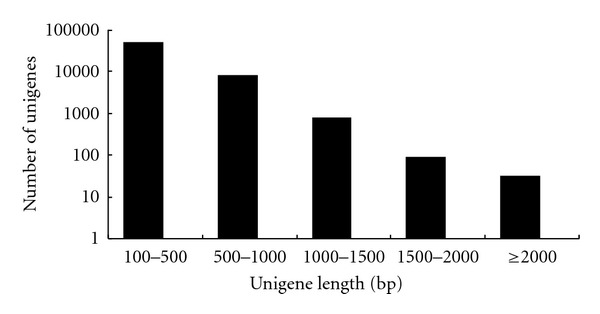
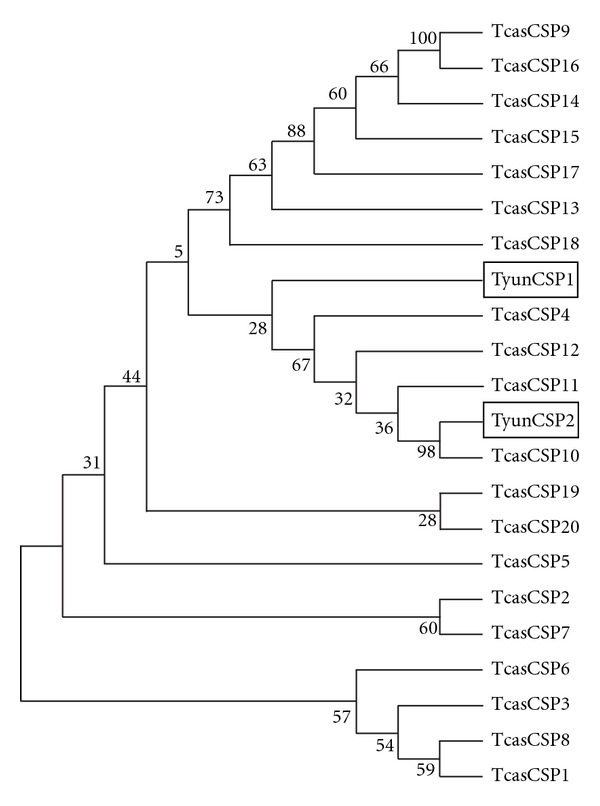
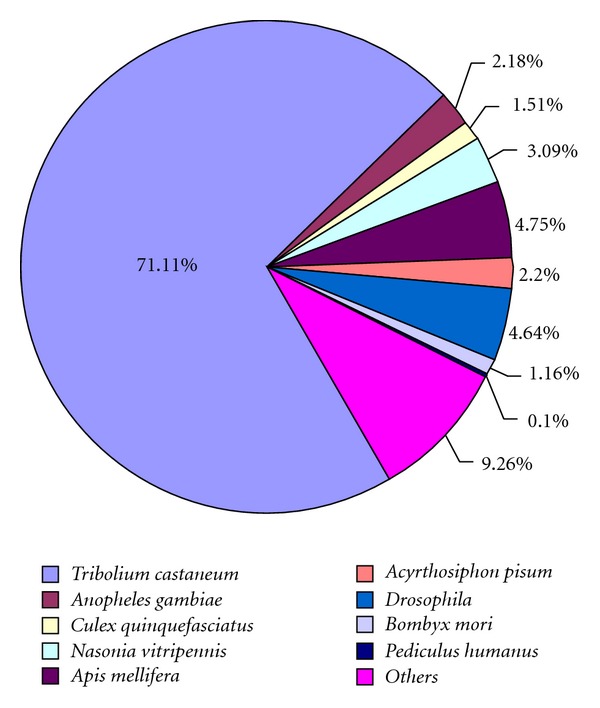
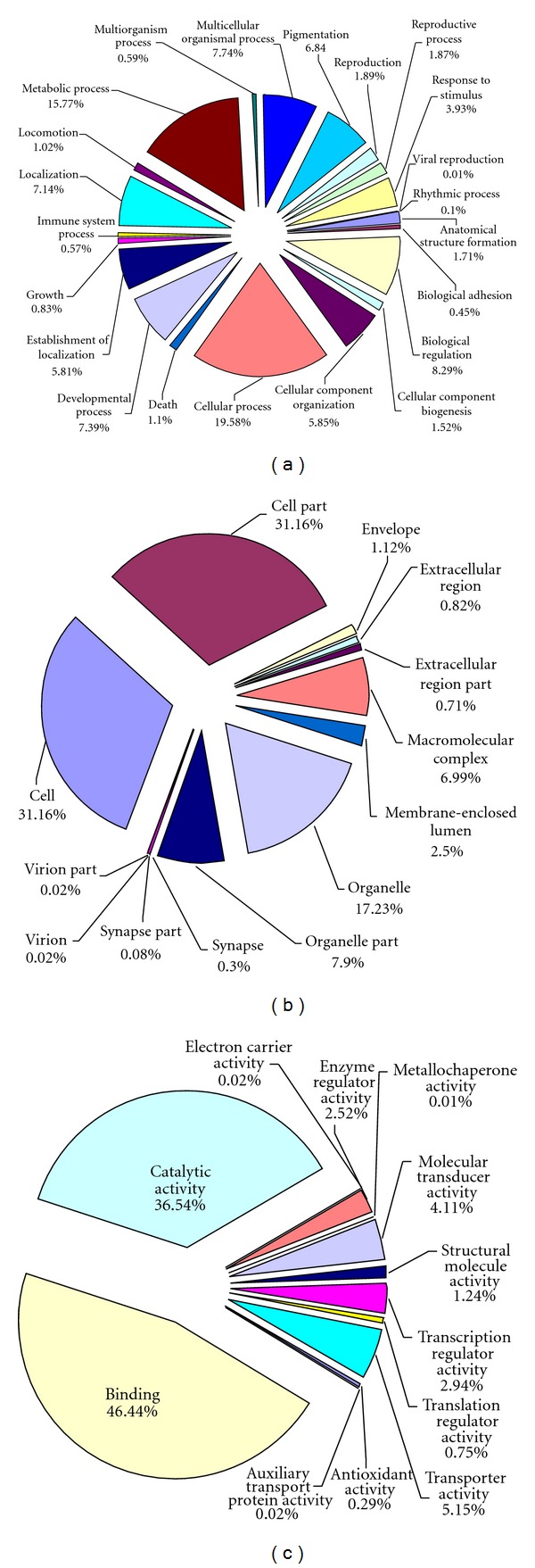
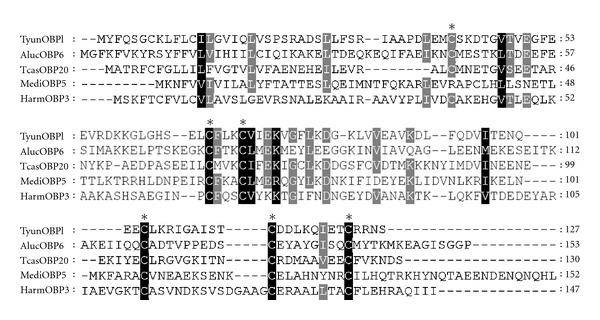
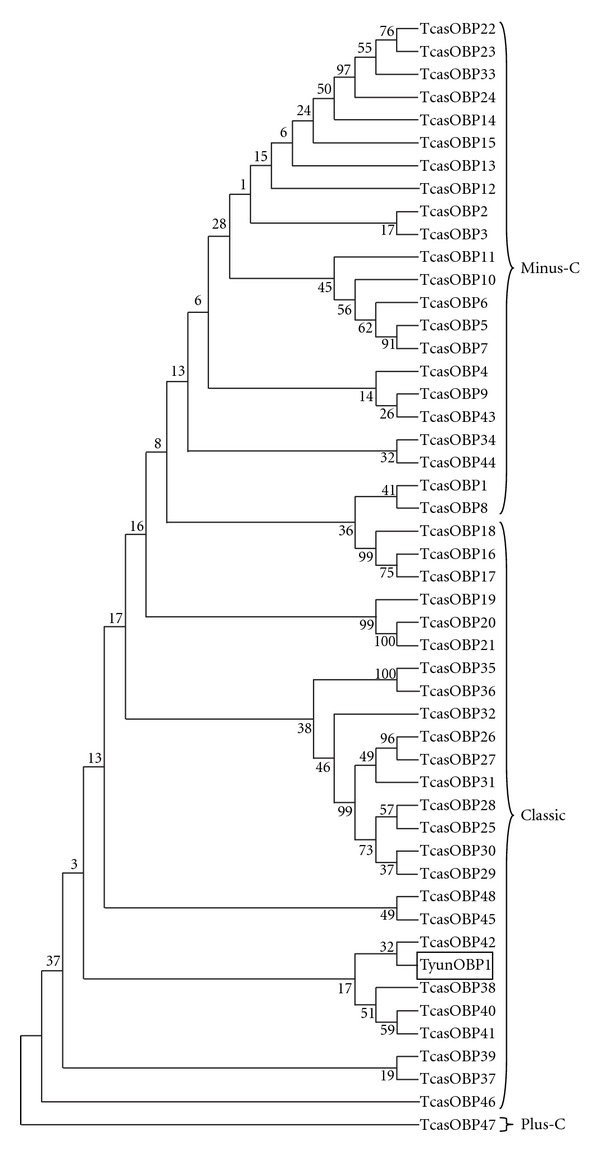
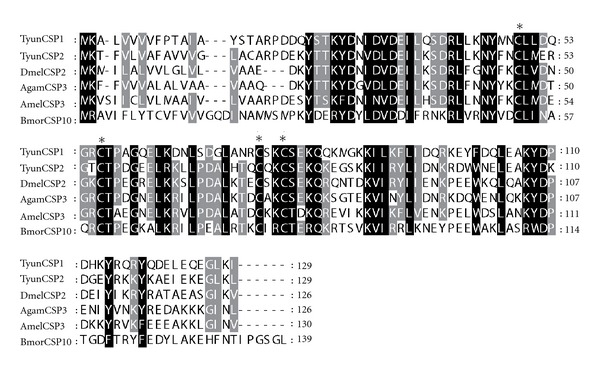
The most important proteins involved in olfaction include odorant binding protein (OBP), chemosensory protein (CSP), olfactory receptor (OR), and gustatory receptor (GR). Despite that the exhaustive genomic analysis has revealed a large number of olfactory genes in a number of model insects, it is still poorly understood for most nonmodel species. This is mostly due to the reason that the small antenna is challenging for collection. We can generally isolate one or few genes at a time by means of the traditional method. Here, we present the large-scale identifying members of the main olfactory genes from the head of Tomicus yunnanensis using Illumina sequencing. In a single run, we obtained over 51.8 million raw reads. These reads were assembled into 57,142 unigenes. Nearly 29,384 of them were functionally annotated in the NCBI nonredundant database. By depth analysis of the data, 11 OBPs, 8 CSPs, 18 ORs, and 8 GRs were retrieved. Sequences encoding full length proteins were further characterised for one OBP and two CSPs. The obtained olfactory genes provide a major resource in further unraveling the molecular mechanisms of T. yunnanensis chemoperception. This study indicates that the next generation sequencing is an attractive approach for efficient identification of olfactory genes from insects, for which the genome sequence is unavailable.
参与嗅觉的最重要蛋白质包括气味结合蛋白(OBP)、化学感受蛋白(CSP)、嗅觉受体(OR)和味觉受体(GR)。尽管详尽的基因组分析已在许多模式昆虫中揭示了大量嗅觉基因,但对于大多数非模式物种仍知之甚少。这主要是因为小触角收集起来具有挑战性。我们通常一次只能通过传统方法分离出一个或几个基因。在此,我们使用Illumina测序从云南切梢小蠹头部大规模鉴定主要嗅觉基因成员。单次运行中,我们获得了超过5180万个原始读数。这些读数被组装成57142个单基因。其中近29384个在NCBI非冗余数据库中进行了功能注释。通过对数据的深度分析,可以检索到11个OBP、8个CSP、18个OR和8个GR。对一个OBP和两个CSP进一步鉴定了编码全长蛋白的序列。所获得的嗅觉基因为进一步阐明云南切梢小蠹化学感受的分子机制提供了重要资源。这项研究表明,下一代测序是从基因组序列不可用的昆虫中高效鉴定嗅觉基因的一种有吸引力的方法。