Department of Biomedical Engineering, Case Western Reserve University, Cleveland, Ohio, United States of America.
PLoS One. 2012;7(9):e43601. doi: 10.1371/journal.pone.0043601. Epub 2012 Sep 10.
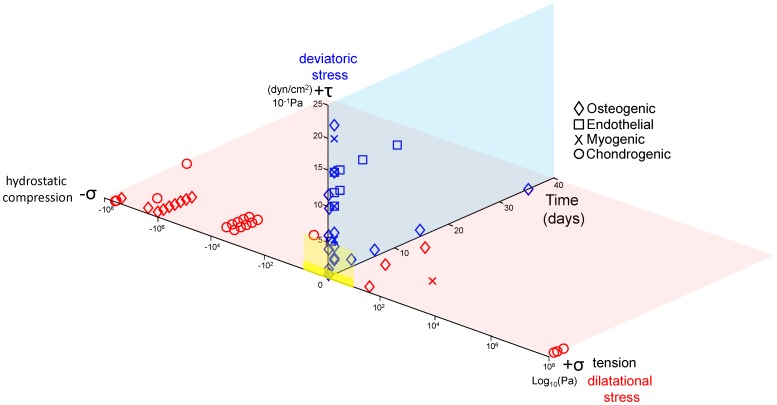
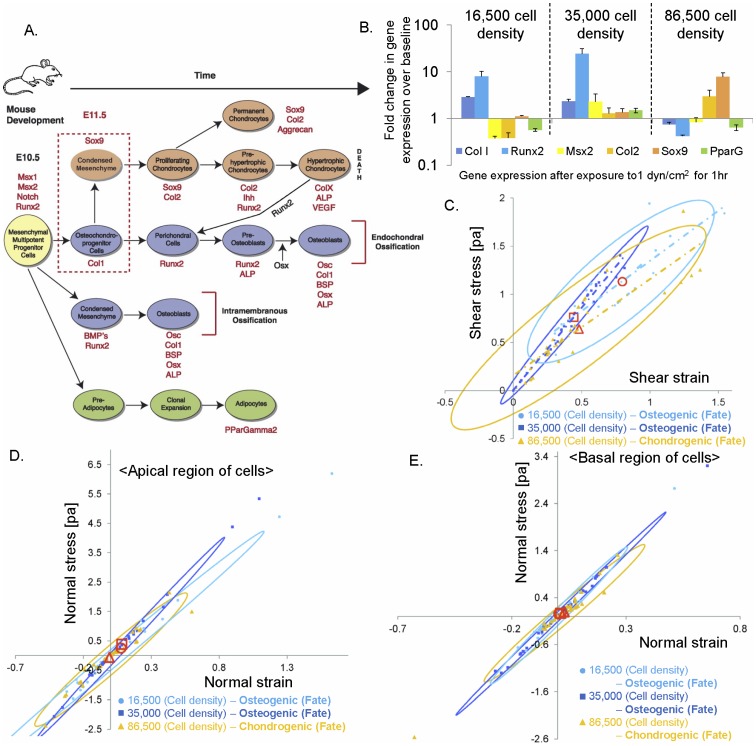
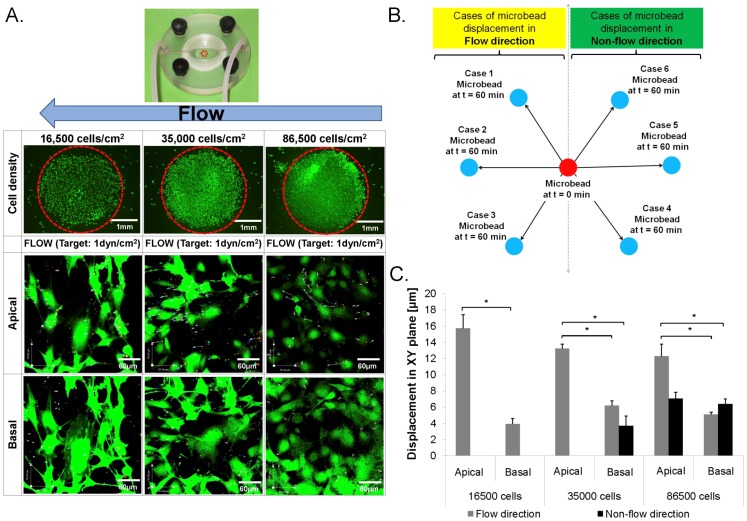
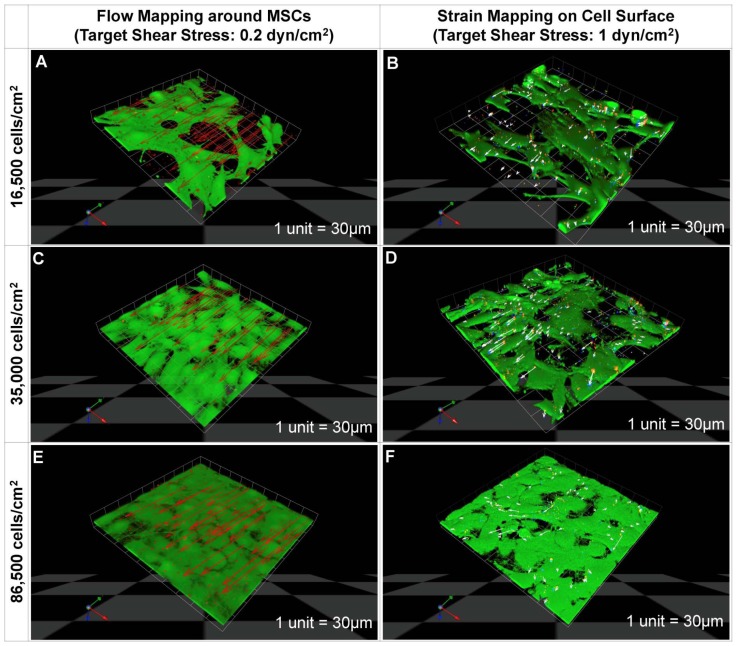
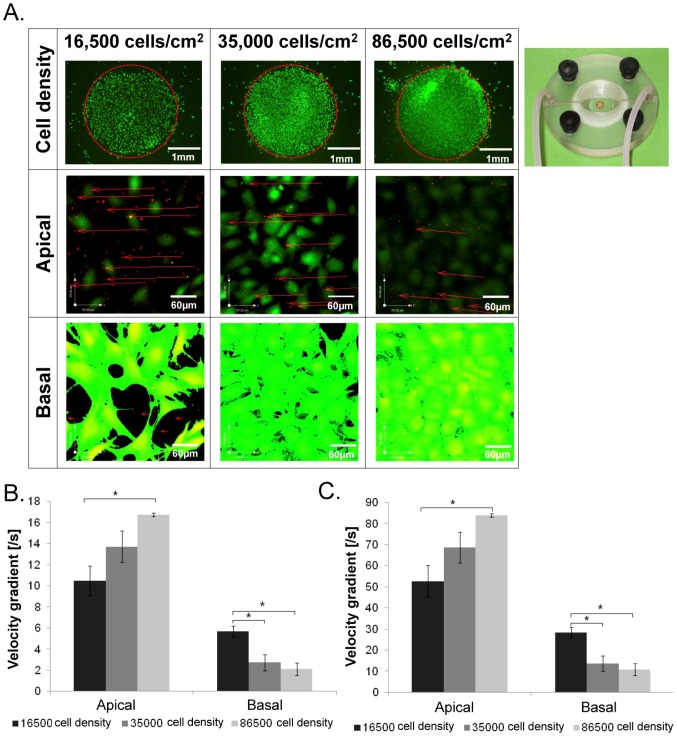
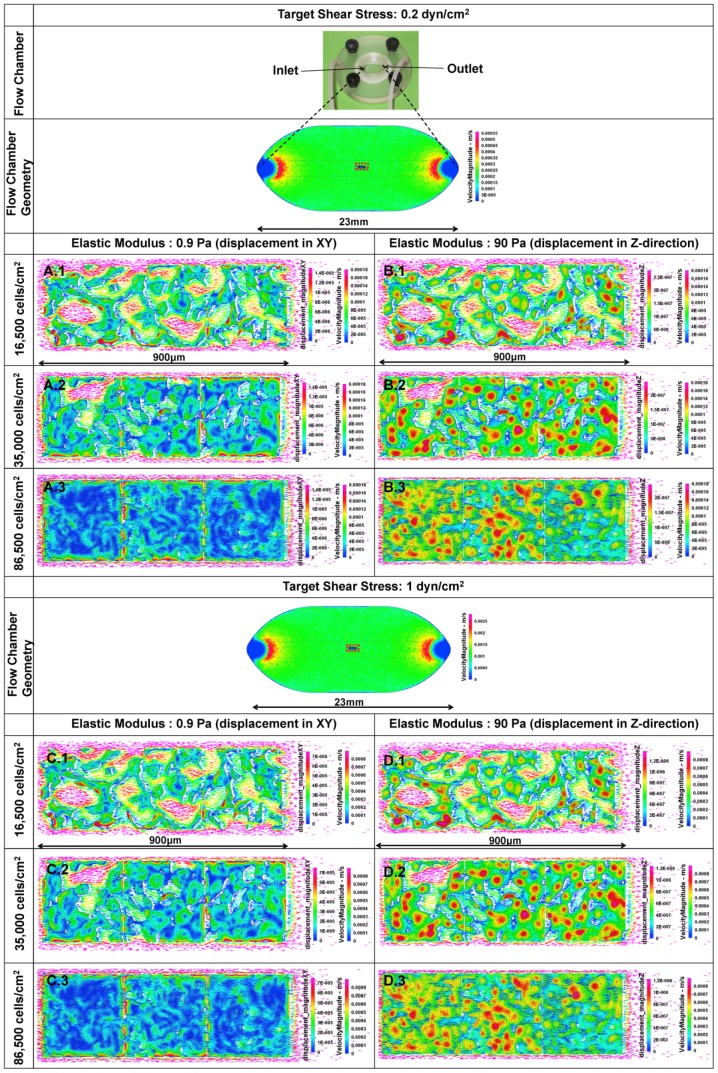
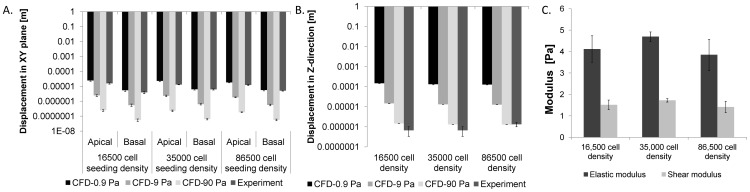
During mesenchymal condensation, the initial step of skeletogenesis, transduction of minute mechanical forces to the nucleus is associated with up or down-regulation of genes, ultimately resulting in formation of the skeletal template and appropriate cell lineage commitment. The summation of these biophysical cues affects the cell's shape and fate. Here, we predict and measure surface strain, in live stem cells, in response to controlled delivery of stresses, providing a platform to direct short-term structure--function relationships and long-term fate decisions. We measure local strains on stem cell surfaces using fluorescent microbeads coated with Concanavalin A. During delivery of controlled mechanical stresses, 4-Dimensional (x,y,z,t) displacements of the bound beads are measured as surface strains using confocal microscopy and image reconstruction. Similarly, micro-particle image velocimetry (μ-piv) is used to track flow fields with fluorescent microspheres. The measured flow velocity gradient is used to calculate stress imparted by fluid drag at the surface of the cell. We compare strain measured on cell surfaces with those predicted computationally using parametric estimates of the cell's elastic and shear modulus. Finally, cross-correlating stress--strain data to measures of gene transcription marking lineage commitment enables us to create stress--strain--fate maps, for live stem cells in situ. The studies show significant correlations between live stem cell stress--strain relationships and lineage commitment. The method presented here provides a novel means to probe the live stem cell's mechanome, enabling mechanistic studies of the role of mechanics in lineage commitment as it unfolds.
在间充质凝聚过程中,骨骼发生的初始步骤,微小机械力向细胞核的传递与基因的上调或下调有关,最终导致骨骼模板的形成和适当的细胞谱系决定。这些生物物理线索的总和影响细胞的形状和命运。在这里,我们预测并测量活干细胞对受控施加应力的表面应变,为指导短期结构-功能关系和长期命运决策提供了一个平台。我们使用包被有刀豆球蛋白 A 的荧光微珠来测量干细胞表面的局部应变。在施加受控机械应力时,使用共聚焦显微镜和图像重建测量结合珠的 4D(x,y,z,t)位移作为表面应变。同样,微粒子图像测速(μ-piv)用于跟踪带有荧光微球的流场。测量的流速梯度用于计算细胞表面流体阻力施加的应力。我们将细胞表面测量的应变与使用细胞弹性和剪切模量的参数估计计算得到的应变进行比较。最后,将应力-应变数据与标记谱系决定的基因转录的测量值进行交叉相关,使我们能够为原位活干细胞创建应力-应变-命运图谱。研究表明,活干细胞的应力-应变关系与谱系决定之间存在显著相关性。本文提出的方法为探测活干细胞的机械力学提供了一种新方法,使我们能够对力学在谱系决定中的作用进行机制研究。