Immunology and Haematology Laboratory, Immunohaematology and Clinical Biochemistry Department, Faculty of Health Sciences, Universidad de Talca, 3460000 Talca, Chile ; Centro de Estudios en Alimentos Procesados (CEAP), CONICYT-Regional, Gore Maule, R09I2001 Talca, Chile ; Synthesis Laboratory, Chemical Institute of Natural Resources, Universidad de Talca, 3460000 Talca, Chile.
Evid Based Complement Alternat Med. 2012;2012:147031. doi: 10.1155/2012/147031. Epub 2012 Nov 13.
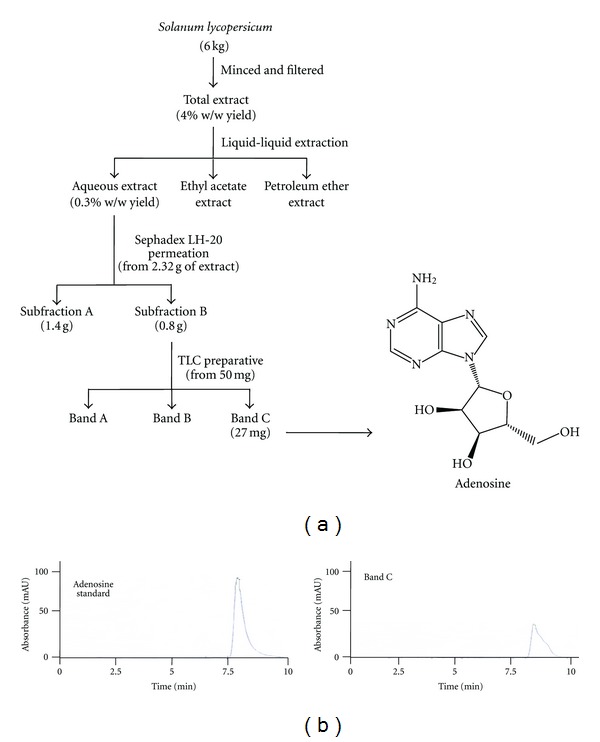
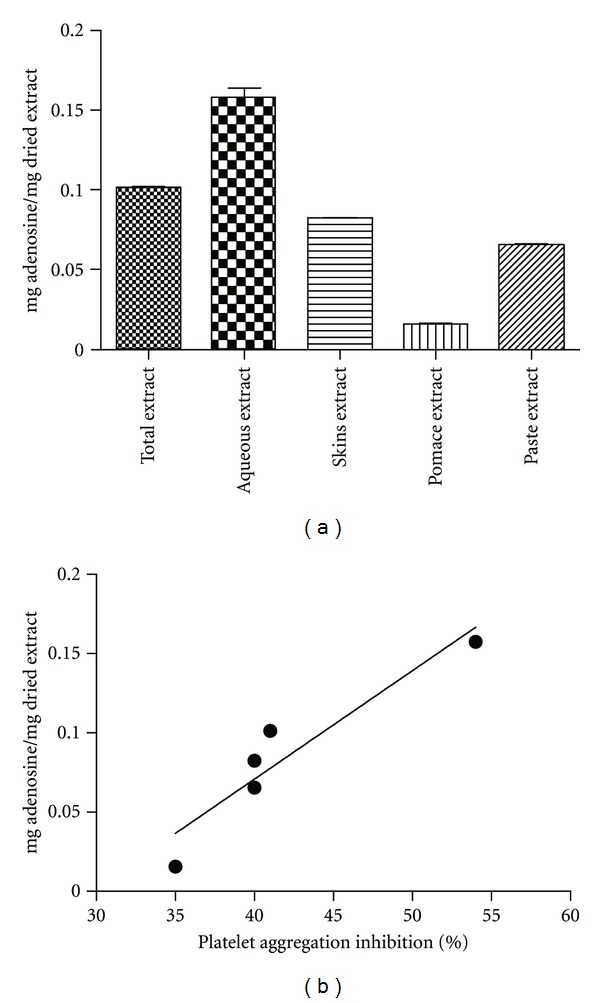
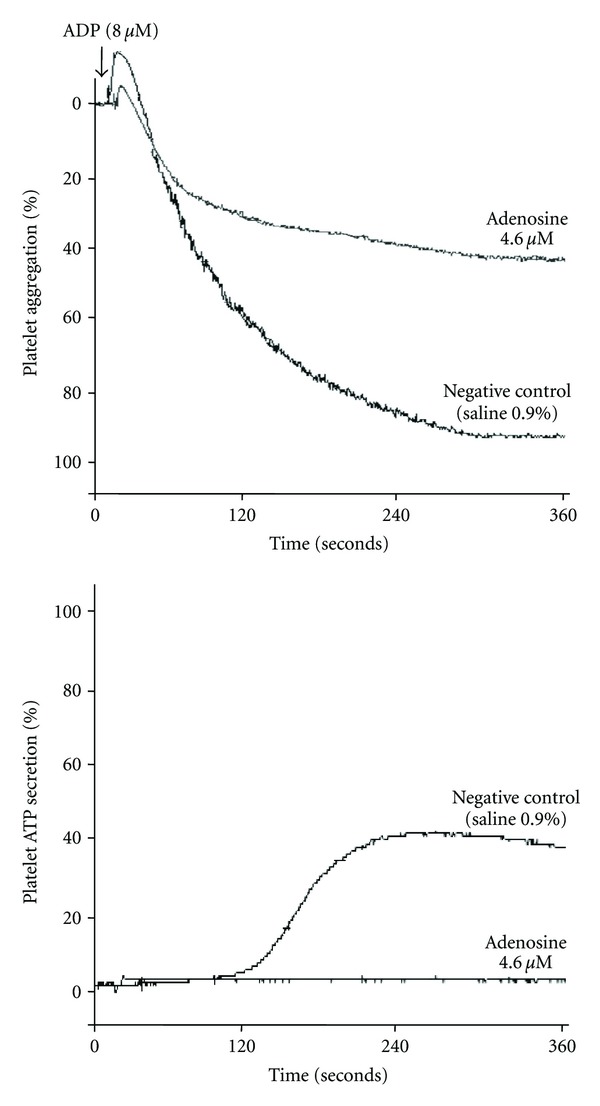
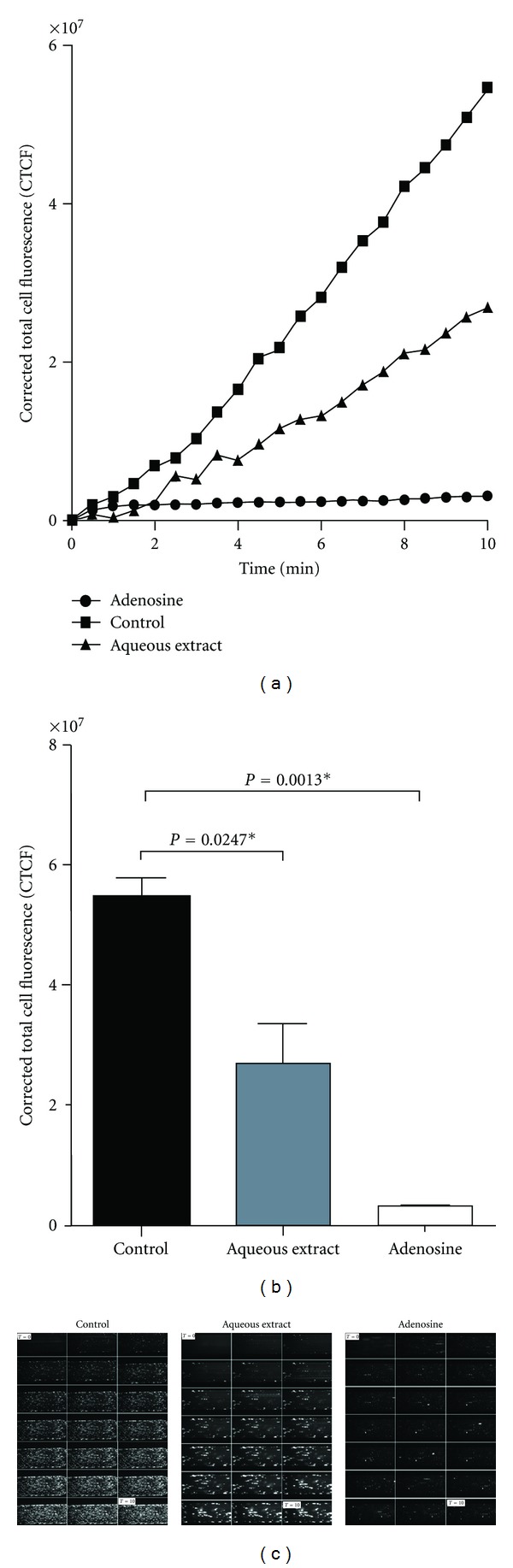
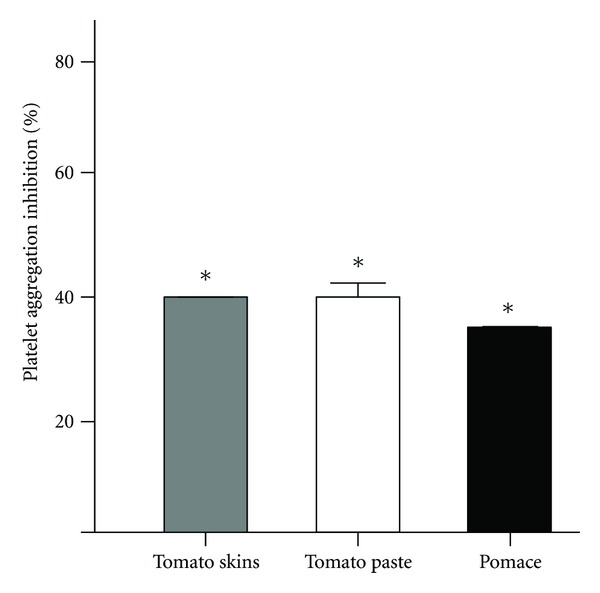
In seeking the functionality of foodstuff applicable to medicine, ripe tomato fruits were found to show an antiplatelet activity. Therefore, the bioactive compound was isolated, structurally identified, and studied for an inhibitory effects on platelet adhesion, secretion, and aggregation. The concentration of adenosine in ripe tomato fruits (pulp and skin extracts) and its processing by-products (paste and pomace) was determined by reversed-phase high-performance liquid chromatography (HPLC). According to platelet aggregation inhibition induced by ADP, the total extract residual was fractionated by liquid-liquid separation, obtaining aqueous, ethyl acetate and petroleum ether extracts. The aqueous extract was subjected to repeated permeation over sephadex LH-20 and semipreparative TLC. The isolate finally obtained was identified as adenosine on the basis of ESI-MS, (1)H NMR, HPLC, and UV spectra. Adenosine concentration dependently (2.3-457 μM) platelet aggregation inhibited induced by ADP. Also, adenosine present inhibition of platelet secretion and thrombus formation under flow conditions. The quantitative HPLC analysis revealed significant amounts of adenosine in ripe tomato fruits and its processing by-products. From these results, extracts/fractions of ripe tomato fruits and their processing by-products may be referred to as functional food and functional ingredients containing a compound that inhibits platelet function with a potent preventive effect on thrombus formation, as those that occur in stroke.
在寻找适用于医学的食品功能时,发现成熟的番茄果实具有抗血小板活性。因此,分离出了这种生物活性化合物,对其结构进行了鉴定,并研究了它对血小板黏附、分泌和聚集的抑制作用。采用反相高效液相色谱法(HPLC)测定成熟番茄果实(果肉和果皮提取物)及其加工副产物(糊和渣)中的腺苷浓度。根据 ADP 诱导的血小板聚集抑制作用,采用液-液分离对总提取物残留部分进行了分级,得到水相、乙酸乙酯相和石油醚相提取物。水提取物通过 sephadex LH-20 反复渗透和半制备 TLC 进行处理。根据 ESI-MS、(1)H NMR、HPLC 和 UV 光谱,最终分离得到的物质被鉴定为腺苷。腺苷浓度依赖性(2.3-457μM)抑制 ADP 诱导的血小板聚集。此外,腺苷还能抑制血小板在流动条件下的分泌和血栓形成。定量 HPLC 分析显示,成熟番茄果实及其加工副产物中含有大量的腺苷。根据这些结果,成熟番茄果实及其加工副产物的提取物/级分可被视为含有一种具有抑制血小板功能的化合物的功能性食品和功能性成分,具有预防血栓形成的强大作用,这与中风时发生的情况类似。