Institute of Bioinformatics and Biotechnology, University of Pune, Pune, 411007, India.
Appl Microbiol Biotechnol. 2013 Feb;97(3):1005-16. doi: 10.1007/s00253-012-4641-8. Epub 2013 Jan 3.
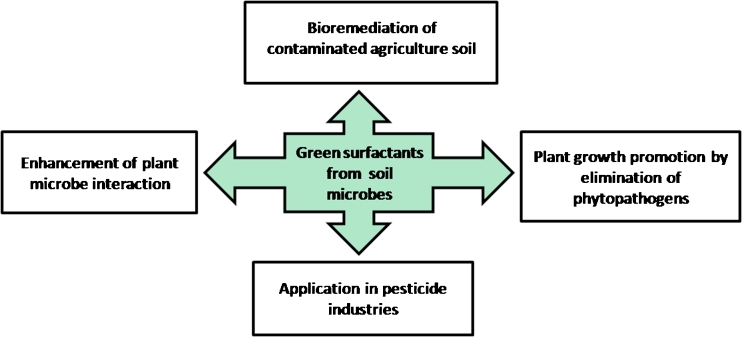
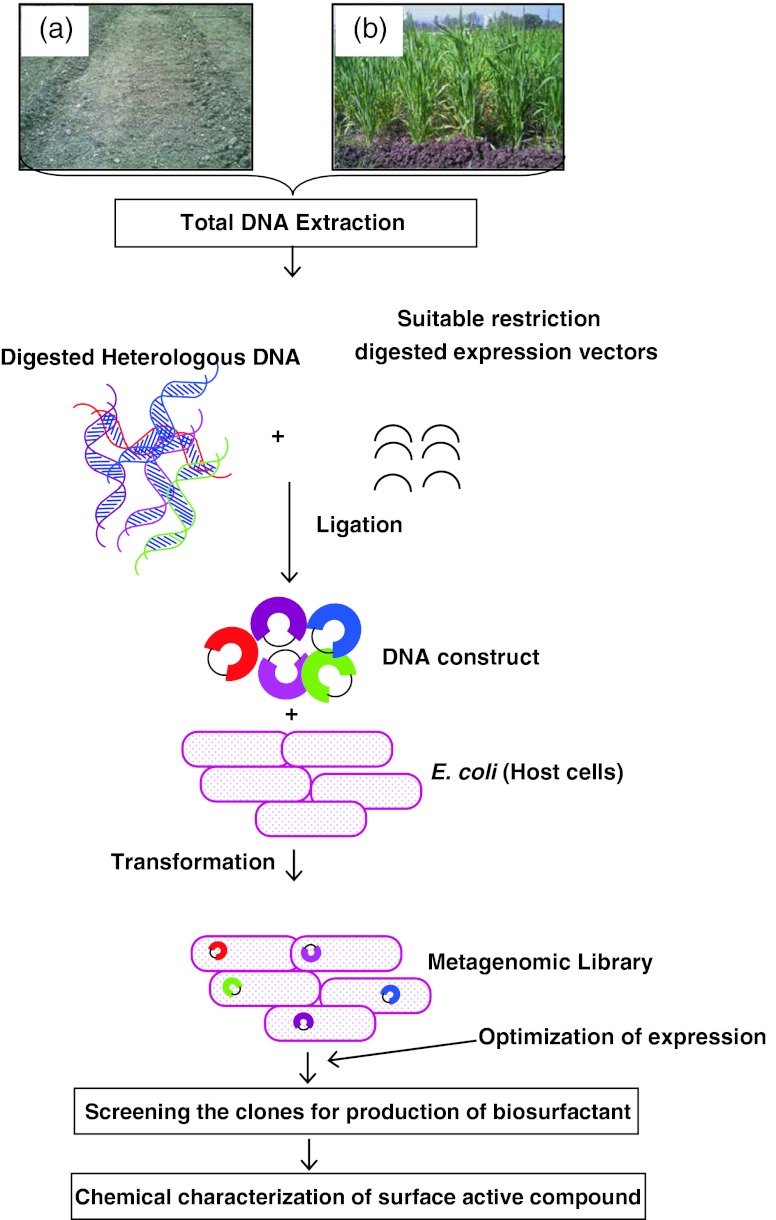
Agricultural productivity to meet growing demands of human population is a matter of great concern for all countries. Use of green compounds to achieve the sustainable agriculture is the present necessity. This review highlights the enormous use of harsh surfactants in agricultural soil and agrochemical industries. Biosurfactants which are reported to be produced by bacteria, yeasts, and fungi can serve as green surfactants. Biosurfactants are considered to be less toxic and eco-friendly and thus several types of biosurfactants have the potential to be commercially produced for extensive applications in pharmaceutical, cosmetics, and food industries. The biosurfactants synthesized by environmental isolates also has promising role in the agricultural industry. Many rhizosphere and plant associated microbes produce biosurfactant; these biomolecules play vital role in motility, signaling, and biofilm formation, indicating that biosurfactant governs plant-microbe interaction. In agriculture, biosurfactants can be used for plant pathogen elimination and for increasing the bioavailability of nutrient for beneficial plant associated microbes. Biosurfactants can widely be applied for improving the agricultural soil quality by soil remediation. These biomolecules can replace the harsh surfactant presently being used in million dollar pesticide industries. Thus, exploring biosurfactants from environmental isolates for investigating their potential role in plant growth promotion and other related agricultural applications warrants details research. Conventional methods are followed for screening the microbial population for production of biosurfactant. However, molecular methods are fewer in reaching biosurfactants from diverse microbial population and there is need to explore novel biosurfactant from uncultured microbes in soil biosphere by using advanced methodologies like functional metagenomics.
农业生产力以满足不断增长的人口需求是所有国家都非常关注的问题。使用绿色化合物实现可持续农业是当前的必要条件。这篇综述强调了在农业土壤和农业化学工业中大量使用苛刻的表面活性剂。据报道,细菌、酵母和真菌产生的生物表面活性剂可以作为绿色表面活性剂。生物表面活性剂被认为毒性较小,对环境友好,因此几种类型的生物表面活性剂有可能被商业化生产,广泛应用于制药、化妆品和食品工业。环境分离物合成的生物表面活性剂在农业工业中也具有很有前景的作用。许多根际和植物相关的微生物产生生物表面活性剂;这些生物分子在运动、信号传递和生物膜形成中起着至关重要的作用,表明生物表面活性剂控制着植物-微生物的相互作用。在农业中,生物表面活性剂可用于消除植物病原体,并提高有益植物相关微生物的营养生物利用度。生物表面活性剂可以广泛应用于改善农业土壤质量的土壤修复。这些生物分子可以替代目前在价值数百万美元的农药工业中使用的苛刻表面活性剂。因此,从环境分离物中探索生物表面活性剂,以研究它们在植物生长促进和其他相关农业应用中的潜在作用,需要进行详细的研究。传统方法用于筛选产生生物表面活性剂的微生物种群。然而,分子方法在从不同的微生物种群中获得生物表面活性剂方面较少,需要通过使用功能宏基因组学等先进方法来探索土壤生物圈中未培养微生物中的新型生物表面活性剂。