Max-Planck-Institute for Developmental Biology, Spemannstr, 35, Tübingen, D-72076, Germany.
Biol Direct. 2013 Jan 16;8:2. doi: 10.1186/1745-6150-8-2.
Alvinella pompejana is an annelid worm that inhabits deep-sea hydrothermal vent sites in the Pacific Ocean. Living at a depth of approximately 2500 meters, these worms experience extreme environmental conditions, including high temperature and pressure as well as high levels of sulfide and heavy metals. A. pompejana is one of the most thermotolerant metazoans, making this animal a subject of great interest for studies of eukaryotic thermoadaptation.
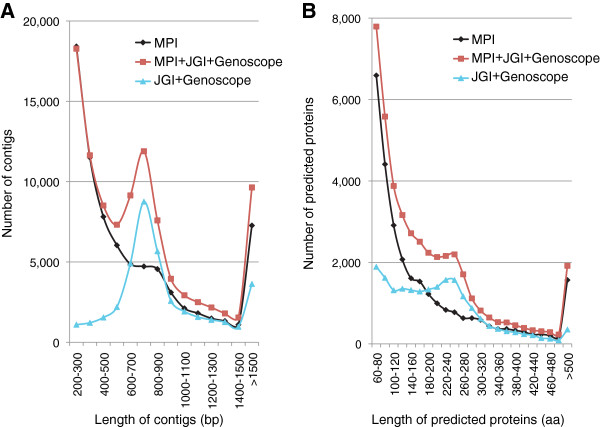
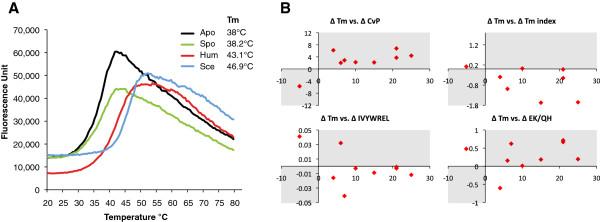
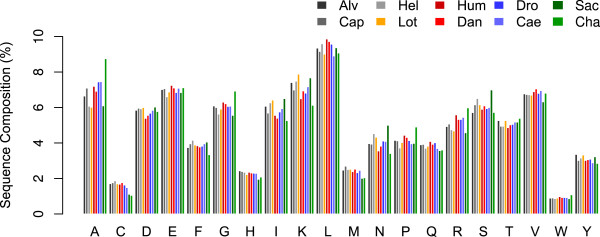
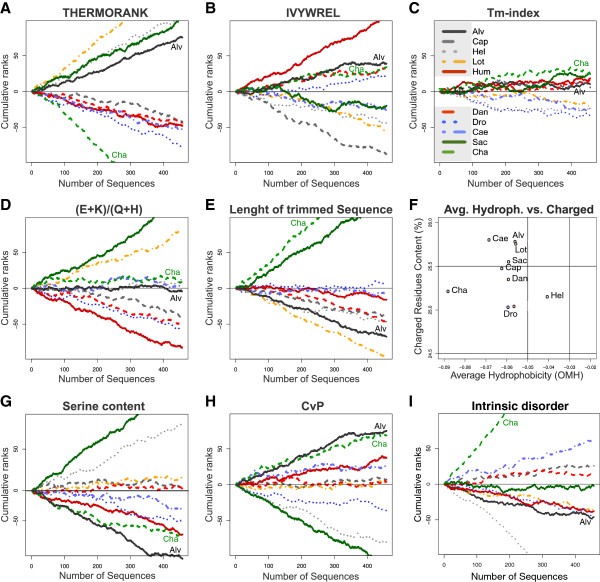
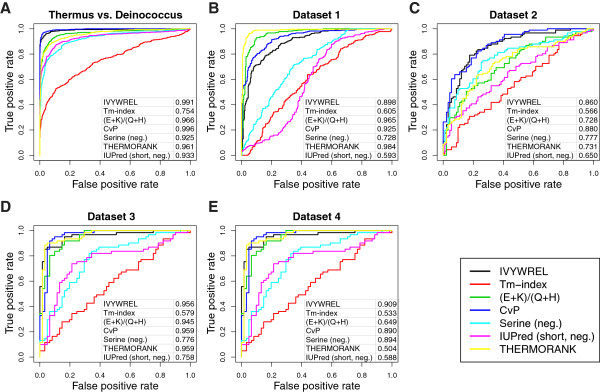
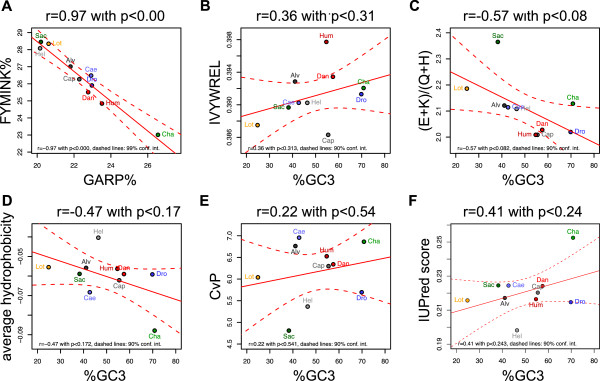
In order to complement existing EST resources we performed deep sequencing of the A. pompejana transcriptome. We identified several thousand novel protein-coding transcripts, nearly doubling the sequence data for this annelid. We then performed an extensive survey of previously established prokaryotic thermoadaptation measures to search for global signals of thermoadaptation in A. pompejana in comparison with mesophilic eukaryotes. In an orthologous set of 457 proteins, we found that the best indicator of thermoadaptation was the difference in frequency of charged versus polar residues (CvP-bias), which was highest in A. pompejana. CvP-bias robustly distinguished prokaryotic thermophiles from prokaryotic mesophiles, as well as the thermophilic fungus Chaetomium thermophilum from mesophilic eukaryotes. Experimental values for thermophilic proteins supported higher CvP-bias as a measure of thermal stability when compared to their mesophilic orthologs. Proteome-wide mean CvP-bias also correlated with the body temperatures of homeothermic birds and mammals.
Our work extends the transcriptome resources for A. pompejana and identifies the CvP-bias as a robust and widely applicable measure of eukaryotic thermoadaptation.
Alvinella pompejana 是一种栖息在太平洋深海热液喷口的环节动物蠕虫。这些蠕虫生活在大约 2500 米的深海中,经历着极端的环境条件,包括高温、高压以及高浓度的硫化物和重金属。A. pompejana 是最耐热的后生动物之一,因此这种动物成为研究真核生物热适应的研究热点。
为了补充现有的 EST 资源,我们对 A. pompejana 的转录组进行了深度测序。我们鉴定了数千个新的编码蛋白质的转录本,几乎使这种环节动物的序列数据增加了一倍。然后,我们对先前建立的原核生物热适应措施进行了广泛调查,以搜索 A. pompejana 与嗜温真核生物相比的热适应的全局信号。在 457 个同源蛋白中,我们发现热适应的最佳指标是带电荷与极性残基的频率差异(CvP-偏倚),在 A. pompejana 中最高。CvP-偏倚可很好地区分原核嗜热生物与原核嗜中生物,以及嗜热真菌 Chaetomium thermophilum 与嗜温真核生物。与嗜温同源物相比,热稳定蛋白的实验值支持更高的 CvP-偏倚作为热稳定性的衡量标准。全蛋白质组平均 CvP-偏倚也与恒温鸟类和哺乳动物的体温相关。
我们的工作扩展了 A. pompejana 的转录组资源,并确定 CvP-偏倚是衡量真核生物热适应的一种稳健且广泛适用的指标。