Defence Institute of High Altitude Research, Defence Research & Development Organisation, Leh-Ladakh, Jammu & Kashmir, India.
PLoS One. 2013;8(1):e52797. doi: 10.1371/journal.pone.0052797. Epub 2013 Jan 10.
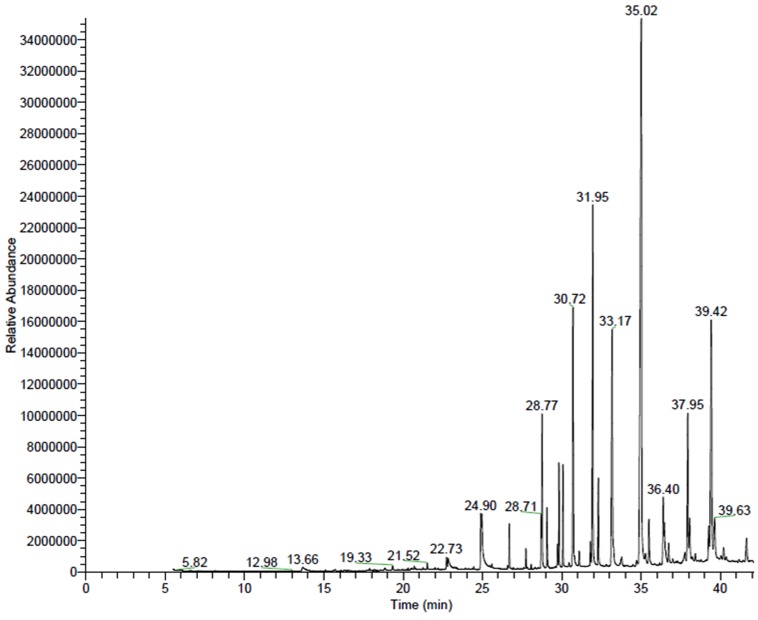
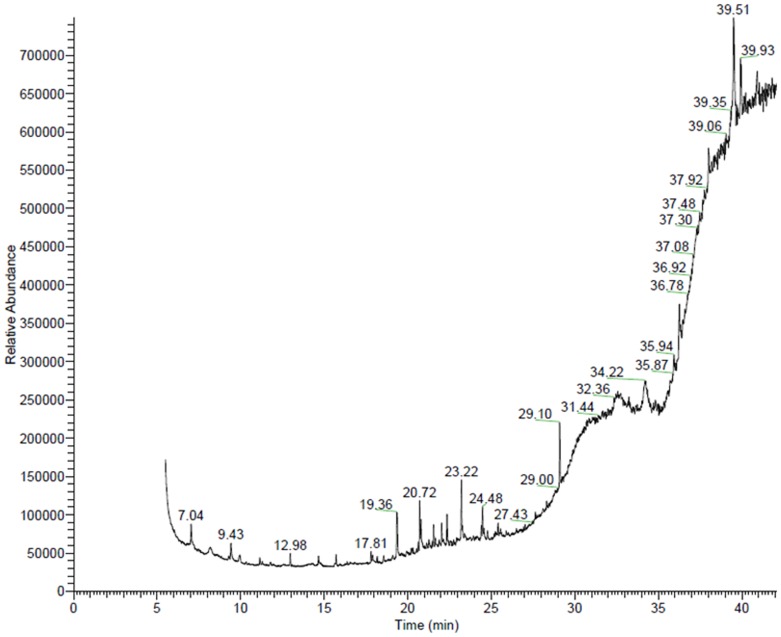
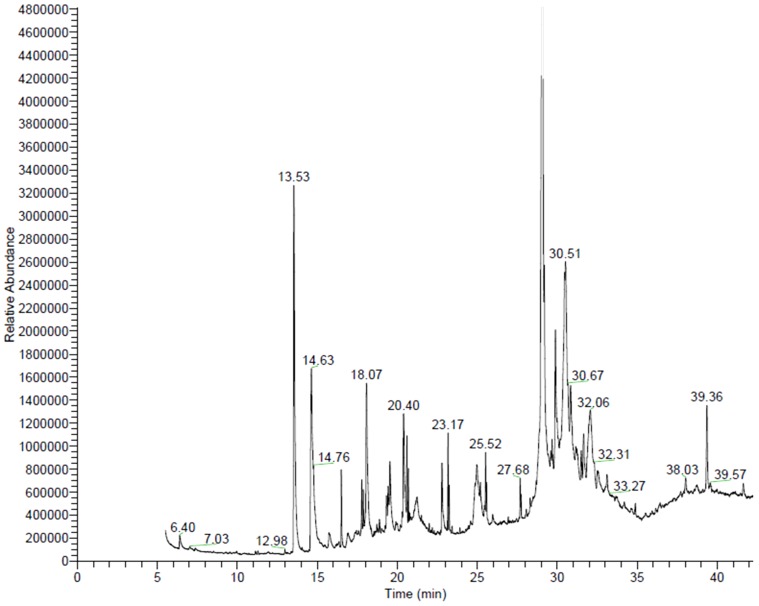
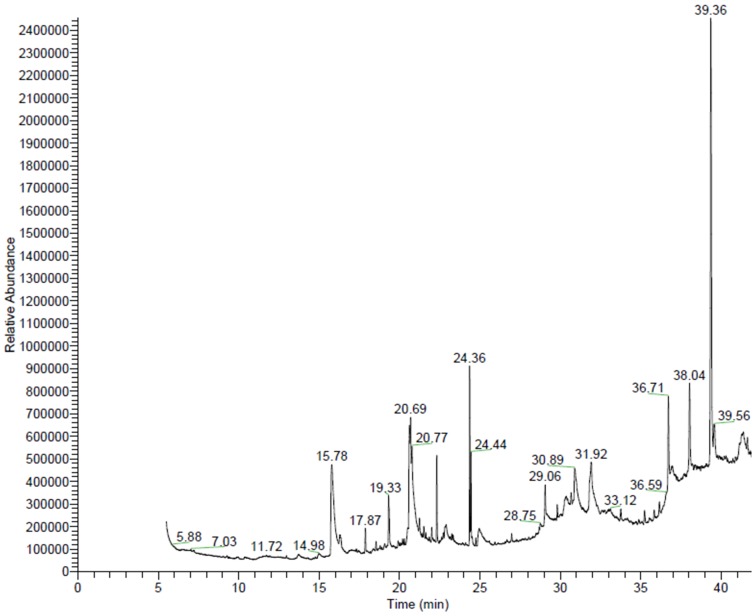
Rhodiola imbricata Edgew. (Rose root or Arctic root or Golden root or Shrolo), belonging to the family Crassulaceae, is an important food crop and medicinal plant in the Indian trans-Himalayan cold desert. Chemometric profile of the n-hexane, chloroform, dichloroethane, ethyl acetate, methanol, and 60% ethanol root extracts of R. imbricata were performed by hyphenated gas chromatography mass spectrometry (GC/MS) technique. GC/MS analysis was carried out using Thermo Finnigan PolarisQ Ion Trap GC/MS MS system comprising of an AS2000 liquid autosampler. Interpretation on mass spectrum of GC/MS was done using the NIST/EPA/NIH Mass Spectral Database, with NIST MS search program v.2.0g. Chemometric profile of root extracts revealed the presence of 63 phyto-chemotypes, among them, 1-pentacosanol; stigmast-5-en-3-ol, (3β,24S); 1-teracosanol; 1-henteracontanol; 17-pentatriacontene; 13-tetradecen-1-ol acetate; methyl tri-butyl ammonium chloride; bis(2-ethylhexyl) phthalate; 7,8-dimethylbenzocyclooctene; ethyl linoleate; 3-methoxy-5-methylphenol; hexadecanoic acid; camphor; 1,3-dimethoxybenzene; thujone; 1,3-benzenediol, 5-pentadecyl; benzenemethanol, 3-hydroxy, 5-methoxy; cholest-4-ene-3,6-dione; dodecanoic acid, 3-hydroxy; octadecane, 1-chloro; ethanone, 1-(4-hydroxyphenyl); α-tocopherol; ascaridole; campesterol; 1-dotriacontane; heptadecane, 9-hexyl were found to be present in major amount. Eventually, in the present study we have found phytosterols, terpenoids, fatty acids, fatty acid esters, alkyl halides, phenols, alcohols, ethers, alkanes, and alkenes as the major group of phyto-chemotypes in the different root extracts of R. imbricata. All these compounds identified by GC/MS analysis were further investigated for their biological activities and it was found that they possess a diverse range of positive pharmacological actions. In future, isolation of individual phyto-chemotypes and subjecting them to biological activity will definitely prove fruitful results in designing a novel drug.
高山红景天(玫瑰根或北极根或金色根或 Shrolo),属于景天科,是印度横断喜马拉雅寒冷沙漠中一种重要的粮食作物和药用植物。采用气相色谱-质谱联用(GC/MS)技术对高山红景天的正己烷、氯仿、二氯乙烷、乙酸乙酯、甲醇和 60%乙醇根提取物进行了化学计量学分析。GC/MS 分析使用 Thermo Finnigan PolarisQ 离子阱 GC/MS MS 系统进行,该系统包括一个 AS2000 液体自动进样器。通过 NIST/EPA/NIH 质谱数据库对 GC/MS 质谱进行解释,并使用 NIST MS search program v.2.0g。根提取物的化学计量学分析显示存在 63 种植物化学型,其中包括 1-二十五烷醇;豆甾-5-烯-3β,24S;1-二十烷醇;1-正二十烷醇;17-正三十五烷烯;13-十四烯-1-醇乙酸酯;甲基三丁基氯化铵;邻苯二甲酸二(2-乙基己基)酯;7,8-二甲基苯并环辛烯;亚油酸乙酯;3-甲氧基-5-甲基苯酚;十六烷酸;樟脑;1,3-二甲氧基苯;侧柏酮;1,3-苯二酚,5-十五烷基;苯甲醇,3-羟基,5-甲氧基;胆甾-4-烯-3,6-二酮;3-羟基十二烷酸;1-氯十八烷;1-(4-羟基苯基)乙酮;α-生育酚;土木香内酯;菜油甾醇;1-三十烷;1-十七烷,9-己基。最终,在本研究中,我们发现植物甾醇、萜类、脂肪酸、脂肪酸酯、烷基卤化物、酚类、醇类、醚类、烷烃和烯烃是高山红景天不同根提取物中的主要植物化学型。通过 GC/MS 分析鉴定的所有这些化合物都进一步研究了它们的生物活性,发现它们具有广泛的积极的药理作用。未来,对单个植物化学型的分离和对其生物活性的研究,必将在设计新药方面取得丰硕成果。