State Key Laboratory of Mesoscopic Physics and Department of Physics, Peking University, Beijing 100871, P. R. China.
Sci Rep. 2013;3:1314. doi: 10.1038/srep01314.
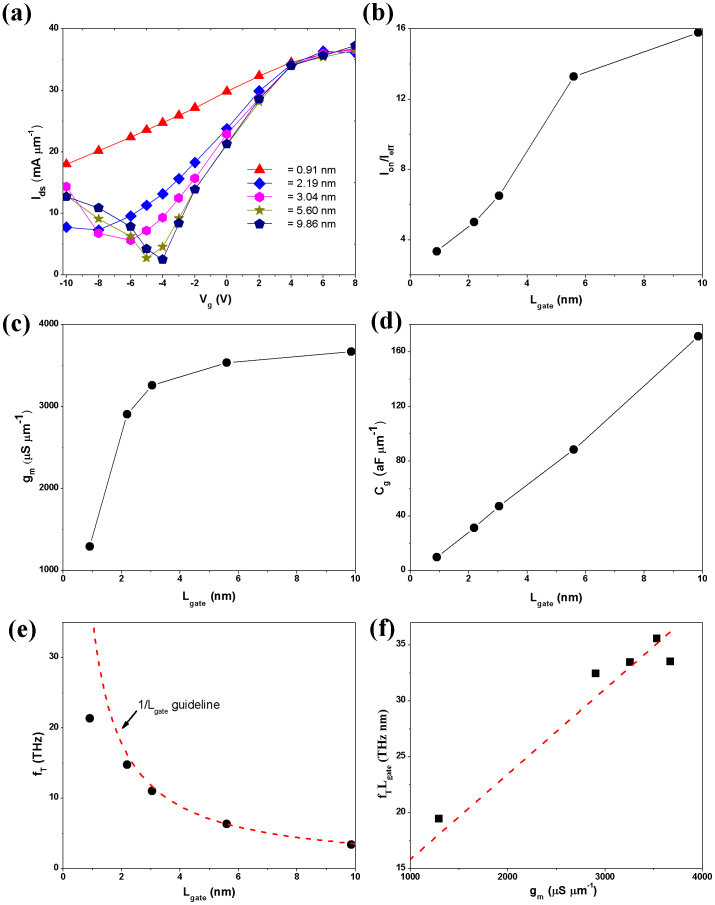
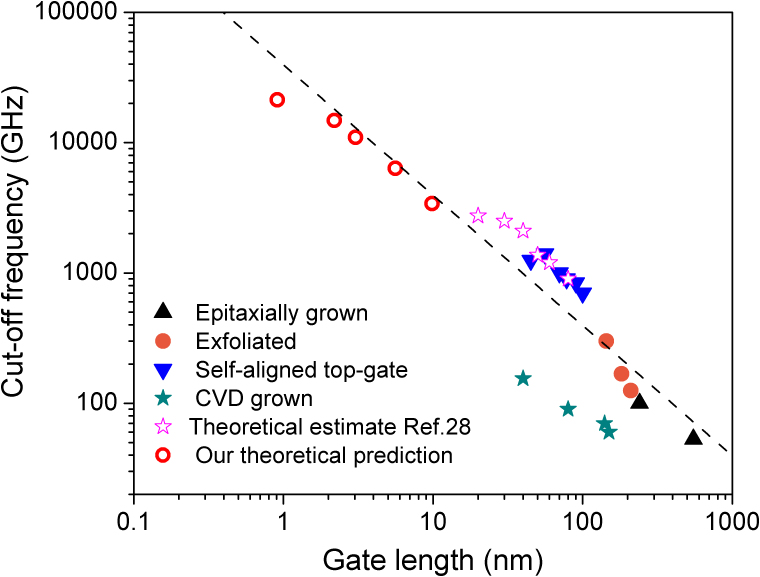
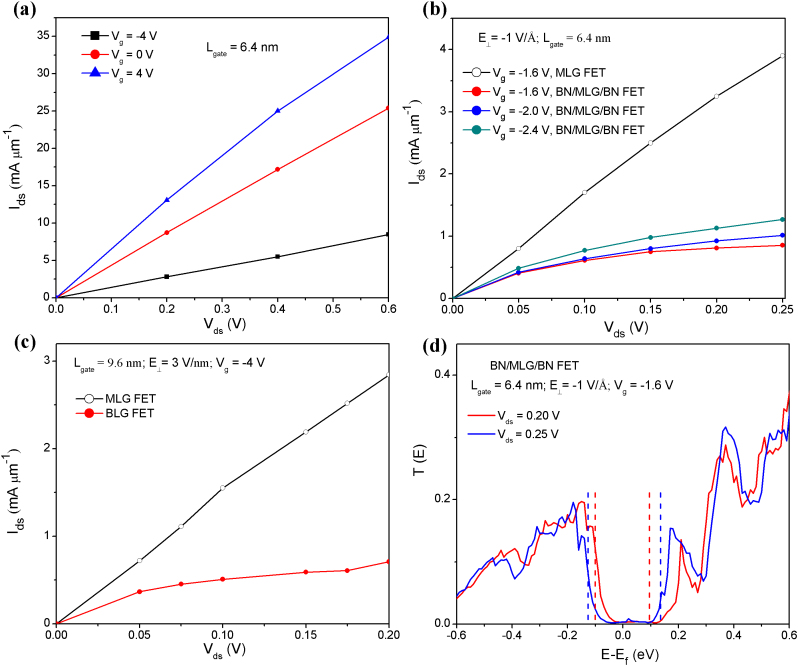
Radio-frequency application of graphene transistors is attracting much recent attention due to the high carrier mobility of graphene. The measured intrinsic cut-off frequency (f(T)) of graphene transistor generally increases with the reduced gate length (L(gate)) till L(gate) = 40 nm, and the maximum measured f(T) has reached 300 GHz. Using ab initio quantum transport simulation, we reveal for the first time that f(T) of a graphene transistor still increases with the reduced L(gate) when L(gate) scales down to a few nm and reaches astonishing a few tens of THz. We observe a clear drain current saturation when a band gap is opened in graphene, with the maximum intrinsic voltage gain increased by a factor of 20. Our simulation strongly suggests it is possible to design a graphene transistor with an extraordinary high f(T) and drain current saturation by continuously shortening L(gate) and opening a band gap.
由于石墨烯具有较高的载流子迁移率,因此其晶体管的射频应用近来受到了广泛关注。通过测量,石墨烯晶体管的本征截止频率(f(T))通常随着栅长(L(gate))的减小而增大,直至 L(gate) = 40nm,最大测量 f(T) 已达到 300GHz。通过使用从头算量子输运模拟,我们首次揭示了当栅长缩小到几纳米时,石墨烯晶体管的 f(T) 仍随着栅长的减小而增大,并达到惊人的几十太赫兹。当石墨烯中出现带隙时,我们观察到漏电流明显饱和,最大本征电压增益增加了 20 倍。我们的模拟强烈表明,通过不断缩短 L(gate)并打开带隙,设计具有超高 f(T)和漏电流饱和的石墨烯晶体管是有可能的。