Bischoff David S, Makhijani Nalini S, Yamaguchi Dean T
Research Service, Veterans' Administration Greater Los Angeles Healthcare System , Los Angeles, California. ; The David Geffen School of Medicine at University of California , Los Angeles, California.
Biores Open Access. 2012 Dec;1(6):273-9. doi: 10.1089/biores.2012.0252.
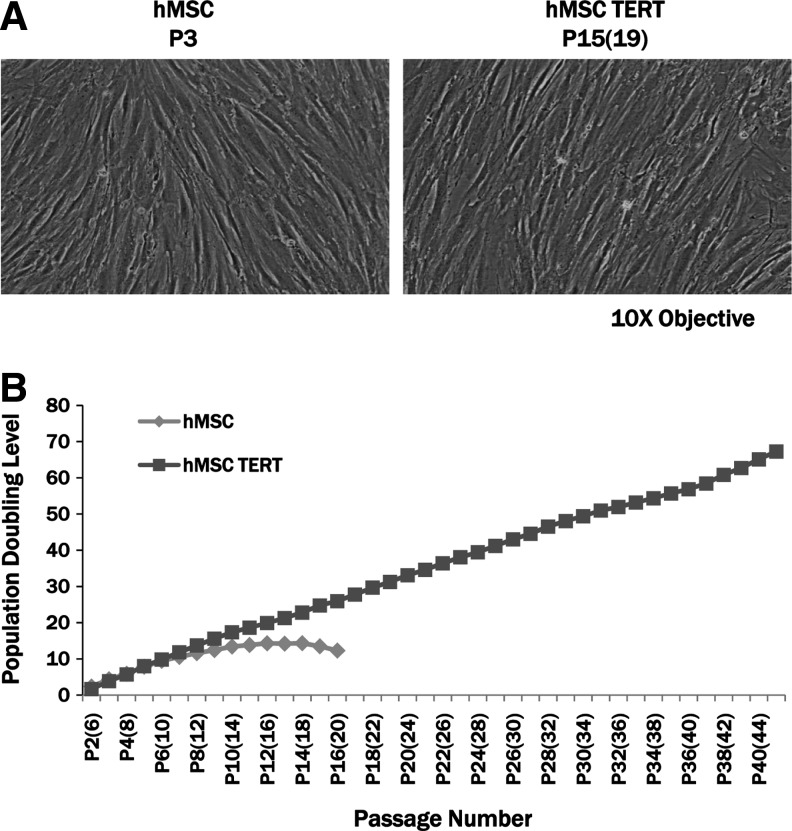
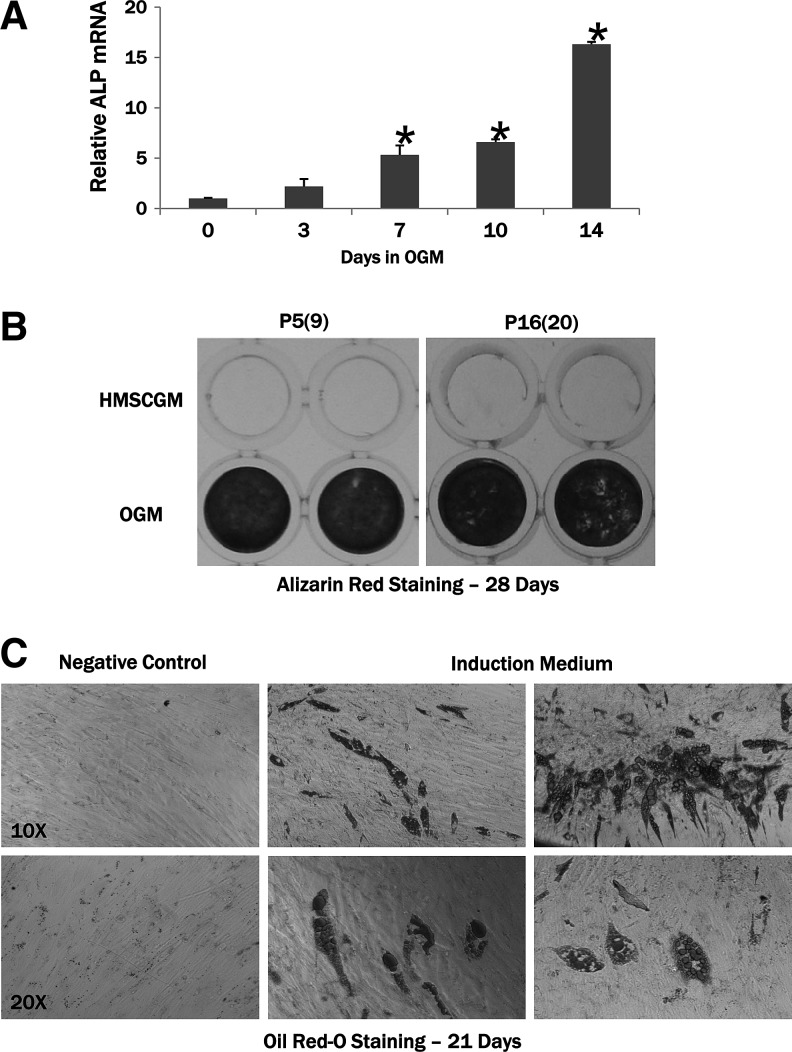
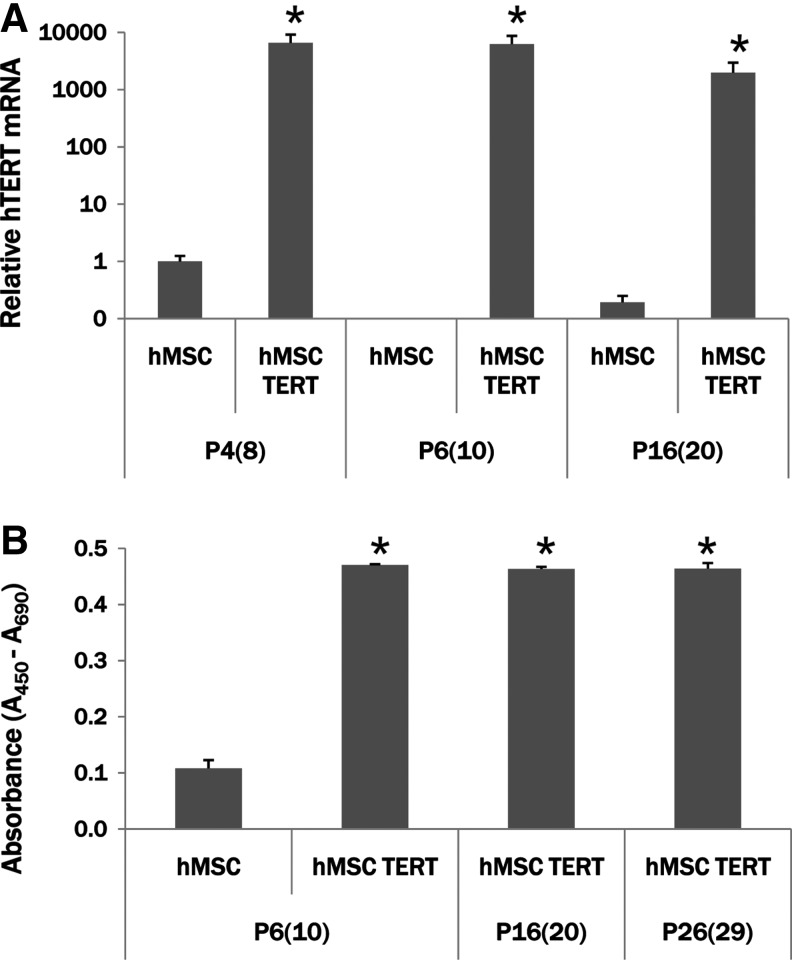
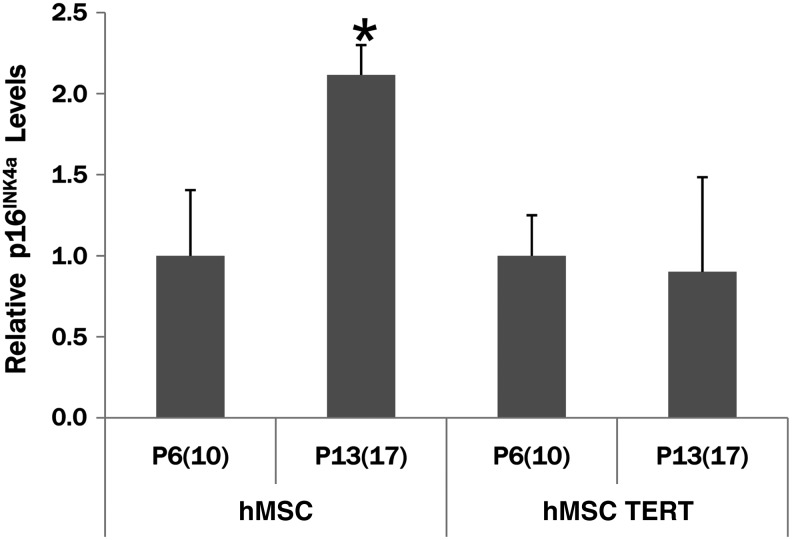
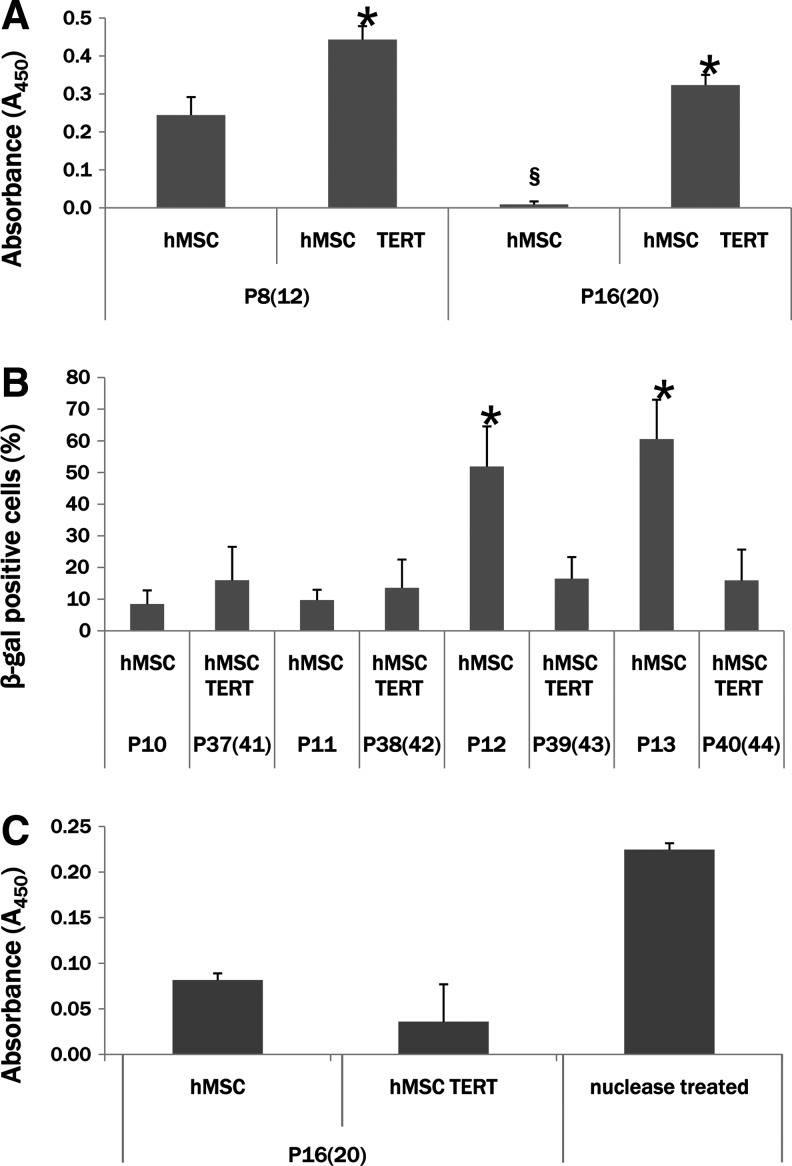
Human mesenchymal stem cells (hMSCs) are highly desirable cells for bone engineering due to the inherent multipotent nature of the cells. Unfortunately, there is a high degree of variability, as primary hMSC cultures quickly undergo replicative senescence with loss of proliferative potential as they are continually propagated in cell culture. We sought to reduce the variability of these cells by insertion and expression of human telomerase reverse transcriptase (TERT) to immortalize the cell line. hMSCs were transduced with a lentivirus containing the human TERT gene. The resulting cell line has been propagated through more than 70 population-doubling level (PDL) to date and continues to grow exhibiting the characteristic fibroblastic hMSC phenotype. Expression of TERT mRNA and protein activity was confirmed in the TERT-transduced cells. Mock-transduced hMSCs had almost undetectable levels of TERT mRNA and protein activity and lost proliferation potential at PDL 14. The enhanced growth capacity of the hMSC TERT cells was due to increased cell proliferation and reduced cellular senescence rather than due to inhibition of apoptosis. The multipotent nature of the TERT cells was confirmed by differentiation toward the osteoblastic and adipogenic lineages in vitro. Osteoblastic differentiation was confirmed by both expression of alkaline phosphate and mineral deposition visualized by Alizarin Red staining. Adipogenic differentiation was confirmed by production of lipid droplets, which were detected by Oil Red-O staining. In summary, we have generated a stable hMSC line that can be continually propagated and retains both osteoblastic and adipogenic differentiation potential.
由于人类间充质干细胞(hMSCs)固有的多能性,它们是骨组织工程中非常理想的细胞。不幸的是,存在高度的变异性,因为原代hMSC培养物在细胞培养中持续传代时会迅速经历复制性衰老并丧失增殖潜力。我们试图通过插入和表达人类端粒酶逆转录酶(TERT)来使细胞系永生化,从而降低这些细胞的变异性。用含有人类TERT基因的慢病毒转导hMSCs。所得细胞系迄今为止已传代超过70个群体倍增水平(PDL),并且继续生长,呈现出典型的成纤维细胞样hMSC表型。在TERT转导的细胞中证实了TERT mRNA和蛋白活性的表达。mock转导的hMSCs几乎检测不到TERT mRNA和蛋白活性水平,并且在PDL 14时丧失了增殖潜力。hMSC TERT细胞增强的生长能力是由于细胞增殖增加和细胞衰老减少,而不是由于细胞凋亡的抑制。通过体外向成骨细胞和成脂细胞谱系分化证实了TERT细胞的多能性。通过碱性磷酸酶的表达和茜素红染色可视化的矿物质沉积证实了成骨细胞分化。通过油红O染色检测到的脂滴产生证实了成脂细胞分化。总之,我们已经建立了一种稳定的hMSC系,该细胞系可以持续传代,并保留成骨细胞和成脂细胞的分化潜力。