College of Resources and Environment Science, Hunan Normal University, Changsha, China.
PLoS One. 2013 Apr 24;8(4):e61536. doi: 10.1371/journal.pone.0061536. Print 2013.
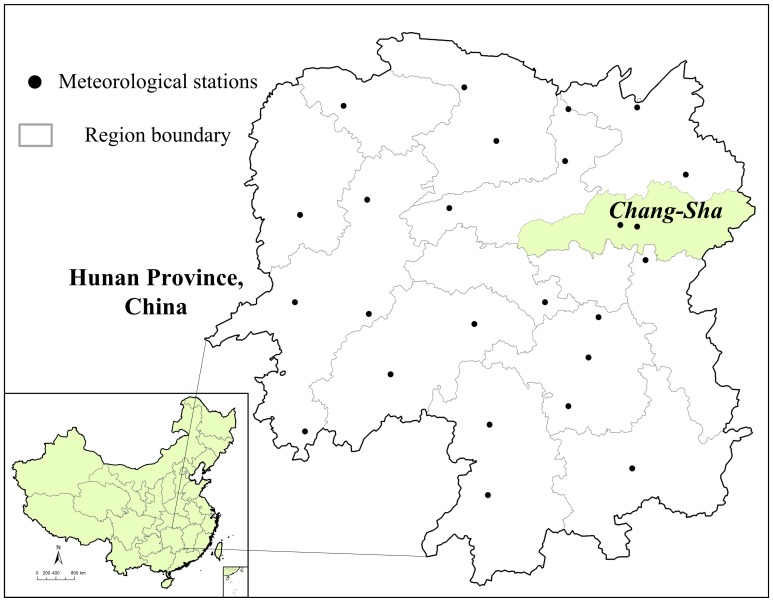
The transmission of hemorrhagic fever with renal syndrome (HFRS) is influenced by population dynamics of its main host, rodents. It is therefore important to better understand rodents' characteristic in epidemic areas.
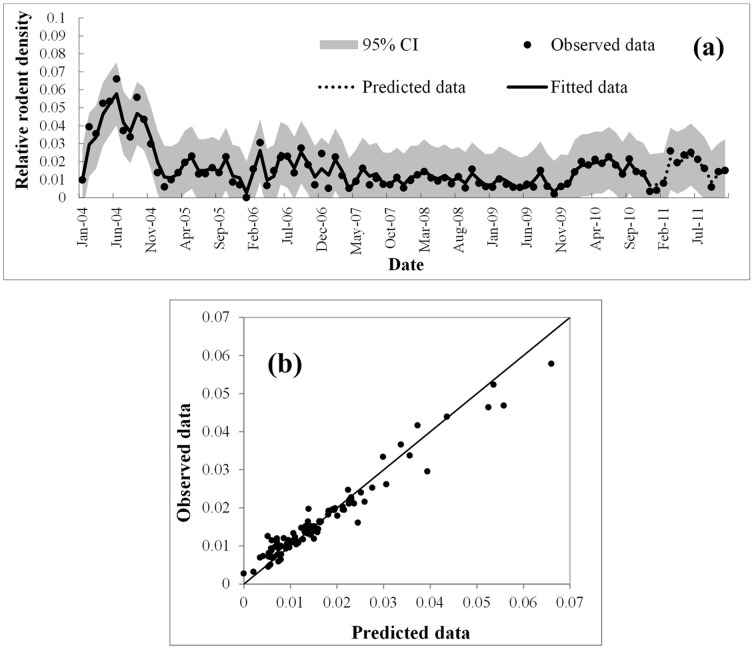
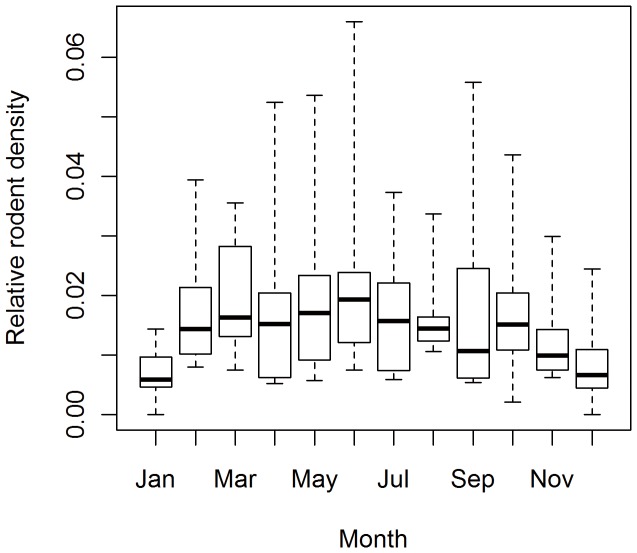
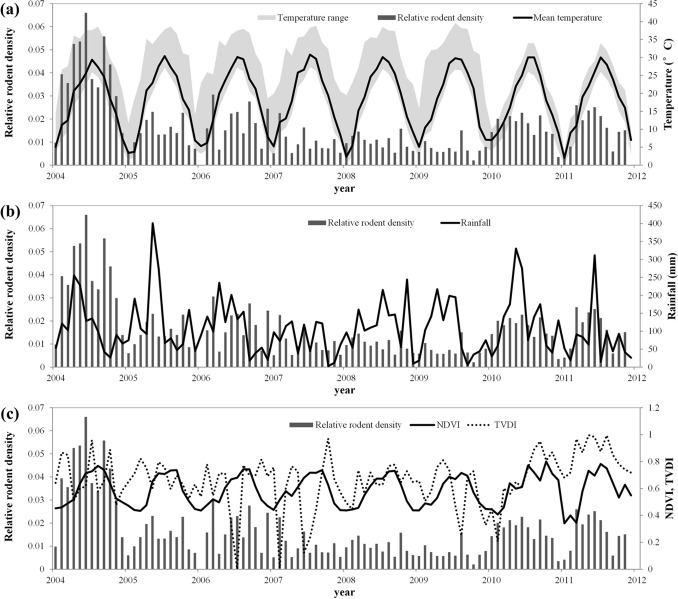
METHODOLOGY/PRINCIPAL FINDINGS: We examined the potential impact of food available and climatic variability on HFRS rodent host and developed forecasting models. Monthly rodent density of HFRS host and climate data in Changsha from January 2004 to December 2011 were obtained. Monthly normalized difference vegetation index (NDVI) and temperature vegetation dryness index (TVDI) for rice paddies were extracted from MODIS data. Cross-correlation analysis were carried out to explore correlation between climatic variables and food available with monthly rodent data. We used auto-regressive integrated moving average model with explanatory variables to examine the independent contribution of climatic variables and food supply to rodent density. The results indicated that relative rodent density of HFRS host was significantly correlated with monthly mean temperatures, monthly accumulative precipitation, TVDI and NDVI with lags of 1-6 months.
CONCLUSIONS/SIGNIFICANCE: Food available plays a significant role in population fluctuations of HFRS host in Changsha. The model developed in this study has implications for HFRS control and prevention.
肾综合征出血热(HFRS)的传播受其主要宿主啮齿动物种群动态的影响。因此,了解疫区啮齿动物的特征非常重要。
方法/主要发现:我们研究了食物供应和气候可变性对 HFRS 宿主啮齿动物的潜在影响,并开发了预测模型。我们获得了 2004 年 1 月至 2011 年 12 月长沙每月 HFRS 宿主啮齿动物密度和气候数据。从 MODIS 数据中提取了稻田逐月归一化差异植被指数(NDVI)和温度植被干燥指数(TVDI)。进行了交叉相关分析,以探讨气候变量与食物供应与每月啮齿动物数据之间的相关性。我们使用具有解释变量的自回归综合移动平均模型来检验气候变量和食物供应对啮齿动物密度的独立贡献。结果表明,HFRS 宿主的相对啮齿动物密度与 1-6 个月的月平均温度、月累积降水量、TVDI 和 NDVI 显著相关。
结论/意义:食物供应对长沙 HFRS 宿主的种群波动起着重要作用。本研究中开发的模型对 HFRS 的控制和预防具有重要意义。