Key Laboratory of Public Health Safety, Ministry of Education, School of Public Health, Fudan University, Shanghai, China.
PLoS One. 2013 May 7;8(5):e62526. doi: 10.1371/journal.pone.0062526. Print 2013.
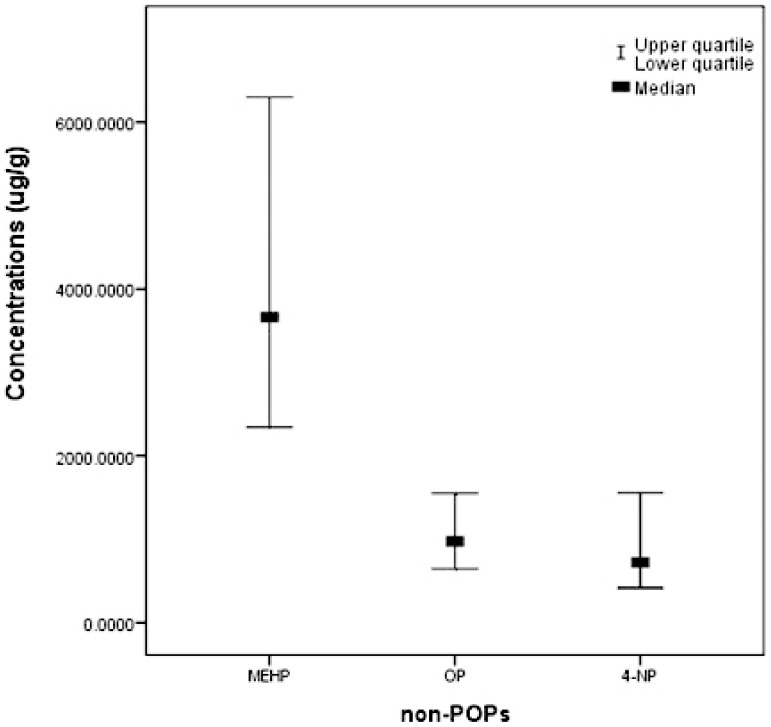
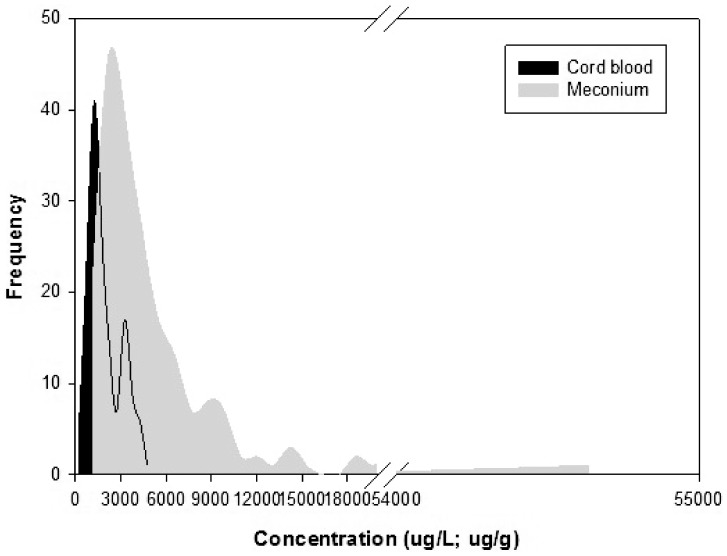
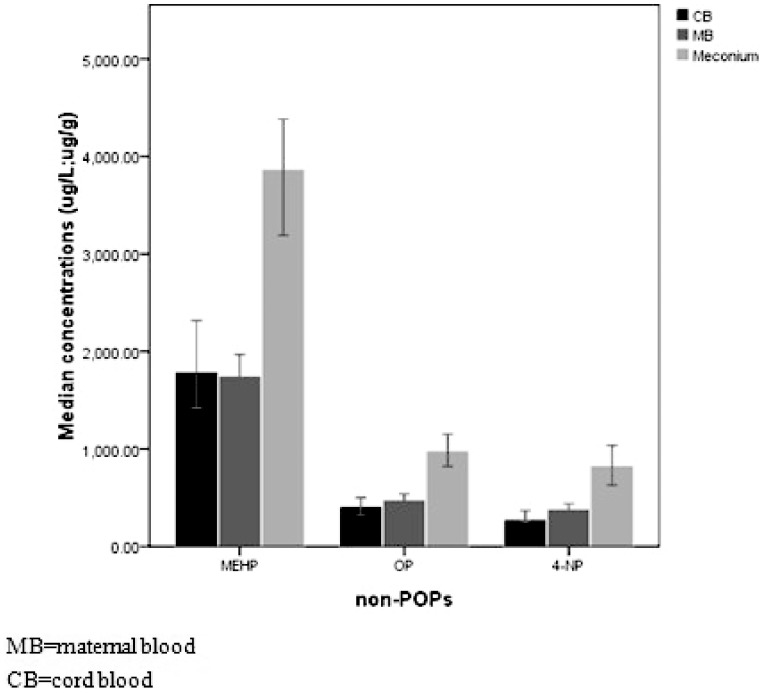
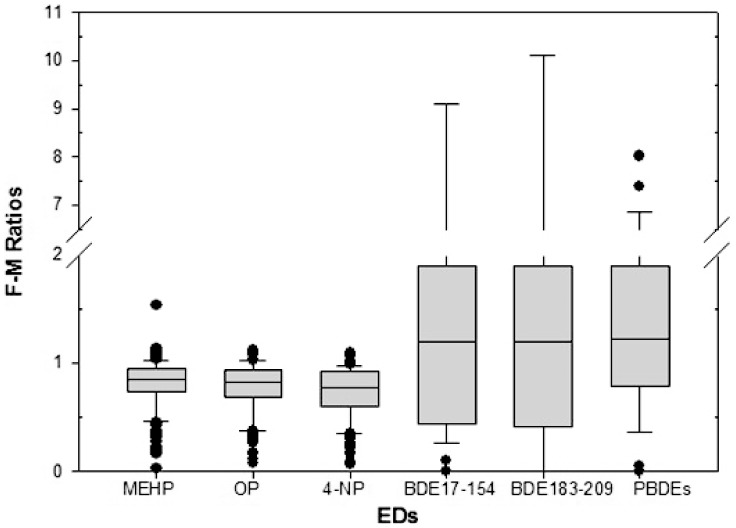
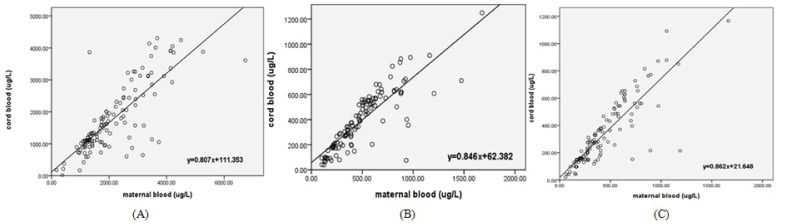
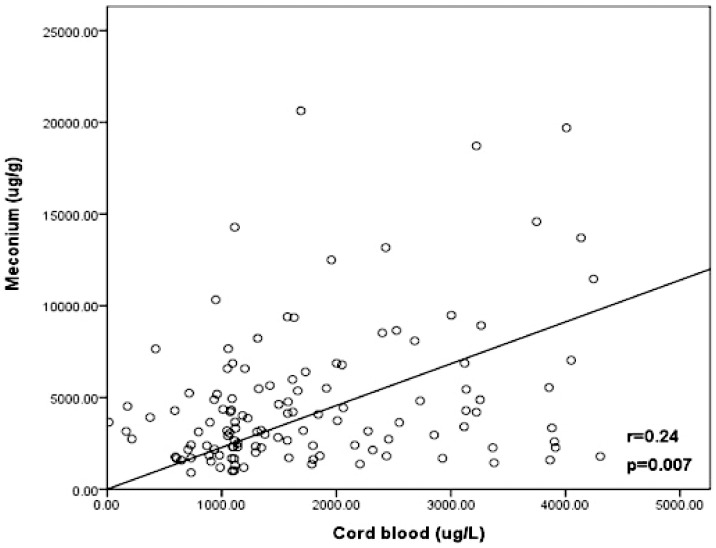
There is a growing concern about the potential health effects of exposure to various environmental chemicals during pregnancy and infancy. The placenta is expected to be an effective barrier protecting the developing embryo against some endocrine disruptors (EDs) circulating in maternal blood. The current study was designed to assess in utero exposure levels of non-persistent organic pollutants (non-POPs) and persistent organic pollutants (POPs) in Chinese newborns and potential role of placenta barrier against fetal exposure to these commonly-used environmental endocrine disruptors. A total of 230 newborn-mother pairs were enrolled during 2010-2011, 201 pairs of which were recruited from Shanghai, and the other 29 pairs came from Wenzhou. Maternal blood, cord blood, and meconium specimens were collected in the subject population from Shanghai and analyzed for non-POPs, including mono-2-ethylhexyl phthalate (MEHP), octylphenol (OP) and 4-nonylphenol (4-NP). A total of 19 polybrominated diphenyl ethers (PBDEs) congeners, which belong to POPs, were detected in maternal and cord blood specimens from the other 29 pairs. Fetal-maternal ratios (F-M ratios) and regression coefficients were presented to assess potential function of placenta on barricading the mother/fetal transfer of these EDs. Concentrations of the detected non-POPs in cord blood samples were approximately 20% lower than those in maternal blood, and regression coefficients of which were all over 0.80. In contrast, PBDEs levels in cord blood samples were significantly higher than those in maternal blood. MEHP levels in meconium were much higher than those in cord blood samples, and highly correlated. Therefore, observations demonstrated that the placental barrier slightly decreased the fetal exposure to most non-POPs, while PBDEs seemed to be totally transferred across the placenta and finally reached the fetus. For in utero exposure assessment of Di-2-ethylhexyl phthalate (DEHP), MEHP level in meconium may be a useful biomarker.
人们越来越关注孕妇和婴儿接触各种环境化学物质对健康产生的潜在影响。胎盘被认为是一种有效的屏障,可以保护发育中的胚胎免受母体血液中循环的某些内分泌干扰物(EDs)的影响。本研究旨在评估中国新生儿体内非持久性有机污染物(non-POPs)和持久性有机污染物(POPs)的暴露水平,以及胎盘屏障对这些常用环境内分泌干扰物胎儿暴露的潜在作用。2010-2011 年期间共招募了 230 对母婴,其中 201 对来自上海,另外 29 对来自温州。在上海的研究对象人群中采集了母体血液、脐带血和胎粪样本,并对其进行了非持久性有机污染物分析,包括邻苯二甲酸单-2-乙基己酯(MEHP)、辛基酚(OP)和 4-壬基酚(4-NP)。在来自另外 29 对母婴的母体和脐带血样本中检测到 19 种多溴二苯醚(PBDEs)同系物,属于持久性有机污染物。胎儿-母体比(F-M 比)和回归系数用于评估胎盘对这些 EDs 进行母体/胎儿转移的潜在功能。脐带血样本中检测到的非持久性有机污染物浓度比母体血液中的浓度约低 20%,回归系数均大于 0.80。相比之下,脐带血样本中的 PBDEs 水平明显高于母体血液。胎粪中的 MEHP 浓度明显高于脐带血样本,且相关性较高。因此,这些观察结果表明,胎盘屏障轻微降低了大多数非持久性有机污染物对胎儿的暴露,而 PBDEs 似乎完全穿过胎盘并最终到达胎儿。对于邻苯二甲酸二-2-乙基己酯(DEHP)的宫内暴露评估,胎粪中的 MEHP 水平可能是一种有用的生物标志物。