Laboratory of Organic Chemistry, ETH Zurich, Zurich, Switzerland.
Nat Chem Biol. 2013 Aug;9(8):494-8. doi: 10.1038/nchembio.1276. Epub 2013 Jun 9.
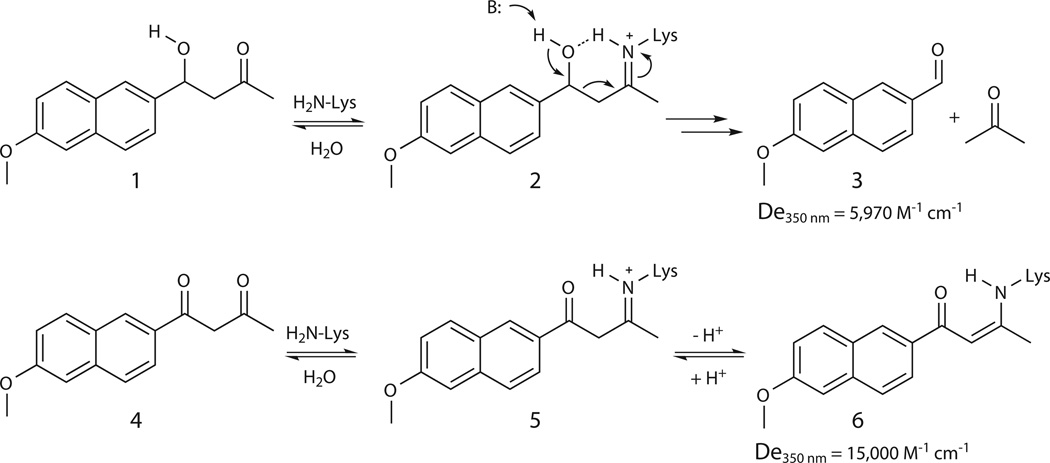
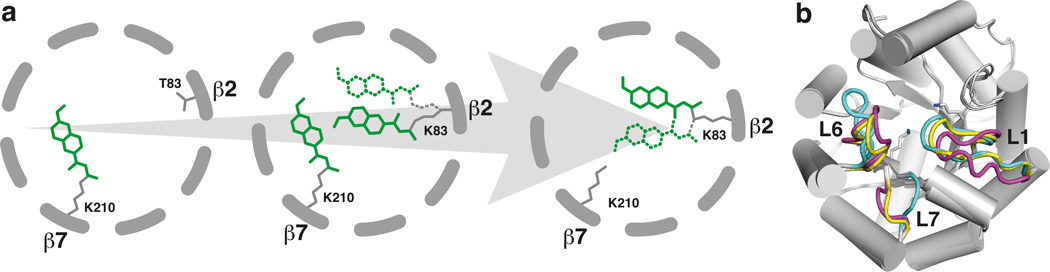
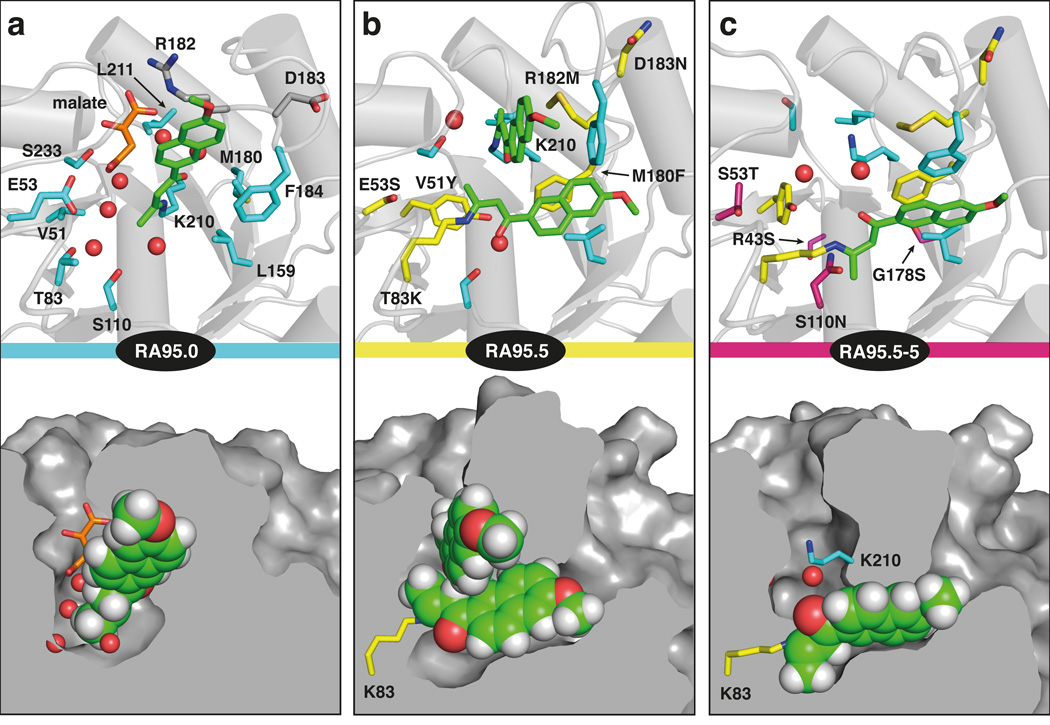
Evolutionary advances are often fueled by unanticipated innovation. Directed evolution of a computationally designed enzyme suggests that pronounced molecular changes can also drive the optimization of primitive protein active sites. The specific activity of an artificial retro-aldolase was boosted >4,400-fold by random mutagenesis and screening, affording catalytic efficiencies approaching those of natural enzymes. However, structural and mechanistic studies reveal that the engineered catalytic apparatus, consisting of a reactive lysine and an ordered water molecule, was unexpectedly abandoned in favor of a new lysine residue in a substrate-binding pocket created during the optimization process. Structures of the initial in silico design, a mechanistically promiscuous intermediate and one of the most evolved variants highlight the importance of loop mobility and supporting functional groups in the emergence of the new catalytic center. Such internal competition between alternative reactive sites may have characterized the early evolution of many natural enzymes.
进化的进步往往是由意想不到的创新所推动的。通过对计算设计的酶进行定向进化,表明显著的分子变化也可以推动原始蛋白质活性位点的优化。通过随机诱变和筛选,人工反醛缩酶的比活性提高了>4400 倍,其催化效率接近天然酶。然而,结构和机制研究表明,工程催化装置由一个反应性赖氨酸和一个有序的水分子组成,出乎意料地被放弃,转而使用在优化过程中在底物结合口袋中产生的新赖氨酸残基。最初的计算机设计、一种具有混杂机制的中间产物和一个进化程度最高的变体的结构突出了环的流动性和支持功能基团在新催化中心出现中的重要性。这种替代反应性位点之间的内部竞争可能是许多天然酶早期进化的特征。