Department of Biomedical Engineering, Washington University, St. Louis, MO 63130, USA.
Curr Opin Biotechnol. 2013 Oct;24(5):887-92. doi: 10.1016/j.copbio.2013.05.006. Epub 2013 Jun 19.
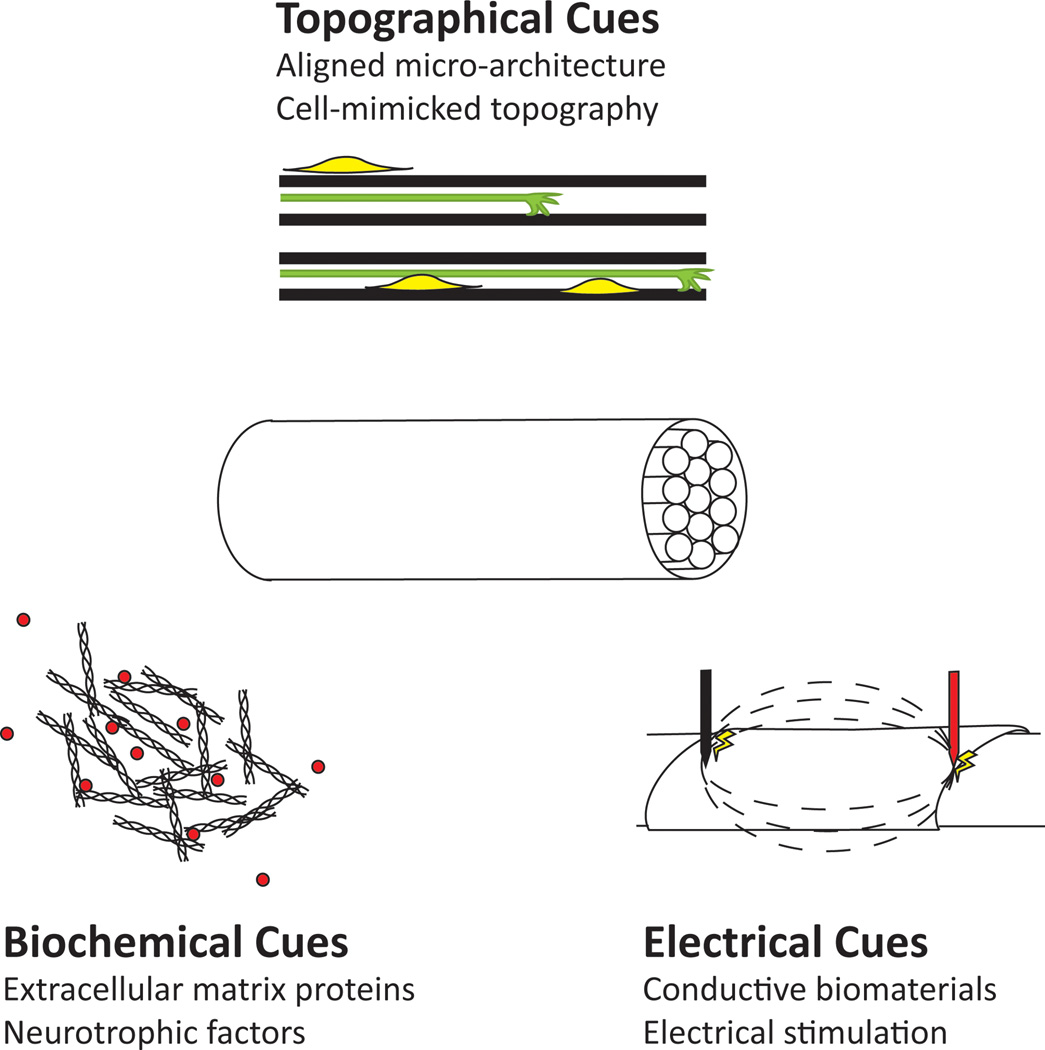
Current approaches for treating peripheral nerve injury have resulted in promising, yet insufficient functional recovery compared to the clinical standard of care, autologous nerve grafts. In order to design a construct that can match the regenerative potential of the autograft, all facets of nerve tissue must be incorporated in a combinatorial therapy. Engineered biomaterial scaffolds in the future will have to promote enhanced regeneration and appropriate reinnervation by targeting the highly sensitive response of regenerating nerves to their surrounding microenvironment.
目前治疗周围神经损伤的方法与自体神经移植的临床标准相比,取得了有希望但仍不充分的功能恢复。为了设计一种可以与自体移植物的再生潜力相匹配的构建体,必须将神经组织的各个方面纳入组合治疗中。未来的工程生物材料支架将通过针对再生神经对其周围微环境的高度敏感反应,促进增强的再生和适当的再神经支配。