• 文献检索
  • 文档翻译
  • 深度研究
  • 学术资讯
  • Suppr Zotero 插件Zotero 插件
  • 邀请有礼
  • 套餐&价格
  • 历史记录
应用&插件
Suppr Zotero 插件Zotero 插件浏览器插件Mac 客户端Windows 客户端微信小程序
定价
高级版会员购买积分包购买API积分包
服务
文献检索文档翻译深度研究API 文档MCP 服务
关于我们
关于 Suppr公司介绍联系我们用户协议隐私条款
关注我们

Suppr 超能文献

核心技术专利:CN118964589B侵权必究
粤ICP备2023148730 号-1Suppr @ 2026

文献检索

告别复杂PubMed语法,用中文像聊天一样搜索,搜遍4000万医学文献。AI智能推荐,让科研检索更轻松。

立即免费搜索

文件翻译

保留排版,准确专业,支持PDF/Word/PPT等文件格式,支持 12+语言互译。

免费翻译文档

深度研究

AI帮你快速写综述,25分钟生成高质量综述,智能提取关键信息,辅助科研写作。

立即免费体验

中国南京流行的犬细小病毒的基因分型及病理生物学特征

Genotyping and pathobiologic characterization of canine parvovirus circulating in Nanjing, China.

作者信息

Zhao Yanbing, Lin Yan, Zeng Xujian, Lu Chengping, Hou Jiafa

机构信息

College of Veterinary Medicine, Nanjing Agricultural University, Nanjing, China.

出版信息

Virol J. 2013 Aug 29;10:272. doi: 10.1186/1743-422X-10-272.

DOI:10.1186/1743-422X-10-272
PMID:23988202
原文链接:https://pmc.ncbi.nlm.nih.gov/articles/PMC3844316/
Abstract

BACKGROUND

Canine parvovirus (CPV) is an important pathogen that causes acute enteric disease in dogs. It has mutated and spread throughout the world in dog populations. We provide an update on the molecular characterization of CPV that circulated in Nanjing, a provincial capital in China between 2009 and 2012.

RESULTS

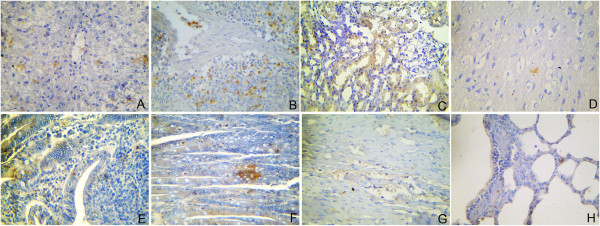
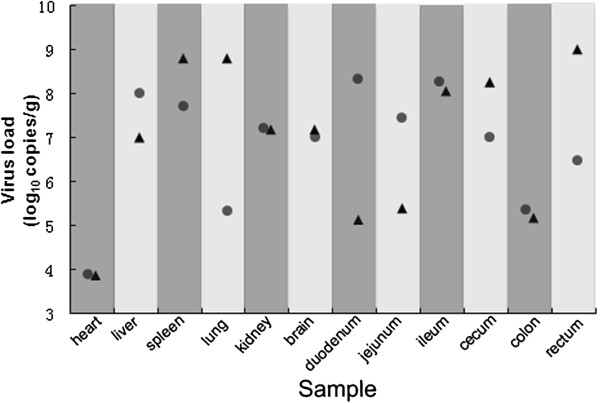
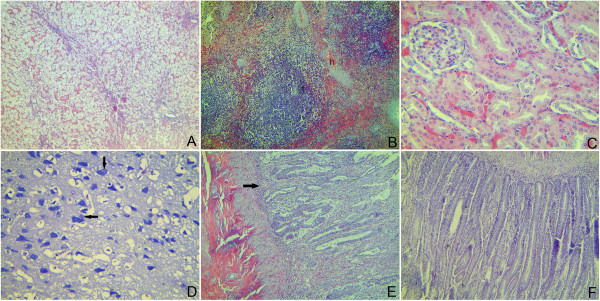
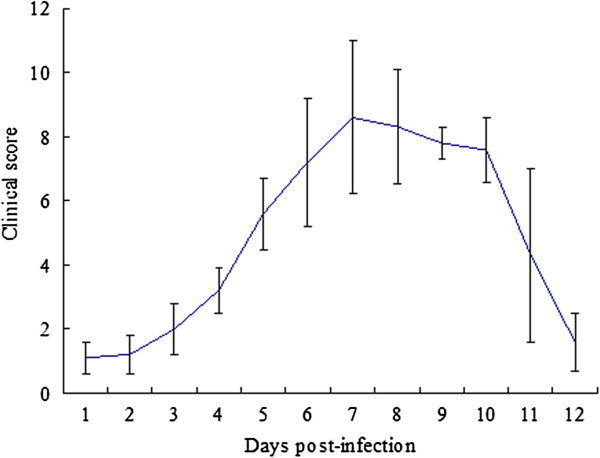
Seventy rectal swab samples were collected from the dogs diagnosed with CPV infection in 8 animal hospitals of Nanjing. Sequence analysis of VP2 genes of 31 samples revealed that 29 viral strains belonged to CPV-2a subtype, while other two strains were classified into CPV-2b. To investigate the pathogenicity of the prevalent virus, we isolated CPV-2a and performed the animal experiment. Nine beagles were inoculated with 105.86 of 50% tissue culture infectious doses (TCID50) of the virus. All the experimentally infected beagles exhibited mild to moderate mucoid or watery diarrhea on day 4 post-infection (p.i.). On day 9 p.i., characteristic histopathological lesions were clearly observed in multiple organs of infected dogs, including liver, spleen, kidney, brain and all segments of the small and large intestines, while viral DNA and antigen staining could be detected in the sampled tissues. It is notable that canine parvovirus was isolated in one from two brain samples processed.

CONCLUSION

Our results indicated that CPV-2a is the predominant subtype in Nanjing of China. And this virus caused extensive lesions in a variety of tissues, including the brain.

摘要

背景

犬细小病毒(CPV)是引起犬急性肠道疾病的重要病原体。它已发生变异并在全球犬类种群中传播。我们提供了2009年至2012年间在中国省会南京流行的CPV分子特征的最新情况。

结果

从南京8家动物医院诊断为CPV感染的犬只中采集了70份直肠拭子样本。对31份样本的VP2基因进行序列分析,结果显示29株病毒属于CPV-2a亚型,另外两株属于CPV-2b亚型。为研究流行病毒的致病性,我们分离了CPV-2a并进行了动物实验。9只比格犬接种了105.86的50%组织培养感染剂量(TCID50)的病毒。所有实验感染的比格犬在感染后第4天均出现轻度至中度的黏液样或水样腹泻。在感染后第9天,在感染犬的多个器官中明显观察到特征性的组织病理学损伤,包括肝脏、脾脏、肾脏、大脑以及小肠和大肠的所有节段,同时在采样组织中可检测到病毒DNA和抗原染色。值得注意的是,在处理的两份脑样本中有一份分离出了犬细小病毒。

结论

我们的结果表明,CPV-2a是中国南京的主要亚型。并且这种病毒在包括大脑在内的多种组织中引起了广泛的损伤。
https://cdn.ncbi.nlm.nih.gov/pmc/blobs/ca72/3844316/2fe99f1b3658/1743-422X-10-272-4.jpg
https://cdn.ncbi.nlm.nih.gov/pmc/blobs/ca72/3844316/20dd99ab7c02/1743-422X-10-272-1.jpg
https://cdn.ncbi.nlm.nih.gov/pmc/blobs/ca72/3844316/febdfad6a322/1743-422X-10-272-2.jpg
https://cdn.ncbi.nlm.nih.gov/pmc/blobs/ca72/3844316/48871c12efdf/1743-422X-10-272-3.jpg
https://cdn.ncbi.nlm.nih.gov/pmc/blobs/ca72/3844316/2fe99f1b3658/1743-422X-10-272-4.jpg
https://cdn.ncbi.nlm.nih.gov/pmc/blobs/ca72/3844316/20dd99ab7c02/1743-422X-10-272-1.jpg
https://cdn.ncbi.nlm.nih.gov/pmc/blobs/ca72/3844316/febdfad6a322/1743-422X-10-272-2.jpg
https://cdn.ncbi.nlm.nih.gov/pmc/blobs/ca72/3844316/48871c12efdf/1743-422X-10-272-3.jpg
https://cdn.ncbi.nlm.nih.gov/pmc/blobs/ca72/3844316/2fe99f1b3658/1743-422X-10-272-4.jpg

相似文献

1
Genotyping and pathobiologic characterization of canine parvovirus circulating in Nanjing, China.中国南京流行的犬细小病毒的基因分型及病理生物学特征
Virol J. 2013 Aug 29;10:272. doi: 10.1186/1743-422X-10-272.
2
Phylogenetic analysis of the VP2 gene of canine parvoviruses circulating in China.中国流行的犬细小病毒VP2基因的系统发育分析。
Virus Genes. 2010 Jun;40(3):397-402. doi: 10.1007/s11262-010-0466-7. Epub 2010 Mar 9.
3
Isolation and sequence analysis of the complete NS1 and VP2 genes of canine parvovirus from domestic dogs in 2013 and 2014 in China.2013年和2014年中国家犬中犬细小病毒完整NS1和VP2基因的分离与序列分析
Arch Virol. 2016 Feb;161(2):385-93. doi: 10.1007/s00705-015-2620-y. Epub 2015 Nov 14.
4
Isolation and sequence analysis of the complete VP2 gene of canine parvovirus from Chinese domestic pets and determination of the pathogenesis of these circulating strains in beagles.中国家养宠物犬细小病毒VP2全基因的分离、序列分析及这些流行毒株在比格犬中的致病性测定
Pol J Vet Sci. 2019 Jun;22(2):287-296. doi: 10.24425/pjvs.2019.129219.
5
Analysis of VP2 gene sequences of canine parvovirus isolates in India.印度犬细小病毒分离株VP2基因序列分析
Arch Virol. 2006 Sep;151(9):1881-7. doi: 10.1007/s00705-006-0753-8. Epub 2006 Apr 3.
6
Molecular epidemiology of canine parvovirus type 2 in Italy from 1994 to 2017: recurrence of the CPV-2b variant.意大利 1994 年至 2017 年犬细小病毒 2 型的分子流行病学:CPV-2b 变异株的重现。
BMC Vet Res. 2019 Nov 4;15(1):393. doi: 10.1186/s12917-019-2096-1.
7
Molecular analysis of partial VP-2 gene amplified from rectal swab samples of diarrheic dogs in Pakistan confirms the circulation of canine parvovirus genetic variant CPV-2a and detects sequences of feline panleukopenia virus (FPV).对巴基斯坦腹泻犬直肠拭子样本中扩增的部分 VP-2 基因进行分子分析证实了犬细小病毒遗传变异株 CPV-2a 的流行,并检测到猫泛白细胞减少症病毒 (FPV) 的序列。
Virol J. 2018 Mar 15;15(1):45. doi: 10.1186/s12985-018-0958-y.
8
Full-length genomic characterization and molecular evolution of canine parvovirus in China.中国犬细小病毒的全基因组特征及分子进化
Virus Genes. 2016 Jun;52(3):411-6. doi: 10.1007/s11262-016-1309-y. Epub 2016 Apr 2.
9
Molecular epidemiology of canine parvovirus type 2 in Vietnam from November 2016 to February 2018.2016 年 11 月至 2018 年 2 月越南犬细小病毒 2 型的分子流行病学研究。
Virol J. 2019 Apr 27;16(1):52. doi: 10.1186/s12985-019-1159-z.
10
Phylogenetic Analysis of Canine Parvovirus VP2 Gene in China.中国犬细小病毒VP2基因的系统发育分析
Transbound Emerg Dis. 2016 Apr;63(2):e262-9. doi: 10.1111/tbed.12268. Epub 2014 Sep 11.

引用本文的文献

1
Prevalence and Molecular Evolution of Parvovirus in Cats in Eastern Shandong, China, between 2021 and 2022.2021年至2022年中国山东东部猫细小病毒的流行情况及分子进化
Transbound Emerg Dis. 2024 Jan 5;2024:5514806. doi: 10.1155/2024/5514806. eCollection 2024.
2
Metagenomic Analysis of DNA Viruses with Targeted Sequence Capture of Canine Lobular Orbital Adenomas and Normal Conjunctiva.犬小叶眶腺瘤和正常结膜DNA病毒的宏基因组分析及靶向序列捕获
Microorganisms. 2023 Apr 28;11(5):1163. doi: 10.3390/microorganisms11051163.
3
Prevalence and Characteristics of Canine Parvovirus Type 2 in Henan Province, China.

本文引用的文献

1
First detection of canine parvovirus type 2c in Brazil.巴西首次检测到犬细小病毒 2c 型。
Braz J Microbiol. 2009 Jul;40(3):465-9. doi: 10.1590/S1517-83822009000200008. Epub 2009 Sep 1.
2
Typing of canine parvovirus strains circulating in Brazil between 2008 and 2010.2008 年至 2010 年期间在巴西流行的犬细小病毒株的分型。
Virus Res. 2012 Apr;165(1):29-33. doi: 10.1016/j.virusres.2012.01.001. Epub 2012 Jan 8.
3
Canine parvovirus--a review of epidemiological and diagnostic aspects, with emphasis on type 2c.犬细小病毒——流行病学和诊断方面的综述,重点介绍 2c 型。
中国河南省犬细小病毒 2 型的流行情况及特征。
Microbiol Spectr. 2022 Dec 21;10(6):e0185622. doi: 10.1128/spectrum.01856-22. Epub 2022 Nov 15.
4
Genetic characterization and evolutionary analysis of canine parvovirus in Tangshan, China.中国唐山犬细小病毒的遗传特征及进化分析。
Arch Virol. 2022 Nov;167(11):2263-2269. doi: 10.1007/s00705-022-05502-x. Epub 2022 Jul 12.
5
A canine-derived chimeric antibody with high neutralizing activity against canine parvovirus-2.一种对犬细小病毒-2具有高中和活性的犬源嵌合抗体。
AMB Express. 2022 Jun 15;12(1):76. doi: 10.1186/s13568-022-01416-8.
6
Antimicrobial Resistance (AMR) of Bacteria Isolated from Dogs with Canine Parvovirus (CPV) Infection: The Need for a Rational Use of Antibiotics in Companion Animal Health.从感染犬细小病毒(CPV)的犬只中分离出的细菌的抗菌药物耐药性(AMR):伴侣动物健康中合理使用抗生素的必要性。
Antibiotics (Basel). 2022 Jan 23;11(2):142. doi: 10.3390/antibiotics11020142.
7
Phylogenetic analysis of canine parvovirus 2 subtypes from diarrheic dogs in Iran.来自伊朗腹泻犬的犬细小病毒2型亚型的系统发育分析。
Iran J Vet Res. 2021 Fall;22(4):347-351. doi: 10.22099/IJVR.2021.40878.5925.
8
Molecular Epidemiological Survey of Canine Parvovirus Circulating in China from 2014 to 2019.2014年至2019年中国犬细小病毒流行情况的分子流行病学调查
Pathogens. 2021 May 11;10(5):588. doi: 10.3390/pathogens10050588.
9
Genetic Characterisation and Local Genotypes of Canine Parvovirus Strains Collected from Pet Dogs in Central and Eastern China During 2018-2019.2018 - 2019年期间从中国中部和东部宠物狗中收集的犬细小病毒毒株的基因特征及本地基因型
J Vet Res. 2020 Nov 19;64(4):477-486. doi: 10.2478/jvetres-2020-0076. eCollection 2020 Dec.
10
A systematic literature review and meta-analysis of characterization of canine parvoviruses 2 prevalent in mainland China.中国大陆流行犬细小病毒 2 型的特征描述的系统文献回顾和荟萃分析。
Virol J. 2020 Dec 11;17(1):195. doi: 10.1186/s12985-020-01462-3.
Vet Microbiol. 2012 Feb 24;155(1):1-12. doi: 10.1016/j.vetmic.2011.09.007. Epub 2011 Sep 12.
4
Monitoring of canine parvovirus (CPV) strains detected in vaccinated puppies in Brazil.监测巴西接种疫苗幼犬中检测到的犬细小病毒(CPV)毒株。
Res Vet Sci. 2011 Apr;90(2):336-40. doi: 10.1016/j.rvsc.2010.06.005. Epub 2010 Jul 6.
5
Leukoencephalopathy associated with parvovirus infection in Cretan hound puppies.与克里特猎犬幼犬细小病毒感染相关的脑白质病。
J Clin Microbiol. 2010 Sep;48(9):3169-75. doi: 10.1128/JCM.01582-09. Epub 2010 Jun 30.
6
Phylogenetic analysis of the VP2 gene of canine parvoviruses circulating in China.中国流行的犬细小病毒VP2基因的系统发育分析。
Virus Genes. 2010 Jun;40(3):397-402. doi: 10.1007/s11262-010-0466-7. Epub 2010 Mar 9.
7
Western European epidemiological survey for parvovirus and coronavirus infections in dogs.西欧地区犬细小病毒和冠状病毒感染的流行病学调查。
Vet J. 2011 Feb;187(2):195-9. doi: 10.1016/j.tvjl.2009.10.027. Epub 2009 Nov 25.
8
Modern uses of electron microscopy for detection of viruses.电子显微镜在病毒检测中的现代应用。
Clin Microbiol Rev. 2009 Oct;22(4):552-63. doi: 10.1128/CMR.00027-09.
9
Occurrence of canine parvovirus type 2c in the dogs with haemorrhagic enteritis in India.在印度患有出血性肠炎的犬中发现犬细小病毒 2c 型。
Res Vet Sci. 2010 Feb;88(1):169-71. doi: 10.1016/j.rvsc.2009.05.018. Epub 2009 Jun 23.
10
Molecular characterization of canine parvovirus strains in Argentina: Detection of the pathogenic variant CPV2c in vaccinated dogs.阿根廷犬细小病毒毒株的分子特征:在接种疫苗的犬只中检测到致病性变异株CPV2c
J Virol Methods. 2009 Aug;159(2):141-5. doi: 10.1016/j.jviromet.2009.03.013. Epub 2009 Mar 25.