Delporte Fabienne, Pretova Anna, du Jardin Patrick, Watillon Bernard
Department of Life Sciences, Bioengineering Unit, Walloon Agricultural Research Centre (CRA-W), Chaussée de Charleroi 234, 5030, Gembloux, Belgium,
Protoplasma. 2014 Nov;251(6):1455-70. doi: 10.1007/s00709-014-0647-7. Epub 2014 Apr 25.
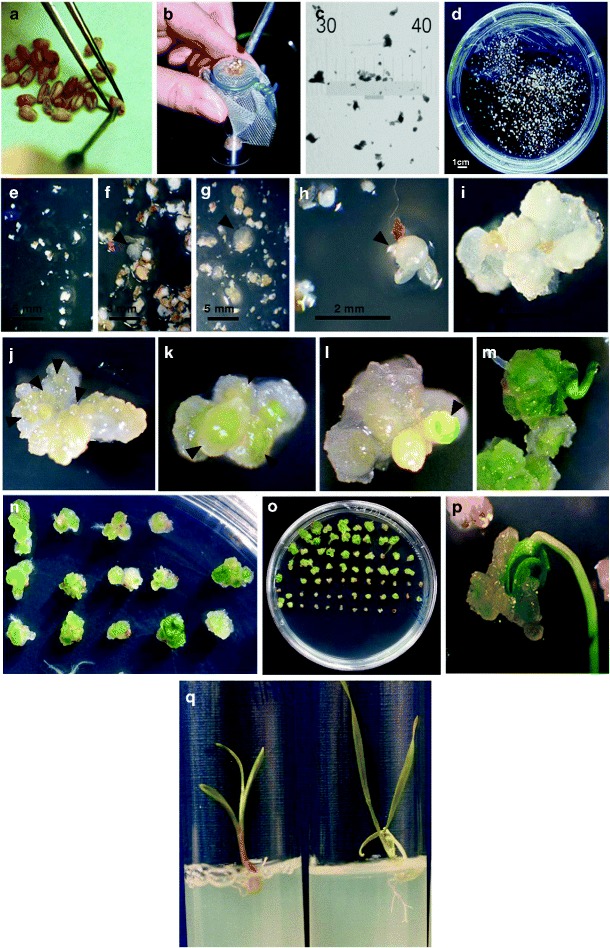
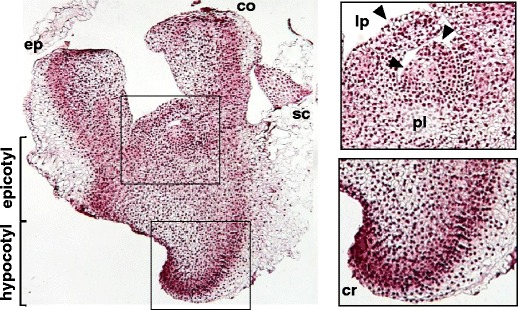
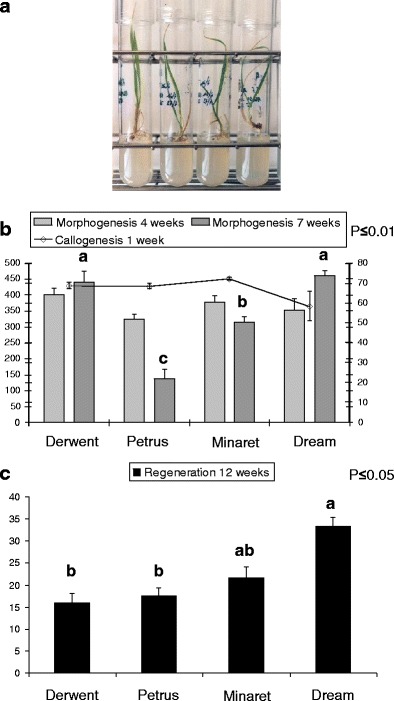
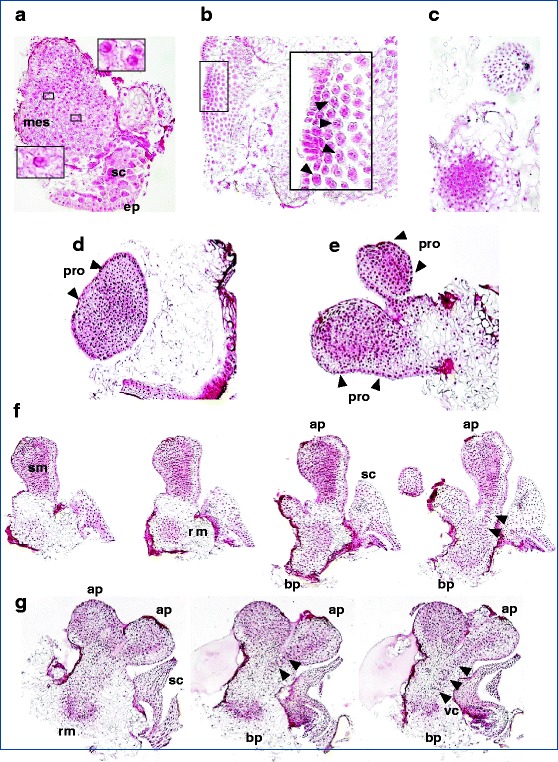
Cellular totipotency is one of the basic principles of plant biotechnology. Currently, the success of the procedure used to produce transgenic plants is directly proportional to the successful insertion of foreign DNA into the genome of suitable target tissue/cells that are able to regenerate plants. The mature embryo (ME) is increasingly recognized as a valuable explant for developing regenerable cell lines in wheat biotechnology. We have previously developed a regeneration procedure based on fragmented ME in vitro culture. Before we can use this regeneration system as a model for molecular studies of the morphogenic pathway induced in vitro and investigate the functional links between regenerative capacity and transformation receptiveness, some questions need to be answered. Plant regeneration from cultured tissues is genetically controlled. Factors such as age/degree of differentiation and physiological conditions affect the response of explants to culture conditions. Plant regeneration in culture can be achieved through embryogenesis or organogenesis. In this paper, the suitability of ME tissues for tissue culture and the chronological series of morphological data observed at the macroscopic level are documented. Genetic variability at each step of the regeneration process was evaluated through a varietal comparison of several elite wheat cultivars. A detailed histological analysis of the chronological sequence of morphological events during ontogeny was conducted. Compared with cultures of immature zygotic embryos, we found that the embryogenic pathway occurs slightly earlier and is of a different origin in our model. Cytological, physiological, and some biochemical aspects of somatic embryo formation in wheat ME culture are discussed.
细胞全能性是植物生物技术的基本原理之一。目前,用于生产转基因植物的程序的成功与将外源DNA成功插入能够再生植物的合适靶组织/细胞的基因组直接相关。成熟胚(ME)越来越被认为是小麦生物技术中用于开发可再生细胞系的有价值外植体。我们之前基于体外培养的破碎成熟胚开发了一种再生程序。在我们能够将这个再生系统用作体外诱导形态发生途径的分子研究模型,并研究再生能力与转化感受性之间的功能联系之前,一些问题需要得到解答。从培养组织再生植物是受基因控制的。诸如年龄/分化程度和生理条件等因素会影响外植体对培养条件的反应。培养中的植物再生可以通过胚胎发生或器官发生来实现。本文记录了成熟胚组织对组织培养的适用性以及在宏观水平观察到的形态学数据的时间序列。通过对几个优良小麦品种的品种比较,评估了再生过程每个步骤的遗传变异性。对个体发育过程中形态学事件的时间序列进行了详细的组织学分析。与未成熟合子胚的培养相比,我们发现在我们的模型中胚胎发生途径发生得稍早且起源不同。讨论了小麦成熟胚培养中体细胞胚胎形成的细胞学、生理学和一些生化方面。