Ahangarpour Akram, Oroojan Ali Akbar, Radan Maryam
Health Research Institute, Diabetes Research Center, Department of Physiology, Ahvaz Jundishapour University of Medical Sciences, Ahvaz, Iran.
Student Research Committee, Ahvaz Jundishapur University of Medical Sciences, Ahvaz, Iran.
Iran J Reprod Med. 2014 Jan;12(1):65-72.
One of the considerable uses of lettuce (Lactuca sativa) seed in traditional medicine has been to reduce semen, sperm and sexuality.
The aim of this study was to investigate the effects of aqueous and hydro-alcoholic extracts of lettuce seed on testosterone level and spermatogenesis.
In this experimental study 24 adult male NMRI mice weighing 20-25gr were purchased. Animals were randomly divided into 4 groups: controls, hydro-alcoholic (200 mg/kg) and aqueous extracts (50, 100mg/kg). The extracts were injected intraperitoneally once a day for 10 consecutive days. 2 weeks after the last injection, the mice were anaesthetized by ether and after laparatomy blood was collected from the heart to determine testosterone by ELISA assay kit. Then testis and cauda epididymis of all animals were removed for analyzing testis morphology and sperm count and viability.
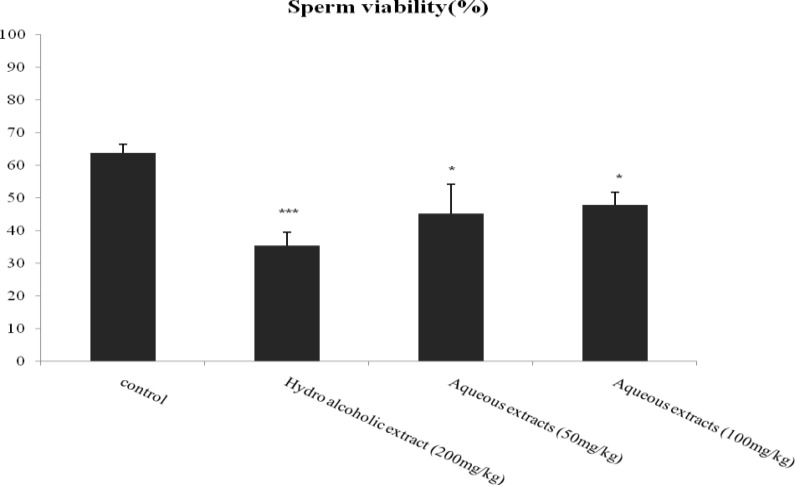
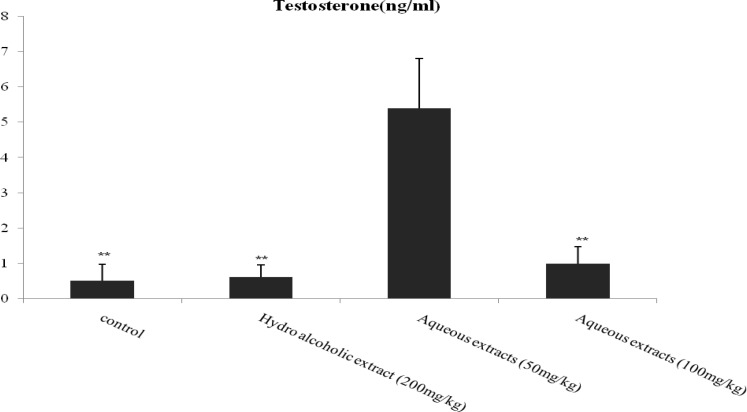
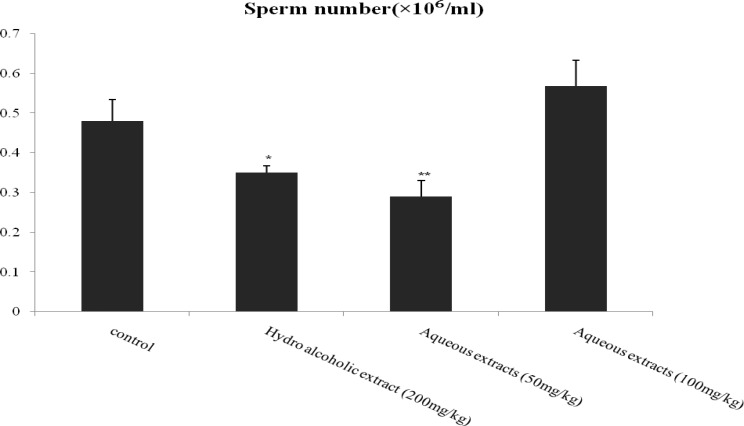
Testis weight in hydro-alcoholic and aqueous extracts 100 mg/kg (p=0.001) and aqueous extract 50 mg/kg (p=0.008) groups was increased. Sperm viability in hydro-alcoholic (p=0.001) and aqueous extracts 50 (p=0.026), 100 mg/kg (p=0.045) groups was decreased, Also the results showed a significant decrease in sperm count in hydro-alcoholic (p=0.035) and aqueous extracts 50 mg/kg (p=0.006) groups in comparison with control group. Also there was a significant increase in serum level of testosterone in aqueous extract 50 mg/kg group in comparison with control (p=0.002) hydro-alcoholic (p=0.001) and aqueous extracts 100 mg/kg (p=0.003) groups.
Present results demonstrated that hydro-alcoholic and aqueous 50 mg/kg extracts of lettuce seed have antispermatogenic effects, also aqueous extract 50 mg/kg increased serum level of testosterone in mice. Therefore we can suggest that lettuce seed could be a potential contraceptive agent. This article extracted from M.Sc. student research project. (Ali Akbar Oroojan).
生菜(莴苣)种子在传统医学中的一个重要用途是减少精液、精子和性欲。
本研究旨在探讨生菜种子水提取物和水醇提取物对睾酮水平和精子发生的影响。
在本实验研究中,购买了24只体重20 - 25克的成年雄性NMRI小鼠。将动物随机分为4组:对照组、水醇提取物组(200毫克/千克)和水提取物组(50、100毫克/千克)。提取物连续10天每天腹腔注射一次。最后一次注射2周后,用乙醚麻醉小鼠,剖腹后从心脏取血,用ELISA试剂盒测定睾酮。然后取出所有动物的睾丸和附睾尾,分析睾丸形态、精子计数和活力。
水醇提取物组和100毫克/千克水提取物组(p = 0.001)以及50毫克/千克水提取物组(p = 0.008)的睾丸重量增加。水醇提取物组(p = 0.001)和50(p = 0.026)、100毫克/千克水提取物组(p = 0.045)的精子活力降低,此外,结果显示水醇提取物组(p = 0.035)和50毫克/千克水提取物组与对照组相比精子计数显著降低(p = 0.006)。与对照组(p = 0.002)、水醇提取物组(p = 0.001)和100毫克/千克水提取物组(p = 0.003)相比,50毫克/千克水提取物组的血清睾酮水平也显著升高。
目前的结果表明,生菜种子的水醇提取物和50毫克/千克水提取物具有抗精子发生作用,50毫克/千克水提取物还可提高小鼠血清睾酮水平。因此,我们可以认为生菜种子可能是一种潜在的避孕剂。本文摘自硕士研究生研究项目。(阿里·阿克巴尔·奥鲁扬)