Park Jonghoon, Kazuko Ishikawa-Takata, Kim Eunkyung, Kim Jeonghyun, Yoon Jinsook
Department of Physical Education, Konkuk University, 120 Neungdong-ro, Gwangjin-gu, Seoul 143-701, Korea.
Department of Nutritional Education, National Institute of Health and Nutrition, Tokyo 162-8636, Japan.
Nutr Res Pract. 2014 Jun;8(3):241-8. doi: 10.4162/nrp.2014.8.3.241. Epub 2014 May 15.
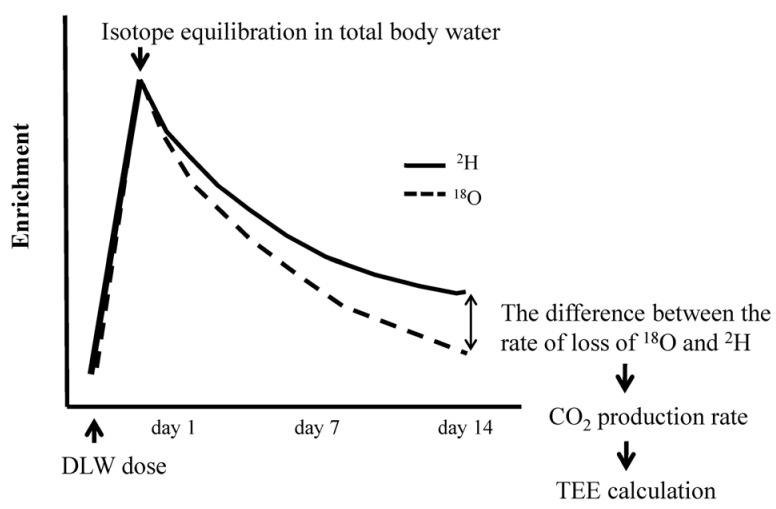
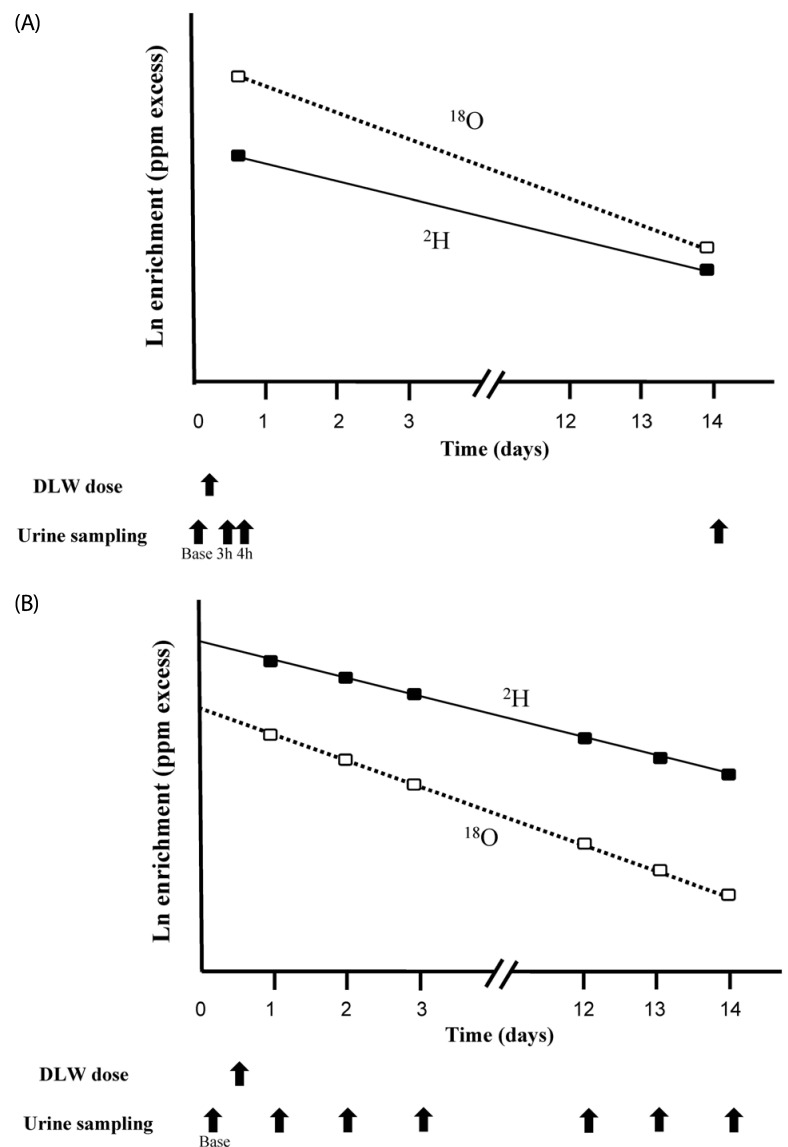
The accuracy and noninvasive nature of the doubly labeled water (DLW) method makes it ideal for the study of human energy metabolism in free-living conditions. However, the DLW method is not always practical in many developing and Asian countries because of the high costs of isotopes and equipment for isotope analysis as well as the expertise required for analysis. This review provides information about the theoretical background and practical aspects of the DLW method, including optimal dose, basic protocols of two- and multiple-point approaches, experimental procedures, and isotopic analysis. We also introduce applications of DLW data, such as determining the equations of estimated energy requirement and validation studies of energy intake.
双标水(DLW)法的准确性和非侵入性使其成为研究自由生活条件下人体能量代谢的理想方法。然而,由于同位素及同位素分析设备成本高昂,以及分析所需的专业知识,DLW法在许多发展中国家和亚洲国家并不总是可行的。本综述提供了有关DLW法的理论背景和实际操作方面的信息,包括最佳剂量、两点法和多点法的基本方案、实验步骤以及同位素分析。我们还介绍了DLW数据的应用,如确定估计能量需求方程和能量摄入验证研究。