Amrani Amira, Bergon Aurélie, Holota Hélène, Tamburini Christian, Garel Marc, Ollivier Bernard, Imbert Jean, Dolla Alain, Pradel Nathalie
Aix-Marseille Université, Université du Sud Toulon-Var, CNRS/INSU, IRD, MIO, UM110, Marseille, France; Aix-Marseille Université, CNRS, LCB-UMR7283, Marseille, France.
Inserm, U1090, TGML/TAGC, Marseille, France; Aix Marseille Université, UMR_S 1090, TGML/TAGC, Marseille, France.
PLoS One. 2014 Sep 12;9(9):e106831. doi: 10.1371/journal.pone.0106831. eCollection 2014.
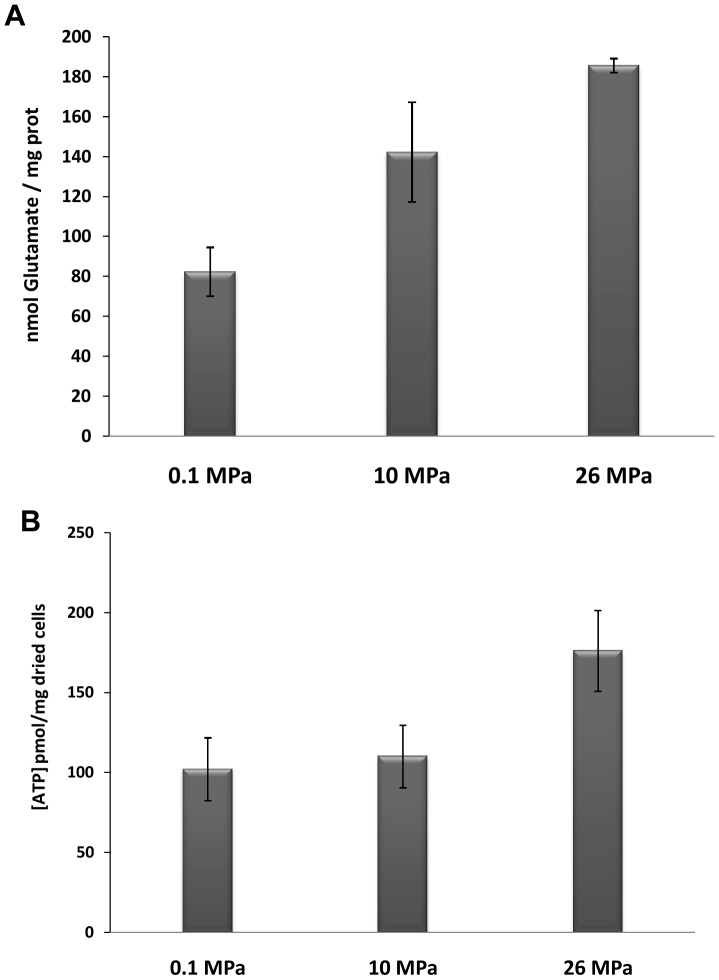
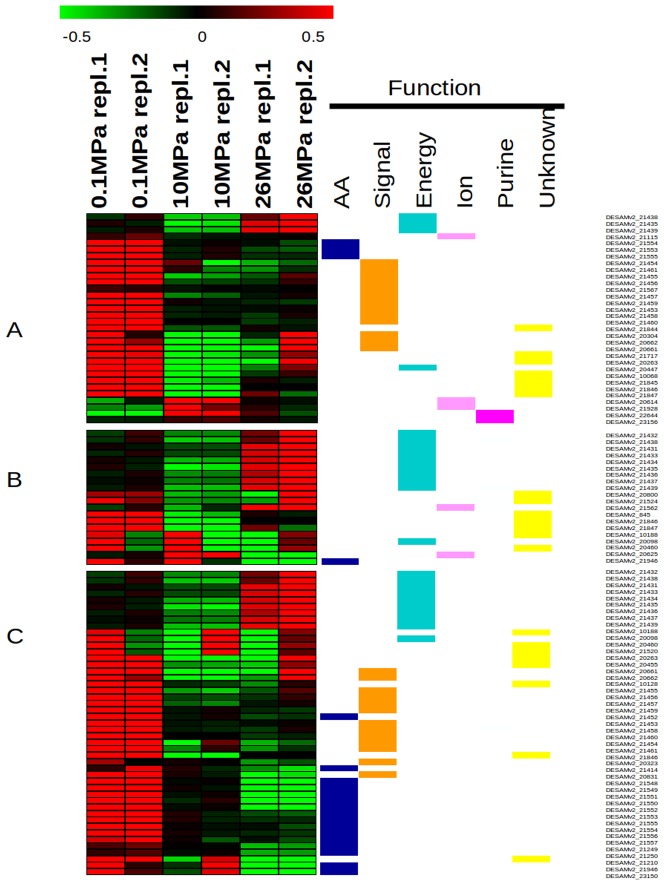
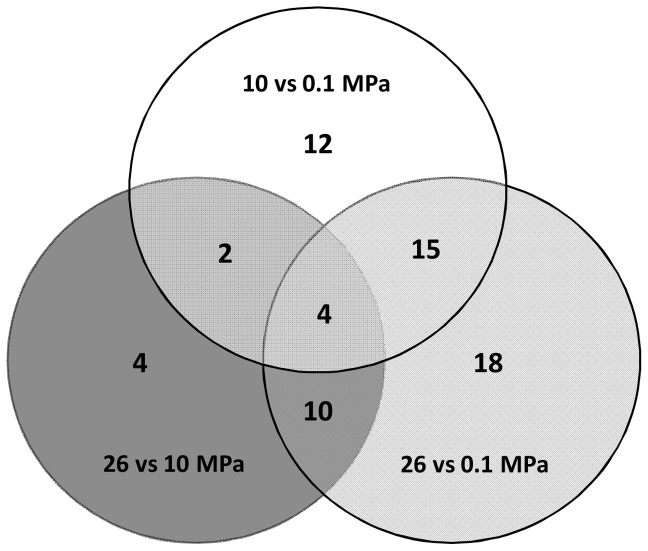
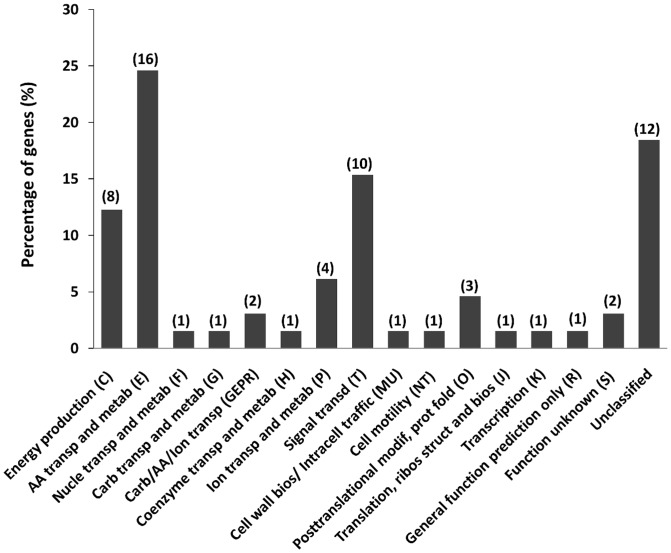
RNA-seq was used to study the response of Desulfovibrio hydrothermalis, isolated from a deep-sea hydrothermal chimney on the East-Pacific Rise at a depth of 2,600 m, to various hydrostatic pressure growth conditions. The transcriptomic datasets obtained after growth at 26, 10 and 0.1 MPa identified only 65 differentially expressed genes that were distributed among four main categories: aromatic amino acid and glutamate metabolisms, energy metabolism, signal transduction, and unknown function. The gene expression patterns suggest that D. hydrothermalis uses at least three different adaptation mechanisms, according to a hydrostatic pressure threshold (HPt) that was estimated to be above 10 MPa. Both glutamate and energy metabolism were found to play crucial roles in these mechanisms. Quantitation of the glutamate levels in cells revealed its accumulation at high hydrostatic pressure, suggesting its role as a piezolyte. ATP measurements showed that the energy metabolism of this bacterium is optimized for deep-sea life conditions. This study provides new insights into the molecular mechanisms linked to hydrostatic pressure adaptation in sulfate-reducing bacteria.
RNA测序被用于研究从东太平洋海隆2600米深处的深海热液烟囱中分离出的嗜热脱硫弧菌对各种静水压力生长条件的反应。在26、10和0.1兆帕压力下生长后获得的转录组数据集仅鉴定出65个差异表达基因,这些基因分布在四个主要类别中:芳香族氨基酸和谷氨酸代谢、能量代谢、信号转导以及未知功能。基因表达模式表明,根据估计高于10兆帕的静水压力阈值(HPt),嗜热脱硫弧菌至少使用三种不同的适应机制。谷氨酸和能量代谢在这些机制中都起着关键作用。细胞中谷氨酸水平的定量分析显示其在高静水压力下积累,表明其作为压力溶质的作用。ATP测量表明,这种细菌的能量代谢针对深海生活条件进行了优化。这项研究为与硫酸盐还原细菌中静水压力适应相关的分子机制提供了新的见解。