Flynn Rachel M, Richert Rebekah A, Staiano Amanda E, Wartella Ellen, Calvert Sandra L
University of California, Riverside, USA.
Pennington Biomedical Research Center, USA.
J Educ Develop Psychol. 2014;4(1):209-225. doi: 10.5539/jedp.v4n1p209.
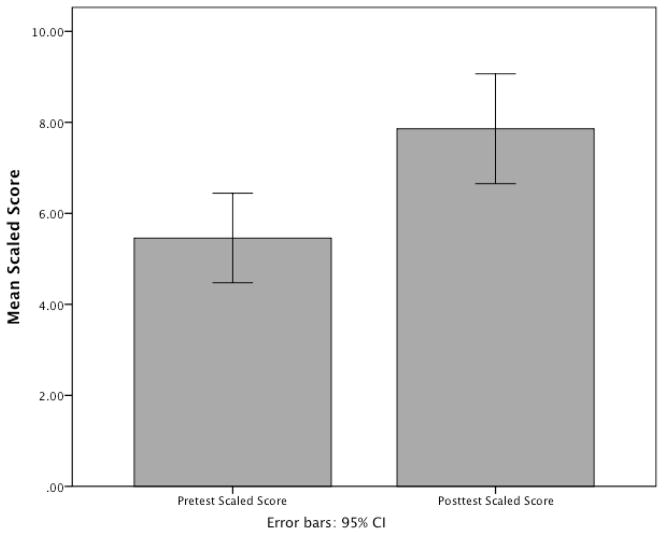
Past research has suggested exergame play improves adolescents' executive function (EF) skills. EF change in 70 African American and Hispanic/Latino 10- to 16-year-olds participating in an inner-city summer camp was assessed following five 30-minute exergame play sessions. Children's EF scores improved from pre- to posttest, and factors related to this change were examined. The number of exergame sessions the participants attended predicted posttest scores. In addition, level of achievement during game play was related to EF scores. Finally, the children's level of enjoyment was not related to EF; however, frustration and boredom during game play were negatively related to EF. The findings are discussed in terms of their implications for the relationship between exergame play and cognitive benefits for adolescent players.
以往的研究表明,玩体感游戏可以提高青少年的执行功能(EF)技能。在一个城市内的夏令营中,对70名10至16岁的非裔美国人和西班牙裔/拉丁裔青少年进行了评估,他们在参加了五节30分钟的体感游戏课程后,EF发生了变化。对儿童的EF分数从测试前到测试后的情况进行了评估,并对与这种变化相关的因素进行了研究。参与者参加体感游戏课程的次数预测了测试后的分数。此外,游戏过程中的成就水平与EF分数有关。最后,孩子们的享受程度与EF无关;然而,游戏过程中的挫折感和无聊感与EF呈负相关。将根据这些发现对体感游戏与青少年玩家认知益处之间的关系的影响进行讨论。