Weitz Joshua S, Dushoff Jonathan
1] School of Biology, Georgia Institute of Technology, Atlanta, GA, USA [2] School of Physics, Georgia Institute of Technology, Atlanta, GA, USA.
1] Department of Biology, McMaster University, Hamilton, ON, Canada [2] Institute of Infectious Disease Research, McMaster University, Hamilton, ON, Canada.
Sci Rep. 2015 Mar 4;5:8751. doi: 10.1038/srep08751.
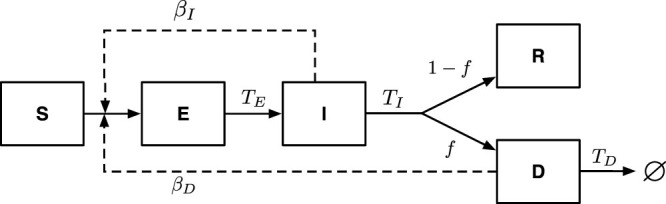
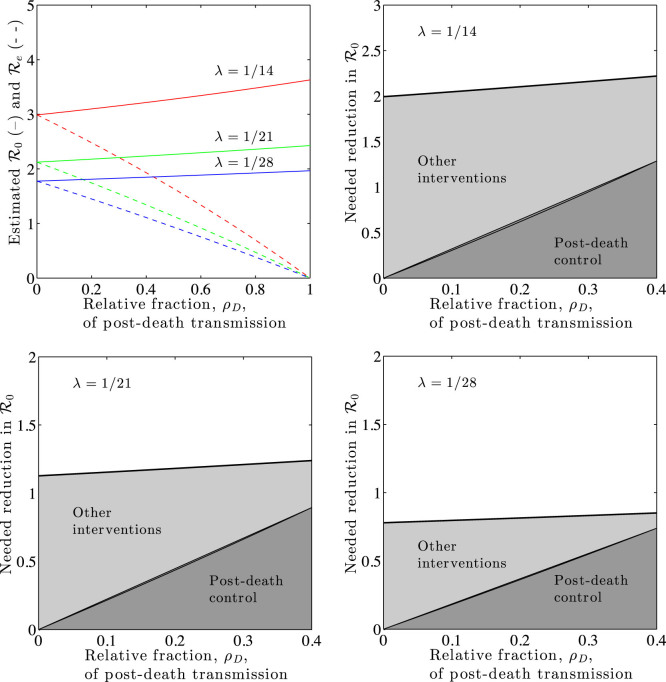
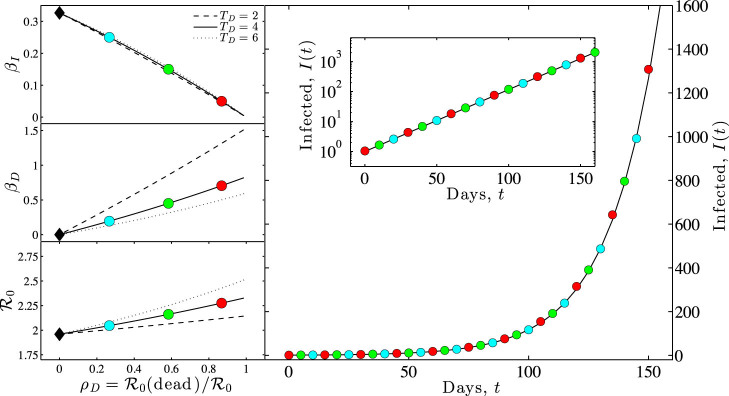
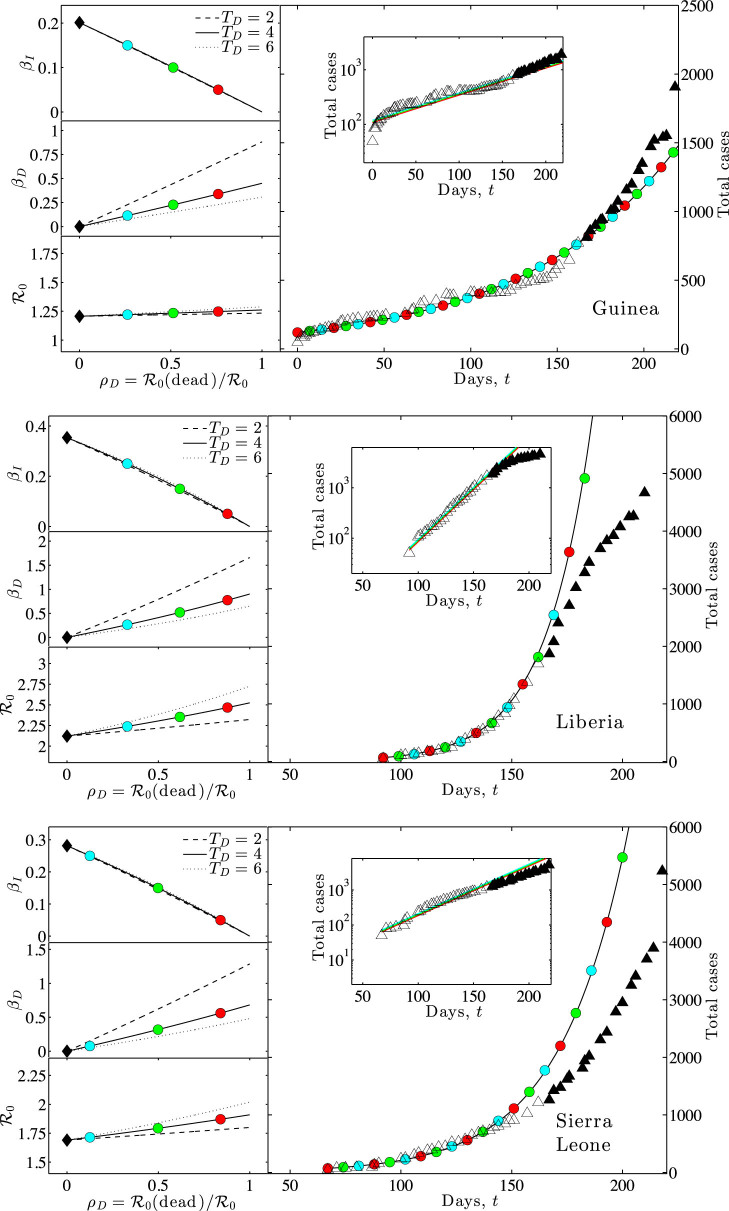
Multiple epidemiological models have been proposed to predict the spread of Ebola in West Africa. These models include consideration of counter-measures meant to slow and, eventually, stop the spread of the disease. Here, we examine one component of Ebola dynamics that is of ongoing concern - the transmission of Ebola from the dead to the living. We do so by applying the toolkit of mathematical epidemiology to analyze the consequences of post-death transmission. We show that underlying disease parameters cannot be inferred with confidence from early-stage incidence data (that is, they are not "identifiable") because different parameter combinations can produce virtually the same epidemic trajectory. Despite this identifiability problem, we find robustly that inferences that don't account for post-death transmission tend to underestimate the basic reproductive number - thus, given the observed rate of epidemic growth, larger amounts of post-death transmission imply larger reproductive numbers. From a control perspective, we explain how improvements in reducing post-death transmission of Ebola may reduce the overall epidemic spread and scope substantially. Increased attention to the proportion of post-death transmission has the potential to aid both in projecting the course of the epidemic and in evaluating a portfolio of control strategies.
已经提出了多种流行病学模型来预测埃博拉病毒在西非的传播。这些模型考虑了旨在减缓并最终阻止疾病传播的应对措施。在此,我们研究埃博拉病毒动态中一个一直备受关注的组成部分——埃博拉病毒从死者向生者的传播。我们通过应用数学流行病学工具包来分析死后传播的后果。我们表明,无法从早期发病率数据可靠地推断出潜在的疾病参数(即它们“不可识别”),因为不同的参数组合实际上可以产生相同的流行轨迹。尽管存在这种可识别性问题,但我们有力地发现,不考虑死后传播的推断往往会低估基本再生数——因此,鉴于观察到的疫情增长速度,大量的死后传播意味着更大的再生数。从控制的角度来看,我们解释了减少埃博拉病毒死后传播方面的改进如何可能大幅降低总体疫情传播和范围。对死后传播比例给予更多关注有可能有助于预测疫情发展过程以及评估一系列控制策略。