Nega Desalegn, Dana Daniel, Tefera Tamirat, Eshetu Teferi
Malaria and Other Parasitic and Vector-Borne Diseases Research Team, Directorate Of Parasitic, Bacterial and Zoonotic Diseases Research, Ethiopian Public Health Institute, Addis Ababa, Ethiopia.
Department of Medical Laboratory Sciences and Pathology, College of Public Health and Medical Sciences, Jimma University, Jimma, Oromia, Ethiopia.
PLoS One. 2015 Apr 7;10(4):e0123630. doi: 10.1371/journal.pone.0123630. eCollection 2015.
In Sub-Saharan African countries, including Ethiopia, malaria in pregnancy is a major public health threat which results in significant morbidities and mortalities among pregnant women and their fetuses. In malaria endemic areas, Plasmodium infections tend to remain asymptomatic yet causing significant problems like maternal anemia, low birth weight, premature births, and still birth. This study was conducted to determine the prevalence and predictors of asymptomatic Plasmodium infection among pregnant women in the rural surroundings of Arba Minch Town, Southern Ethiopia.
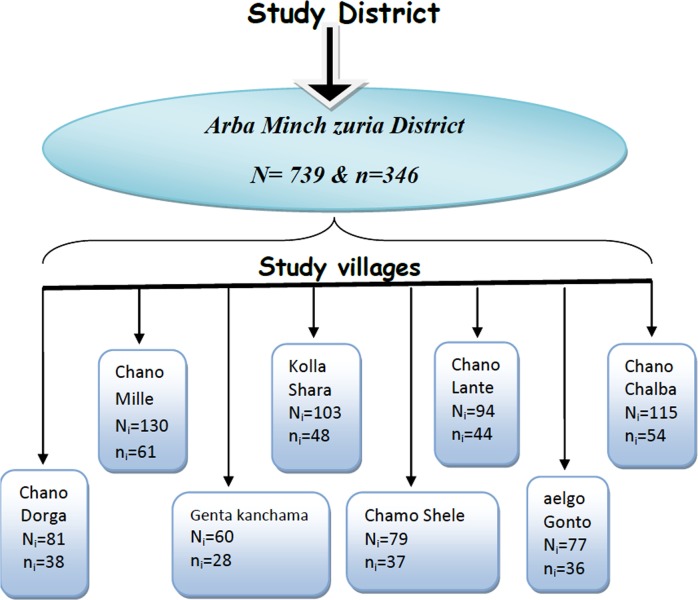
A community based cross-sectional study comprising multistage sampling was conducted between April and June, 2013. Socio-demographic data were collected by using a semi-structured questionnaire. Plasmodium infection was diagnosed by using Giemsa-stained blood smear microscopy and a rapid diagnostic test (SD BIOLINE Malaria Ag Pf/Pv POCT, standard diagnostics, inc., Korea).
Of the total 341 pregnant women participated in this study, 9.1% (31/341) and 9.7% (33/341) were confirmed to be infected with Plasmodium species by microscopy and rapid diagnostic tests (RDTs), respectively. The geometric mean of parasite density was 2392 parasites per microliter (μl); 2275/ μl for P. falciparum and 2032/ μl for P. vivax. Parasitemia was more likely to occur in primigravidae (Adjusted odds ratio (AOR): 9.4, 95% confidence interval (CI): 4.3-60.5), secundigravidae (AOR: 6.3, 95% CI: 2.9-27.3), using insecticide treated bed net (ITN) sometimes (AOR: 3.2, 95% CI: 1.8- 57.9), not using ITN at all (AOR: 4.6, 95% CI: 1.4-14.4) compared to multigravidae and using ITN always, respectively.
Asymptomatic malaria in this study is low compared to other studies' findings. Nevertheless, given the high risk of malaria during pregnancy, pregnant women essentially be screened for asymptomatic Plasmodium infection and be treated promptly via the antenatal care (ANC) services.
在包括埃塞俄比亚在内的撒哈拉以南非洲国家,妊娠疟疾是一项重大的公共卫生威胁,会导致孕妇及其胎儿出现严重发病和死亡情况。在疟疾流行地区,疟原虫感染往往没有症状,但会引发诸如孕产妇贫血、低出生体重、早产和死产等重大问题。本研究旨在确定埃塞俄比亚南部阿尔巴米琴镇周边农村地区孕妇无症状疟原虫感染的患病率及预测因素。
2013年4月至6月期间进行了一项基于社区的横断面研究,采用多阶段抽样。通过半结构化问卷收集社会人口统计学数据。使用吉姆萨染色血涂片显微镜检查和快速诊断检测(SD BIOLINE疟疾抗原Pf/Pv即时检测,标准诊断公司,韩国)诊断疟原虫感染。
在参与本研究的341名孕妇中,分别通过显微镜检查和快速诊断检测确诊感染疟原虫的比例为9.1%(31/341)和9.7%(33/341)。寄生虫密度的几何平均值为每微升2392个寄生虫;恶性疟原虫为2275/微升,间日疟原虫为2032/微升。初产妇(调整优势比(AOR):9.4,95%置信区间(CI):4.3 - 60.5)、经产妇(AOR:6.3,95%CI:2.9 - 27.3)、有时使用经杀虫剂处理的蚊帐(ITN)(AOR:3.2,95%CI:1.8 - 57.9)、与经产妇相比从不使用ITN(AOR:4.6,95%CI:1.4 - 14.4)以及与总是使用ITN相比,寄生虫血症更易发生。
与其他研究结果相比,本研究中无症状疟疾的发生率较低。然而,鉴于孕期疟疾的高风险,孕妇应通过产前保健(ANC)服务接受无症状疟原虫感染筛查并及时治疗。