Doo Miae, Kim Yangha
Department of Nutritional Science and Food Management, Ewha Womans University, Seoul 120-750, Korea.
Prev Nutr Food Sci. 2015 Mar;20(1):1-7. doi: 10.3746/pnf.2015.20.1.1. Epub 2015 Mar 31.
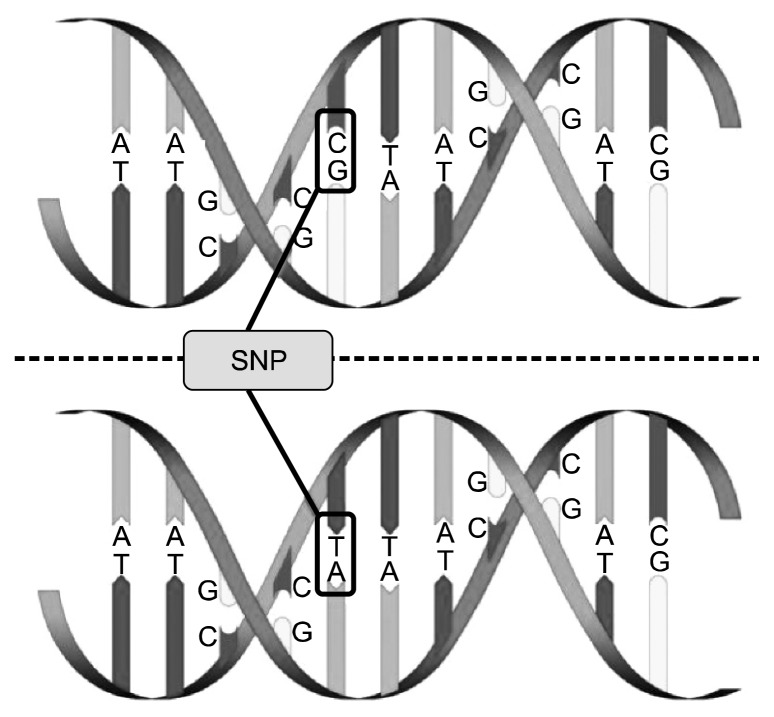
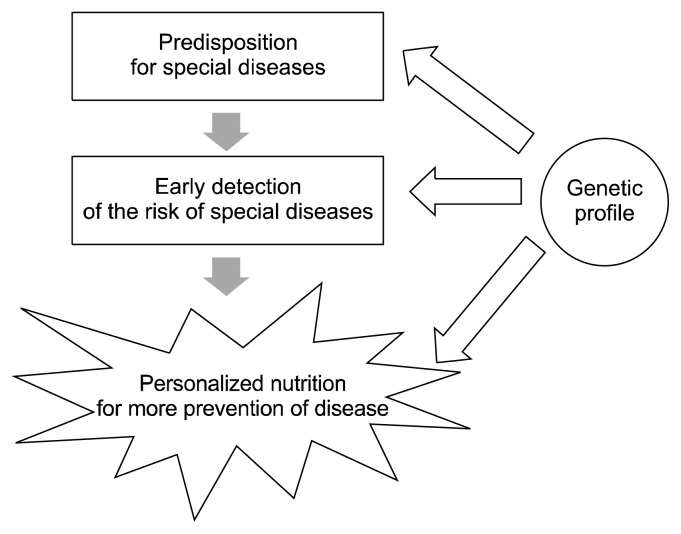
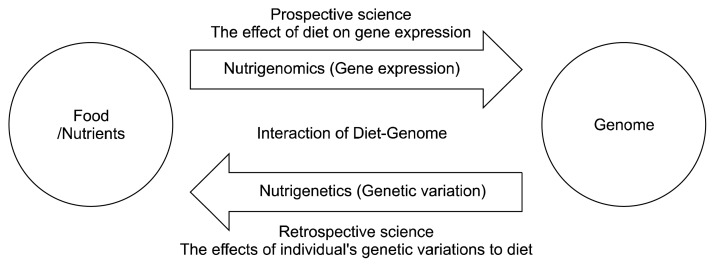
Obesity has become one of the major public health problems all over the world. Recent novel eras of research are opening for the effective management of obesity though gene and nutrient intake interactions because the causes of obesity are complex and multifactorial. Through GWASs (genome-wide association studies) and genetic variations (SNPs, single nucleotide polymorphisms), as the genetic factors are likely to determine individuals' obesity predisposition. The understanding of genetic approaches in nutritional sciences is referred as "nutrigenomics". Nutrigenomics explores the interaction between genetic factors and dietary nutrient intake on various disease phenotypes such as obesity. Therefore, this novel approach might suggest a solution for the effective prevention and treatment of obesity through individual genetic profiles and help improve health conditions.
肥胖已成为全球主要的公共卫生问题之一。由于肥胖的成因复杂且具有多因素性,近期有关通过基因与营养摄入相互作用来有效管理肥胖的新研究时代正在开启。通过全基因组关联研究(GWASs)和基因变异(单核苷酸多态性,SNPs),因为遗传因素可能决定个体的肥胖易感性。在营养科学中对遗传方法的理解被称为“营养基因组学”。营养基因组学探索遗传因素与饮食营养摄入在肥胖等各种疾病表型上的相互作用。因此,这种新方法可能通过个体基因图谱为有效预防和治疗肥胖提供解决方案,并有助于改善健康状况。