Wollum Alexandra, Burstein Roy, Fullman Nancy, Dwyer-Lindgren Laura, Gakidou Emmanuela
Institute for Health Metrics and Evaluation, University of Washington, 2301 5th Ave, Suite 600, Seattle, WA, 98121, USA.
BMC Med. 2015 Sep 2;13:208. doi: 10.1186/s12916-015-0438-9.
Nigeria has made notable gains in improving childhood survival but the country still accounts for a large portion of the world's overall disease burden, particularly among women and children. To date, no systematic analyses have comprehensively assessed trends for health outcomes and interventions across states in Nigeria.
We extracted data from 19 surveys to generate estimates for 20 key maternal and child health (MCH) interventions and outcomes for 36 states and the Federal Capital Territory from 2000 to 2013. Source-specific estimates were generated for each indicator, after which a two-step statistical model was applied using a mixed-effects model followed by Gaussian process regression to produce state-level trends. National estimates were calculated by population-weighting state values.
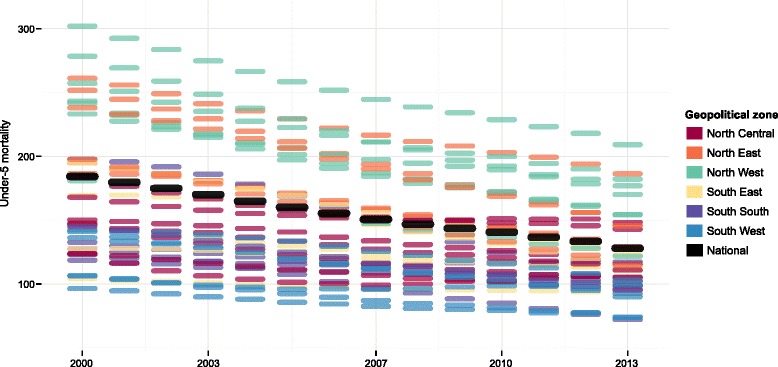
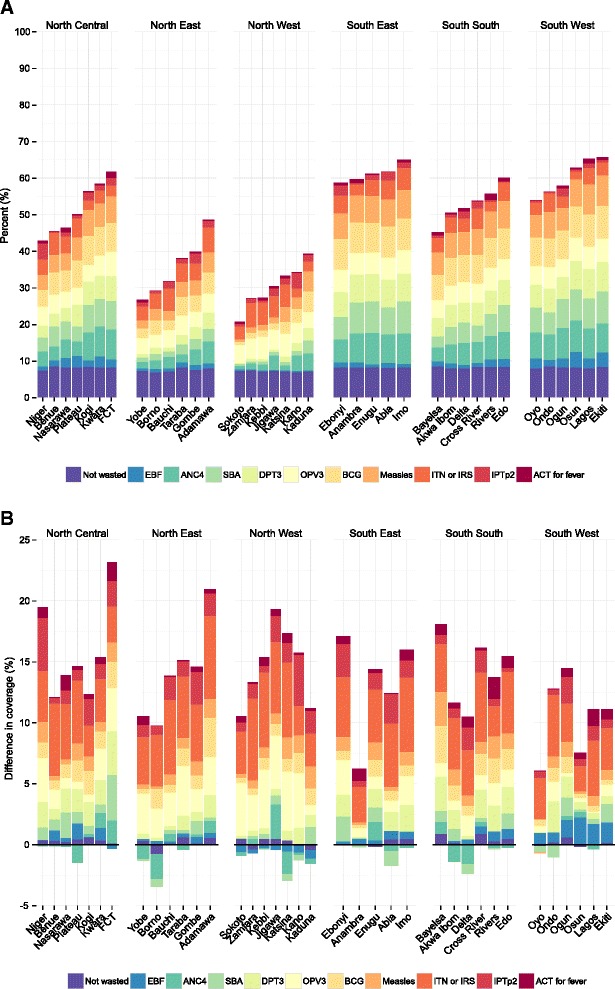
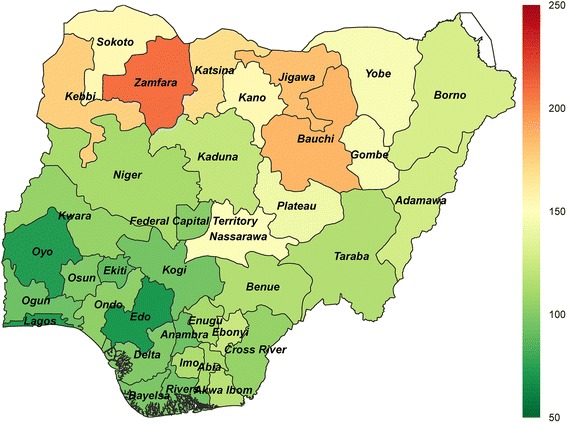
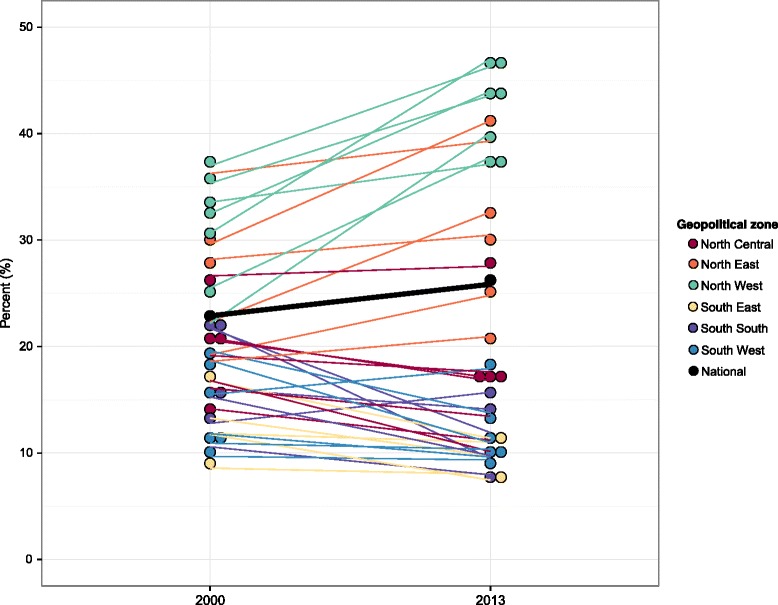
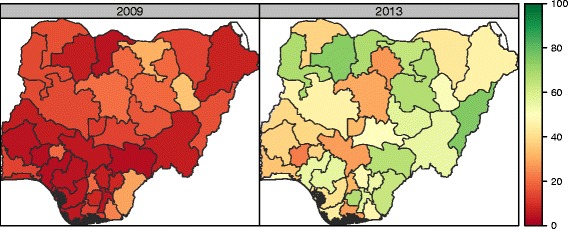
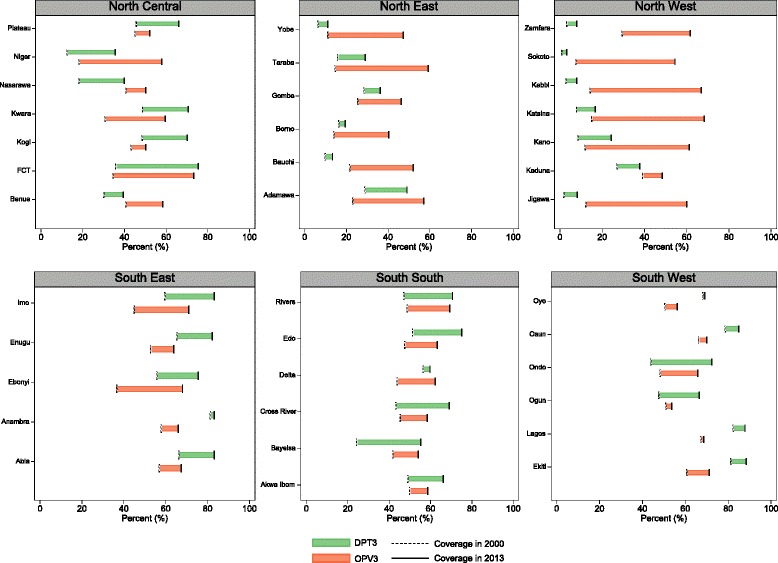
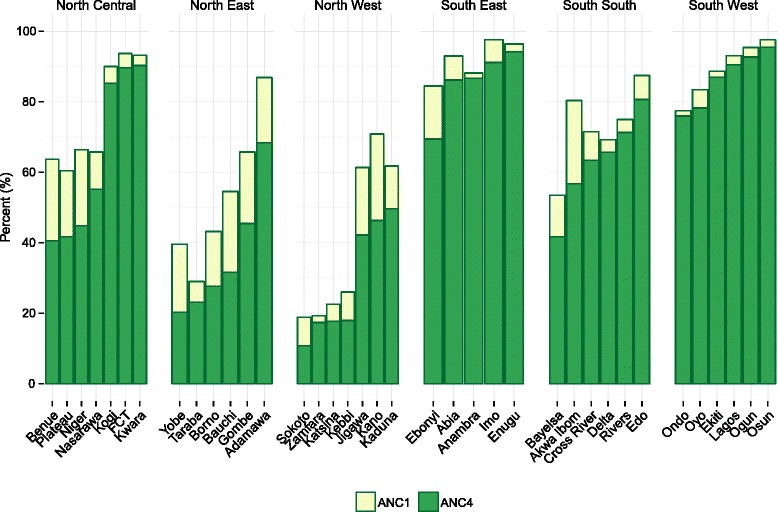
Under-5 mortality decreased in all states from 2000 to 2013, but a large gap remained across them. Malaria intervention coverage stayed low despite increases between 2009 and 2013, largely driven by rising rates of insecticide-treated net ownership. Overall, vaccination coverage improved, with notable increases in the coverage of three-dose oral polio vaccine. Nevertheless, immunization coverage remained low for most vaccines, including measles. Coverage of other MCH interventions, such as antenatal care and skilled birth attendance, generally stagnated and even declined in many states, and the range between the lowest- and highest-performing states remained wide in 2013. Countrywide, a measure of overall intervention coverage increased from 33% in 2000 to 47% in 2013 with considerable variation across states, ranging from 21% in Sokoto to 66% in Ekiti.
We found that Nigeria made notable gains for a subset of MCH indicators between 2000 and 2013, but also experienced stalled progress and even declines for others. Despite progress for a subset of indicators, Nigeria's absolute levels of intervention coverage remained quite low. As Nigeria rolls out its National Health Bill and seeks to strengthen its delivery of health services, continued monitoring of local health trends will help policymakers track successes and promptly address challenges as they arise. Subnational benchmarking ought to occur regularly in Nigeria and throughout sub-Saharan Africa to inform local decision-making and bolster health system performance.
尼日利亚在改善儿童生存状况方面取得了显著进展,但该国在全球总体疾病负担中仍占很大比例,尤其是在妇女和儿童中。迄今为止,尚无系统分析全面评估尼日利亚各州的健康结果和干预措施趋势。
我们从19项调查中提取数据,以得出2000年至2013年期间36个州和联邦首都地区20项关键母婴健康(MCH)干预措施和结果的估计值。针对每个指标生成特定来源的估计值,之后使用混合效应模型和高斯过程回归应用两步统计模型来得出州级趋势。通过对州值进行人口加权计算全国估计值。
2000年至2013年期间,所有州的五岁以下儿童死亡率均有所下降,但各州之间仍存在很大差距。尽管2009年至2013年期间有所增加,但疟疾干预措施的覆盖率仍然很低,这主要是由经杀虫剂处理蚊帐的拥有率上升推动的。总体而言,疫苗接种覆盖率有所提高,三剂口服脊髓灰质炎疫苗的覆盖率显著增加。然而,包括麻疹疫苗在内的大多数疫苗的免疫接种覆盖率仍然很低。其他母婴健康干预措施的覆盖率,如产前护理和熟练接生服务,在许多州普遍停滞甚至下降,2013年表现最差和最佳的州之间的差距仍然很大。在全国范围内,总体干预措施覆盖率的衡量指标从2000年的33%提高到2013年的47%,各州之间存在很大差异,从索科托州的21%到埃基蒂州的66%不等。
我们发现,尼日利亚在2000年至2013年期间在部分母婴健康指标上取得了显著进展,但在其他指标上也出现了进展停滞甚至下降的情况。尽管部分指标取得了进展,但尼日利亚的干预措施覆盖率绝对水平仍然很低。随着尼日利亚推出其《国家卫生法案》并寻求加强其卫生服务提供,持续监测当地卫生趋势将有助于政策制定者跟踪成功之处,并在出现挑战时迅速加以应对。尼日利亚及整个撒哈拉以南非洲地区应定期进行次国家级别的基准评估,以为地方决策提供信息并提升卫生系统绩效。