Chen Liang, Liao Bin, Qi Hua, Xie Li-Juan, Huang Li, Tan Wei-Juan, Zhai Ning, Yuan Li-Bing, Zhou Ying, Yu Lu-Jun, Chen Qin-Fang, Shu Wensheng, Xiao Shi
a State Key Laboratory of Biocontrol; Guangdong Provincial Key Laboratory of Plant Resources; Collaborative Innovation Center of Genetics and Development; School of Life Sciences; Sun Yat-sen University ; Guangzhou , China.
Autophagy. 2015;11(12):2233-46. doi: 10.1080/15548627.2015.1112483.
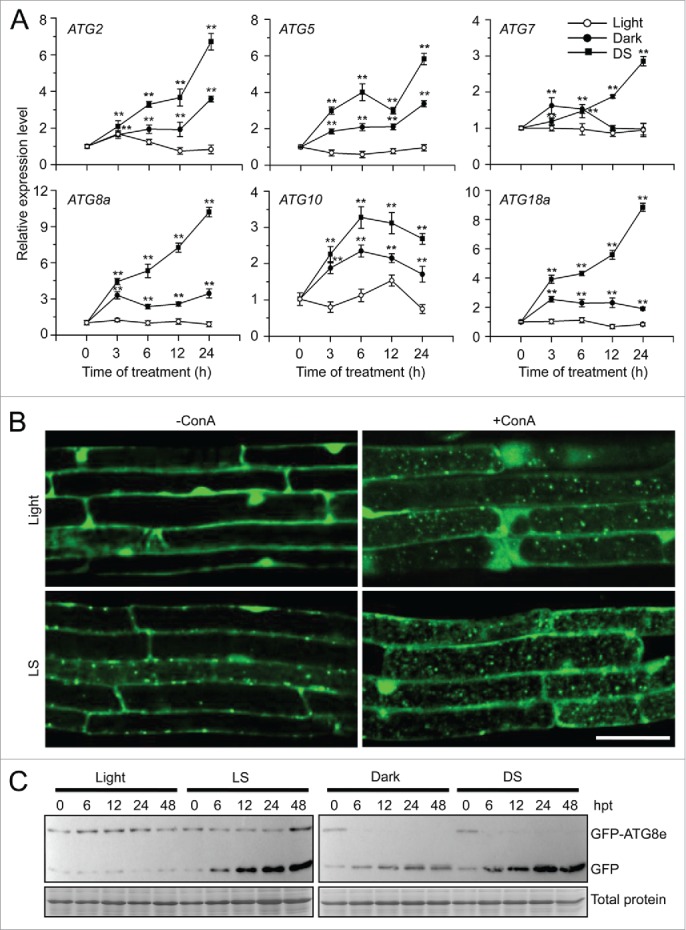
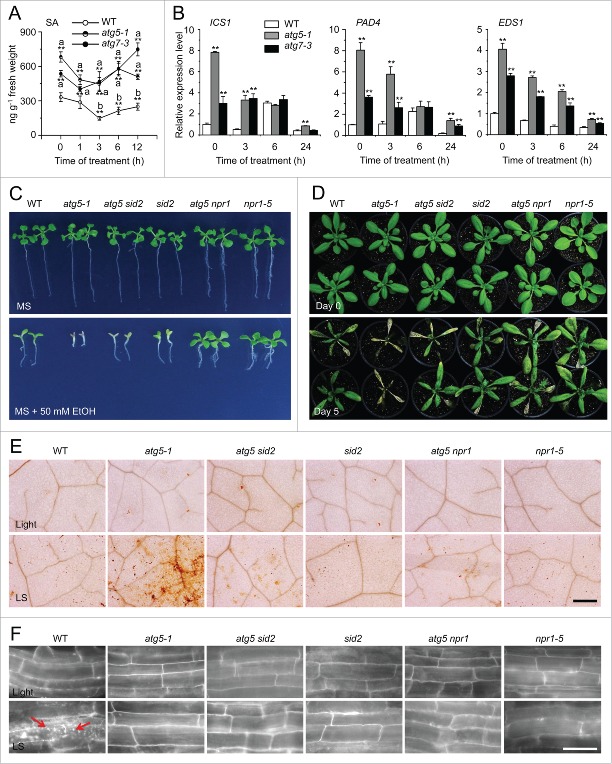
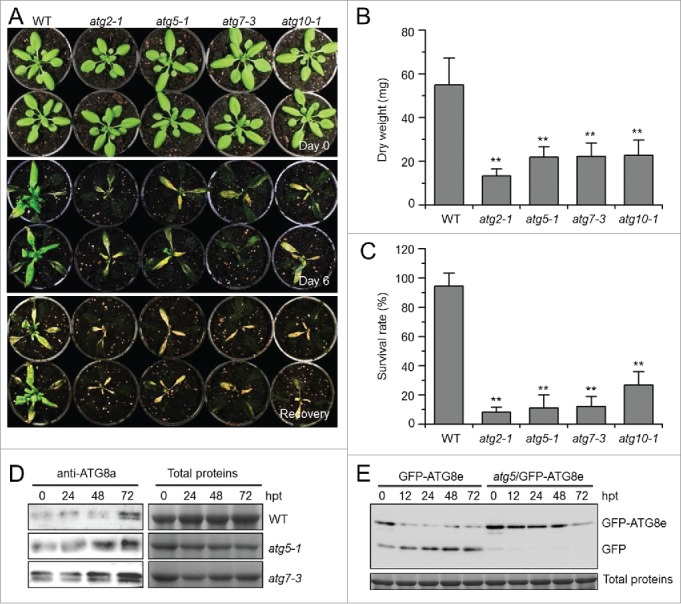
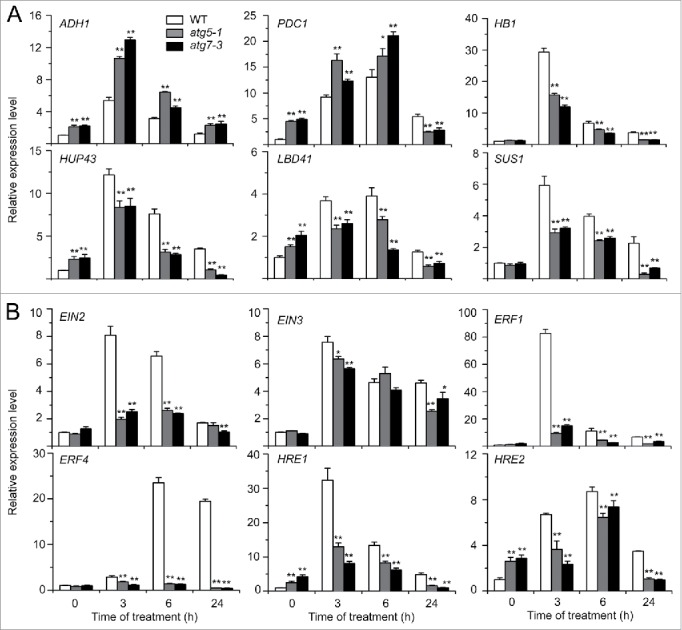
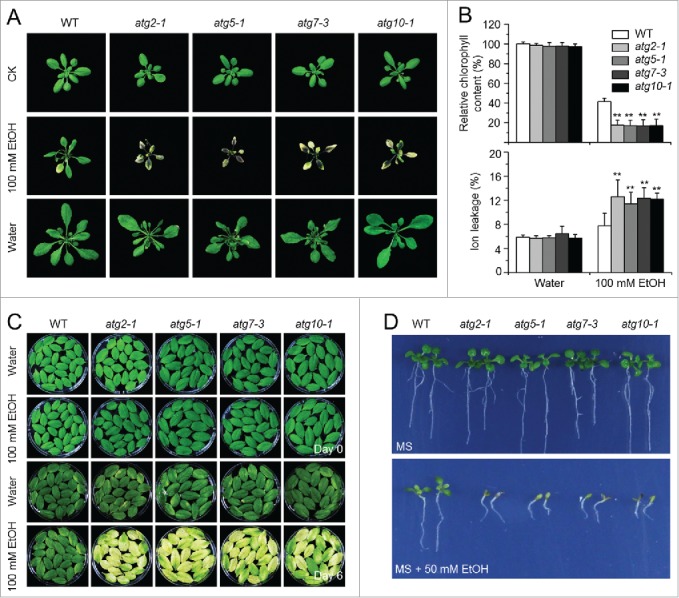
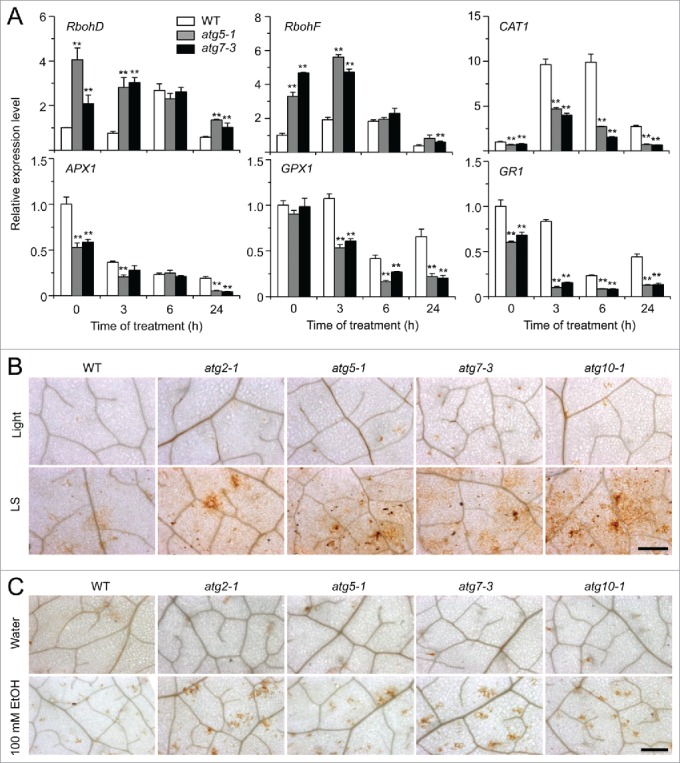
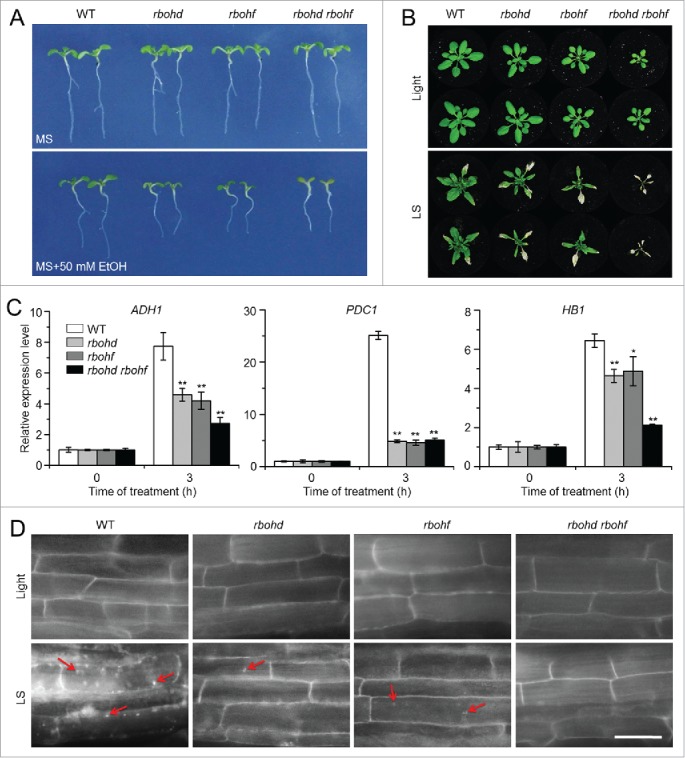
Autophagy involves massive degradation of intracellular components and functions as a conserved system that helps cells to adapt to adverse conditions. In mammals, hypoxia rapidly stimulates autophagy as a cell survival response. Here, we examine the function of autophagy in the regulation of the plant response to submergence, an abiotic stress that leads to hypoxia and anaerobic respiration in plant cells. In Arabidopsis thaliana, submergence induces the transcription of autophagy-related (ATG) genes and the formation of autophagosomes. Consistent with this, the autophagy-defective (atg) mutants are hypersensitive to submergence stress and treatment with ethanol, the end product of anaerobic respiration. Upon submergence, the atg mutants have increased levels of transcripts of anaerobic respiration genes (alcohol dehydrogenase 1, ADH1 and pyruvate decarboxylase 1, PDC1), but reduced levels of transcripts of other hypoxia- and ethylene-responsive genes. Both submergence and ethanol treatments induce the accumulation of reactive oxygen species (ROS) in the rosettes of atg mutants more than in the wild type. Moreover, the production of ROS by the nicotinamide adenine dinucleotide phosphate (NADPH) oxidases is necessary for plant tolerance to submergence and ethanol, submergence-induced expression of ADH1 and PDC1, and activation of autophagy. The submergence- and ethanol-sensitive phenotypes in the atg mutants depend on a complete salicylic acid (SA) signaling pathway. Together, our findings demonstrate that submergence-induced autophagy functions in the hypoxia response in Arabidopsis by modulating SA-mediated cellular homeostasis.
自噬涉及细胞内成分的大量降解,是一种保守的系统,有助于细胞适应不利条件。在哺乳动物中,缺氧会迅速刺激自噬作为一种细胞存活反应。在这里,我们研究自噬在调节植物对淹水反应中的功能,淹水是一种非生物胁迫,会导致植物细胞缺氧和无氧呼吸。在拟南芥中,淹水诱导自噬相关(ATG)基因的转录和自噬体的形成。与此一致的是,自噬缺陷(atg)突变体对淹水胁迫和厌氧呼吸终产物乙醇处理高度敏感。淹水后,atg突变体中无氧呼吸基因(乙醇脱氢酶1,ADH1和丙酮酸脱羧酶1,PDC1)的转录水平升高,但其他缺氧和乙烯反应基因的转录水平降低。淹水和乙醇处理均比野生型更能诱导atg突变体莲座叶中活性氧(ROS)的积累。此外,烟酰胺腺嘌呤二核苷酸磷酸(NADPH)氧化酶产生的ROS对于植物对淹水和乙醇的耐受性、淹水诱导的ADH1和PDC1表达以及自噬的激活是必需的。atg突变体中对淹水和乙醇敏感的表型取决于完整的水杨酸(SA)信号通路。总之,我们的研究结果表明,淹水诱导的自噬通过调节SA介导的细胞内稳态在拟南芥的缺氧反应中发挥作用。