Department of Economics, University of Wyoming, Laramie, WY, 82071, USA.
Ecohealth. 2021 Mar;18(1):44-60. doi: 10.1007/s10393-021-01524-0. Epub 2021 Jun 4.
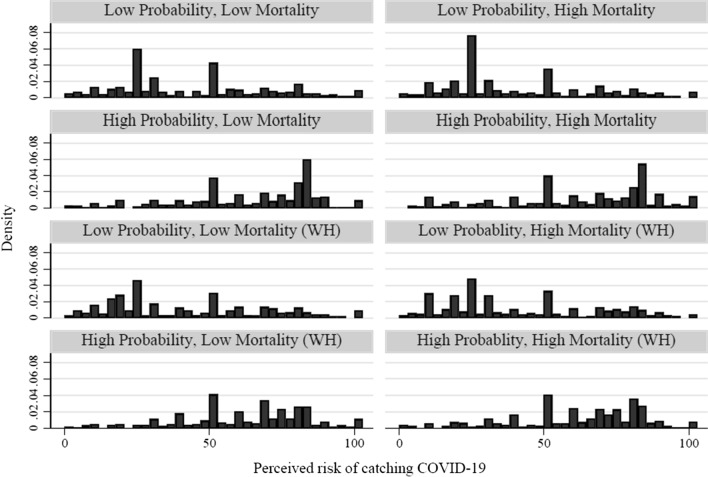
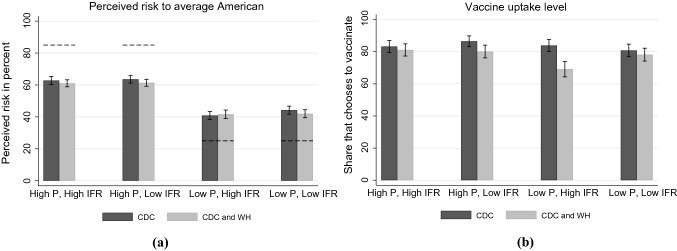
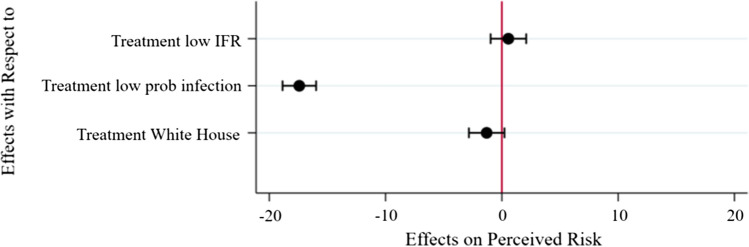
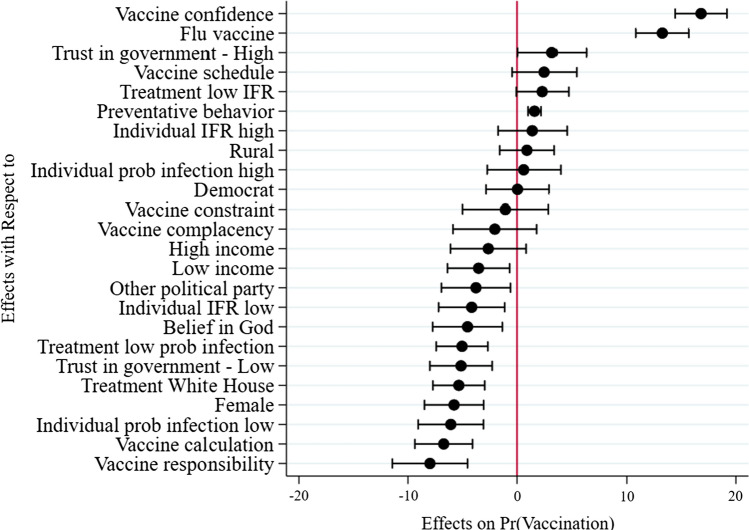
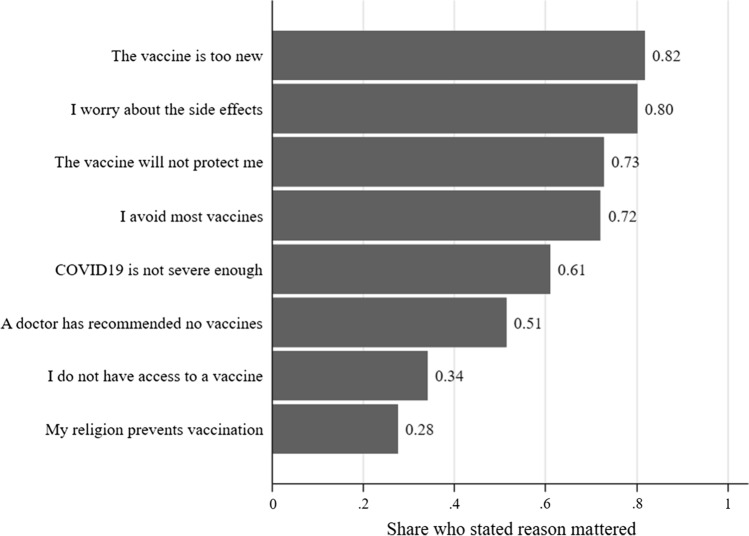
The scientific community has come together in a mass mobilization to combat the public health risks of COVID-19, including efforts to develop a vaccine. However, the success of any vaccine depends on the share of the population that gets vaccinated. We designed a survey experiment in which a nationally representative sample of 3,133 adults in the USA stated their intentions to vaccinate themselves and their children for COVID-19. The factors that we varied across treatments were: the stated severity and infectiousness of COVID-19 and the stated source of the risk information (White House or the Centers for Disease Control). We find that 20% of people in the USA intend to decline the vaccine. We find no statistically significant effect on vaccine intentions from the severity of COVID-19. In contrast, we find that the degree of infectiousness of the coronavirus influences vaccine intentions and that inconsistent risk messages from public health experts and elected officials may reduce vaccine uptake. However, the most important determinants of COVID-19 vaccine hesitancy seem to be distrust of the vaccine safety (including uncertainty due to vaccine novelty), as well as general vaccine avoidance, as implied by not having had a flu shot in the last two years.
科学界已经团结一致,采取大规模行动来应对 COVID-19 的公共卫生风险,包括努力开发疫苗。然而,任何疫苗的成功都取决于接种疫苗的人口比例。我们设计了一项调查实验,在美国对一个具有全国代表性的 3133 名成年人样本进行了调查,以了解他们对 COVID-19 疫苗接种自己和孩子的意愿。我们在不同处理组中改变的因素包括:COVID-19 的严重程度和传染性以及风险信息的来源(白宫或疾病控制中心)。我们发现,美国有 20%的人打算拒绝接种疫苗。我们没有发现 COVID-19 的严重程度对疫苗接种意愿有统计学上的显著影响。相比之下,我们发现冠状病毒的传染性程度会影响疫苗接种意愿,而且公共卫生专家和政府官员不一致的风险信息可能会降低疫苗接种率。然而,COVID-19 疫苗犹豫的最重要决定因素似乎是对疫苗安全性的不信任(包括由于疫苗新颖性而产生的不确定性),以及过去两年没有接种流感疫苗所暗示的对一般疫苗的回避。