Cardona Emilie, Gueguen Yannick, Magré Kevin, Lorgeoux Bénédicte, Piquemal David, Pierrat Fabien, Noguier Florian, Saulnier Denis
Ifremer, UMR 241 EIO, UPF-ILM-IRD, Labex Corail, B.P. 7004, 98719, Taravao, Tahiti, French Polynesia.
Ifremer, Unité de recherche Lagons, Ecosystèmes et Aquaculture Durable en Nouvelle Calédonie, Nouméa, New Caledonia.
BMC Microbiol. 2016 Jul 19;16(1):157. doi: 10.1186/s12866-016-0770-z.
Biofloc technology (BFT), a rearing method with little or no water exchange, is gaining popularity in aquaculture. In the water column, such systems develop conglomerates of microbes, algae and protozoa, together with detritus and dead organic particles. The intensive microbial community presents in these systems can be used as a pond water quality treatment system, and the microbial protein can serve as a feed additive. The current problem with BFT is the difficulty of controlling its bacterial community composition for both optimal water quality and optimal shrimp health. The main objective of the present study was to investigate microbial diversity of samples obtained from different culture environments (Biofloc technology and clear seawater) as well as from the intestines of shrimp reared in both environments through high-throughput sequencing technology.
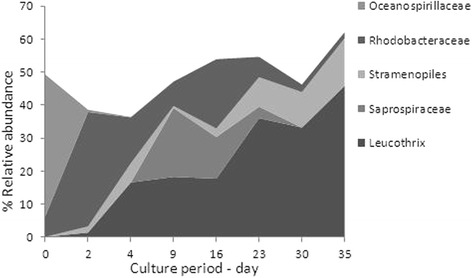
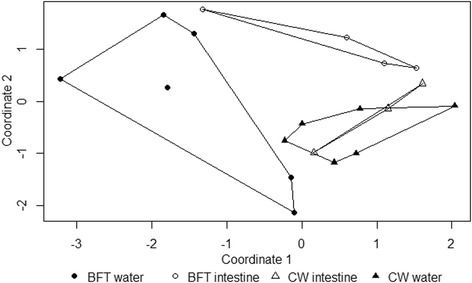
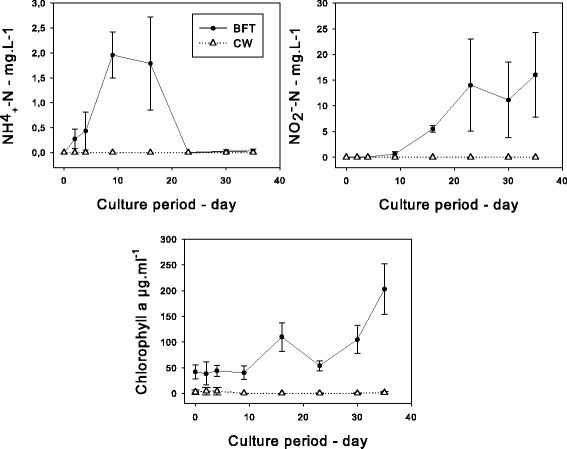
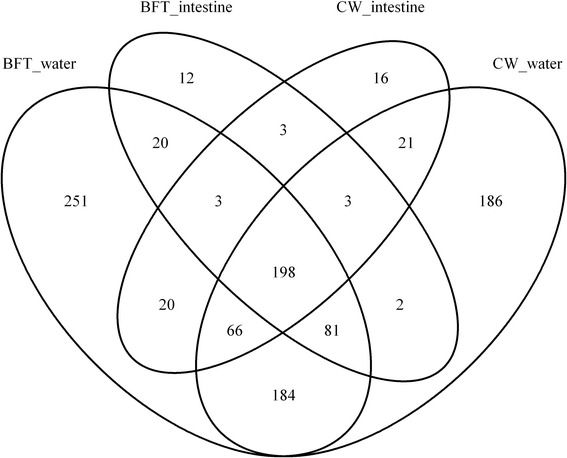
Analyses of the bacterial community identified in water from BFT and "clear seawater" (CW) systems (control) containing the shrimp Litopenaeus stylirostris revealed large differences in the frequency distribution of operational taxonomic units (OTUs). Four out of the five most dominant bacterial communities were different in both culture methods. Bacteria found in great abundance in BFT have two principal characteristics: the need for an organic substrate or nitrogen sources to grow and the capacity to attach to surfaces and co-aggregate. A correlation was found between bacteria groups and physicochemical and biological parameters measured in rearing tanks. Moreover, rearing-water bacterial communities influenced the microbiota of shrimp. Indeed, the biofloc environment modified the shrimp intestine microbiota, as the low level (27 %) of similarity between intestinal bacterial communities from the two treatments.
This study provides the first information describing the complex biofloc microbial community, which can help to understand the environment-microbiota-host relationship in this rearing system.
生物絮团技术(BFT)是一种几乎不换水或不换水的养殖方法,在水产养殖中越来越受欢迎。在水柱中,此类系统会形成微生物、藻类和原生动物的聚集体,以及碎屑和死亡的有机颗粒。这些系统中存在的密集微生物群落可作为池塘水质处理系统,微生物蛋白可作为饲料添加剂。目前生物絮团技术存在的问题是难以控制其细菌群落组成以实现最佳水质和对虾健康。本研究的主要目的是通过高通量测序技术研究从不同养殖环境(生物絮团技术和清澈海水)以及在这两种环境中养殖的虾肠道中获取的样本的微生物多样性。
对来自包含南美蓝对虾的生物絮团技术系统和“清澈海水”(CW)系统(对照)的水中鉴定出的细菌群落分析显示,操作分类单元(OTU)的频率分布存在很大差异。两种养殖方法中,五个最主要的细菌群落中有四个不同。在生物絮团技术系统中大量发现的细菌有两个主要特征:生长需要有机底物或氮源,以及附着于表面和共同聚集的能力。发现细菌群与养殖池中测量的理化和生物学参数之间存在相关性。此外,养殖水体细菌群落影响了虾的微生物群。事实上,生物絮团环境改变了虾肠道微生物群,因为两种处理的肠道细菌群落之间的相似度较低(27%)。
本研究提供了描述复杂生物絮团微生物群落的首个信息,这有助于理解该养殖系统中的环境-微生物群-宿主关系。