Nimrichter Leonardo, de Souza Marcio M, Del Poeta Maurizio, Nosanchuk Joshua D, Joffe Luna, Tavares Patricia de M, Rodrigues Marcio L
Laboratório de Glicobiologia de Eucariotos, Instituto de Microbiologia Professor Paulo de Góes, Universidade Federal do Rio de Janeiro, Rio de Janeiro Brazil.
Department of Molecular Genetics and Microbiology, Stony Brook University, Stony Brook, NYUSA; Veterans Administration Medical Center, Northport, NYUSA.
Front Microbiol. 2016 Jul 8;7:1034. doi: 10.3389/fmicb.2016.01034. eCollection 2016.
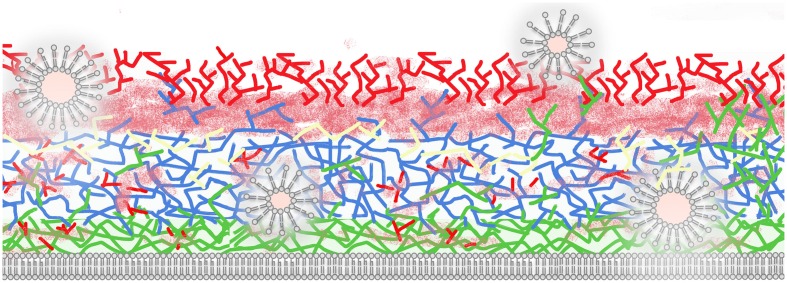
Classic cell wall components of fungi comprise the polysaccharides glucans and chitin, in association with glycoproteins and pigments. During the last decade, however, system biology approaches clearly demonstrated that the composition of fungal cell walls include atypical molecules historically associated with intracellular or membrane locations. Elucidation of mechanisms by which many fungal molecules are exported to the extracellular space suggested that these atypical components are transitorily located to the cell wall. The presence of extracellular vesicles (EVs) at the fungal cell wall and in culture supernatants of distinct pathogenic species suggested a highly functional mechanism of molecular export in these organisms. Thus, the passage of EVs through fungal cell walls suggests remarkable molecular diversity and, consequently, a potentially variable influence on the host antifungal response. On the basis of information derived from the proteomic characterization of fungal EVs from the yeasts Cryptoccocus neoformans and Candida albicans and the dimorphic fungi Histoplasma capsulatum and Paracoccidioides brasiliensis, our manuscript is focused on the clear view that the fungal cell wall is much more complex than previously thought.
真菌的经典细胞壁成分包括多糖葡聚糖和几丁质,它们与糖蛋白和色素相关。然而,在过去十年中,系统生物学方法清楚地表明,真菌细胞壁的组成包括历史上与细胞内或膜位置相关的非典型分子。对许多真菌分子输出到细胞外空间机制的阐明表明,这些非典型成分会暂时定位到细胞壁。在真菌细胞壁以及不同致病物种的培养上清液中存在细胞外囊泡(EVs),这表明这些生物体中存在一种高效的分子输出机制。因此,EVs穿过真菌细胞壁表明其具有显著的分子多样性,进而可能对宿主抗真菌反应产生可变影响。基于从新型隐球菌、白色念珠菌等酵母以及双态真菌荚膜组织胞浆菌和巴西副球孢子菌的真菌EVs蛋白质组学特征获得的信息,我们的手稿聚焦于一个清晰的观点,即真菌细胞壁比以前认为的要复杂得多。