Ling Zongxin, Jin Changzhong, Xie Tiansheng, Cheng Yiwen, Li Lanjuan, Wu Nanping
Collaborative Innovation Center for Diagnosis and Treatment of Infectious Diseases, State Key Laboratory for Diagnosis and Treatment of Infectious Diseases, the First Affiliated Hospital, School of Medicine, Zhejiang University, Hangzhou, Zhejiang, 310003, China.
Sci Rep. 2016 Aug 1;6:30673. doi: 10.1038/srep30673.
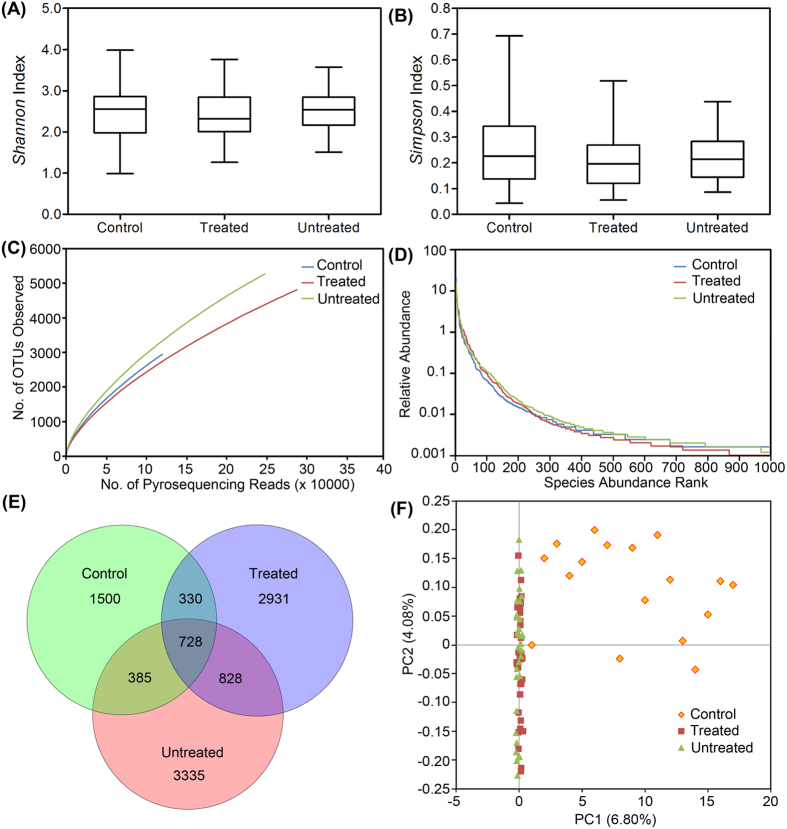
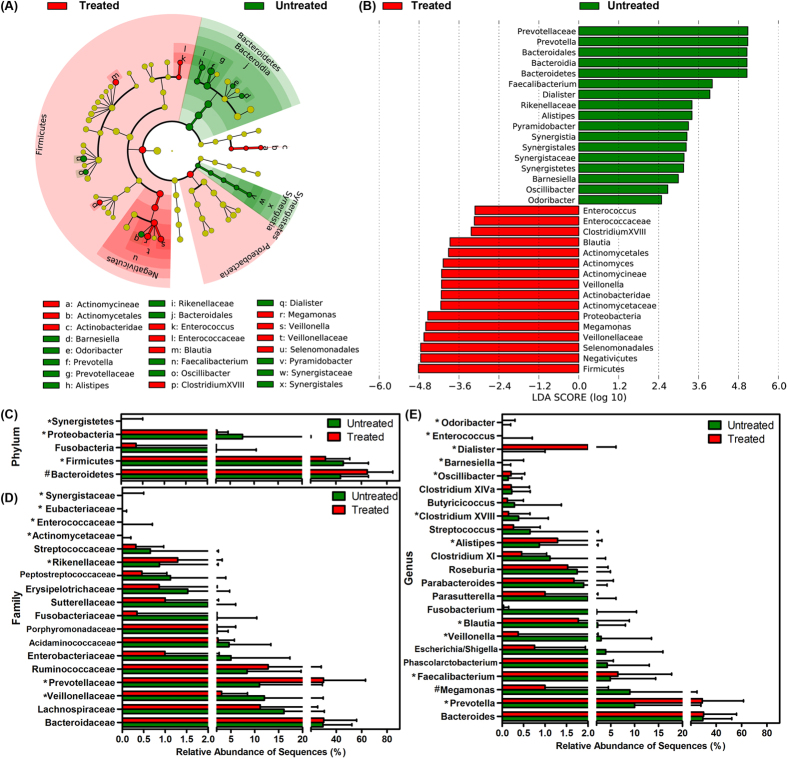
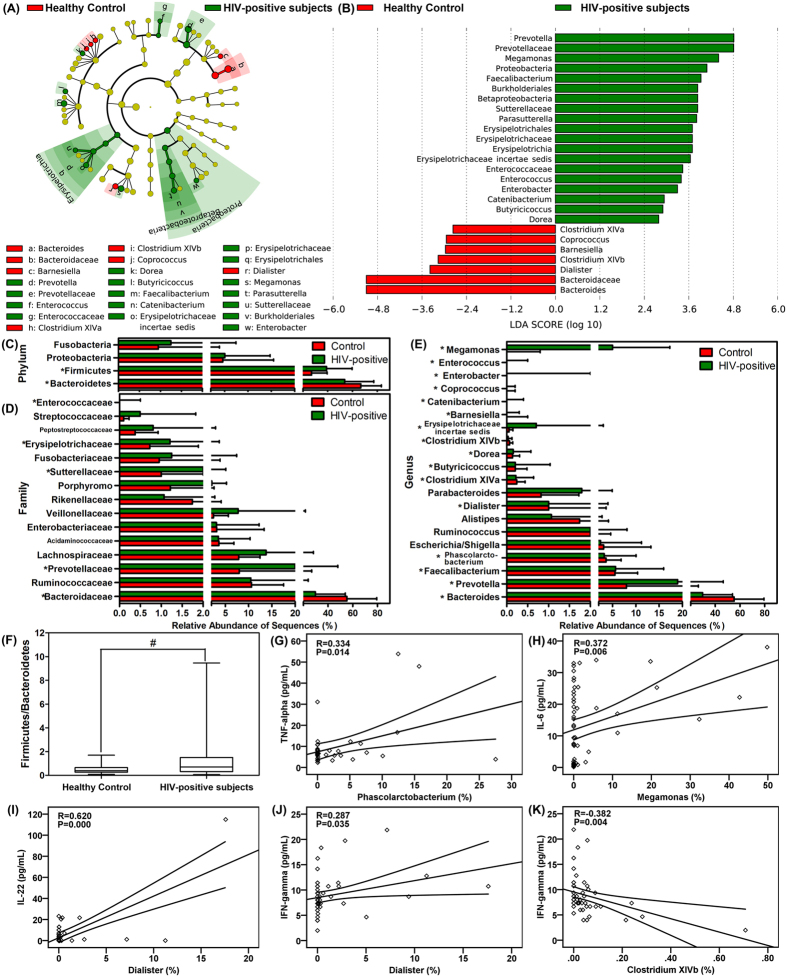
The available evidence suggests that alterations in gut microbiota may be tightly linked to the increase in microbial translocation and systemic inflammation in patients with human immunodeficiency virus 1 (HIV-1) infection. We profiled the fecal microbiota as a proxy of gut microbiota by parallel barcoded 454-pyrosequencing in 67 HIV-1-infected patients (32 receiving highly active antiretroviral therapy [HAART] and 35 HAART naïve) and 16 healthy controls from a Chinese population. We showed that α-diversity indices did not differ significantly between the healthy control and HIV-1-infected patients. The ratio of Firmicutes/Bacteroidetes increased significantly in HIV-1-infected patients. Several key bacterial phylotypes, including Prevotella, were prevalent in HIV-1-infected patients; whereas Phascolarctobacterium, Clostridium XIVb, Dialister and Megamonas were significantly correlated with systemic inflammatory cytokines. After short-term, effective HAART, the viral loads of HIV-1 were reduced; however, the diversity and composition of the fecal microbiota were not completely restored. and the dysbiosis remained among HIV-1-infected subjects undergoing HAART. Our detailed analysis demonstrated that dysbiosis of fecal microbiota might play an active role in HIV-1 infection. Thus, new insights may be provided into therapeutics that target the microbiota to attenuate the progression of HIV disease and to reduce the risk of gut-linked disease in HIV-1-infected patients.
现有证据表明,肠道微生物群的改变可能与人类免疫缺陷病毒1(HIV-1)感染患者的微生物易位增加和全身炎症密切相关。我们通过平行条形码454焦磷酸测序对67名HIV-1感染患者(32名接受高效抗逆转录病毒治疗[HAART],35名未接受HAART)和16名中国健康对照者的粪便微生物群进行了分析,以此作为肠道微生物群的代表。我们发现,健康对照者和HIV-1感染患者之间的α多样性指数没有显著差异。HIV-1感染患者中厚壁菌门/拟杆菌门的比例显著增加。包括普雷沃菌属在内的几种关键细菌系统型在HIV-1感染患者中普遍存在;而考拉杆菌属、梭菌属XIVb、戴阿李斯特菌属和巨单胞菌属与全身炎症细胞因子显著相关。短期有效HAART后,HIV-1的病毒载量降低;然而,粪便微生物群的多样性和组成并未完全恢复,接受HAART的HIV-1感染受试者中仍存在生态失调。我们的详细分析表明,粪便微生物群的生态失调可能在HIV-1感染中起积极作用。因此,针对微生物群的治疗方法可能为减缓HIV疾病进展和降低HIV-1感染患者肠道相关疾病风险提供新的见解。