• 文献检索
  • 文档翻译
  • 深度研究
  • 学术资讯
  • Suppr Zotero 插件Zotero 插件
  • 邀请有礼
  • 套餐&价格
  • 历史记录
应用&插件
Suppr Zotero 插件Zotero 插件浏览器插件Mac 客户端Windows 客户端微信小程序
定价
高级版会员购买积分包购买API积分包
服务
文献检索文档翻译深度研究API 文档MCP 服务
关于我们
关于 Suppr公司介绍联系我们用户协议隐私条款
关注我们

Suppr 超能文献

核心技术专利:CN118964589B侵权必究
粤ICP备2023148730 号-1Suppr @ 2026

文献检索

告别复杂PubMed语法,用中文像聊天一样搜索,搜遍4000万医学文献。AI智能推荐,让科研检索更轻松。

立即免费搜索

文件翻译

保留排版,准确专业,支持PDF/Word/PPT等文件格式,支持 12+语言互译。

免费翻译文档

深度研究

AI帮你快速写综述,25分钟生成高质量综述,智能提取关键信息,辅助科研写作。

立即免费体验

幼儿血浆磷脂中的十五烷酸、二十碳五烯酸和二十二碳六烯酸,以及乳制品和鱼类产品的摄入频率。

Plasma phospholipid pentadecanoic acid, EPA, and DHA, and the frequency of dairy and fish product intake in young children.

作者信息

Lund-Blix Nicolai A, Rønningen Kjersti S, Bøås Håkon, Tapia German, Andersen Lene F

机构信息

Department of Pediatric Research, Oslo University Hospital, Rikshospitalet, Oslo, Norway.

Department of Nutrition, Institute of Basic Medical Sciences, University of Oslo, Oslo, Norway.

出版信息

Food Nutr Res. 2016 Aug 16;60:31933. doi: 10.3402/fnr.v60.31933. eCollection 2016.

DOI:10.3402/fnr.v60.31933
PMID:27534845
原文链接:https://pmc.ncbi.nlm.nih.gov/articles/PMC4989176/
Abstract

BACKGROUND

There is a lack of studies comparing dietary assessment methods with the biomarkers of fatty acids in children.

OBJECTIVE

The objective was to evaluate the suitability of a food frequency questionnaire (FFQ) to rank young children according to their intake of dairy and fish products by comparing food frequency estimates to the plasma phospholipid fatty acids pentadecanoic acid, eicosapentaenoic acid (EPA), and docosahexaenoic acid (DHA).

DESIGN

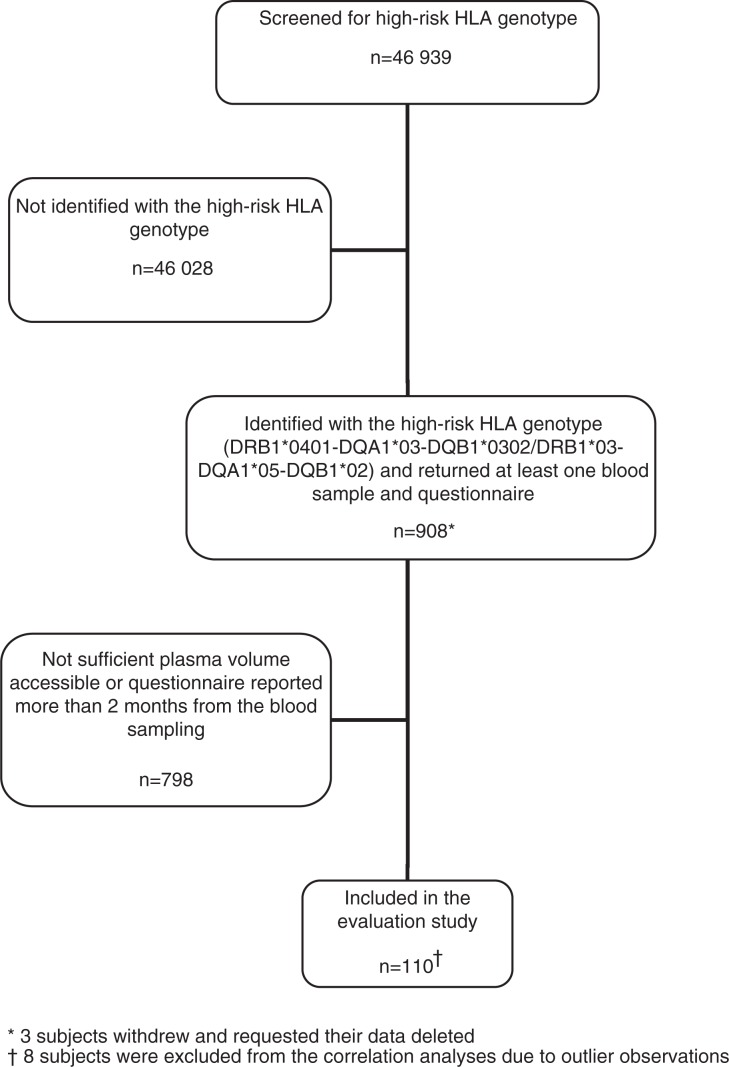
Cross-sectional data for the present study were derived from the prospective cohort 'Environmental Triggers of Type 1 Diabetes Study'. Infants were recruited from the Norwegian general population during 2001-2007. One hundred and ten (age 3-10 years) children had sufficient volumes of plasma and FFQ filled in within 2 months from blood sampling and were included in this evaluation study. The quantitative determination of plasma phospholipid fatty acids was done by fatty acid methyl ester analysis. The association between the frequency of dairy and fish product intake and the plasma phospholipid fatty acids was assessed by a Spearman correlation analysis and by investigating whether participants were classified into the same quartiles of distribution.

RESULTS

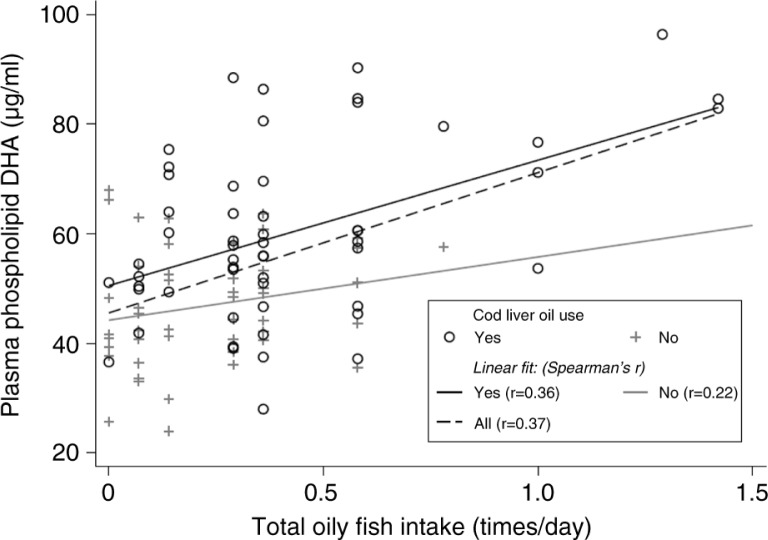
Significant correlations were found between pentadecanoic acid and the intake frequency of total dairy products (r=0.29), total fat dairy products (r=0.39), and cheese products (r=0.36). EPA and DHA were significantly correlated with the intake frequency of oily fish (r=0.26 and 0.37, respectively) and cod liver/fish oil supplements (r=0.47 for EPA and r=0.50 DHA). To a large extent, the FFQ was able to classify individuals into the same quartile as the relevant fatty acid biomarker.

CONCLUSIONS

The present study suggests that, when using the plasma phospholipid fatty acids pentadecanoic acid, EPA, and DHA as biomarkers, the FFQ used in young children showed a moderate capability to rank the intake frequency of dairy products with a high-fat content and cod liver/fish oil supplements.

摘要

背景

目前缺乏关于儿童膳食评估方法与脂肪酸生物标志物对比的研究。

目的

通过比较食物频率估计值与血浆磷脂脂肪酸十五烷酸、二十碳五烯酸(EPA)和二十二碳六烯酸(DHA),评估食物频率问卷(FFQ)根据幼儿乳制品和鱼类产品摄入量进行排名的适用性。

设计

本研究的横断面数据来自前瞻性队列“1型糖尿病的环境触发因素研究”。2001年至2007年期间从挪威普通人群中招募婴儿。110名(3至10岁)儿童在采血后2个月内有足够量的血浆且填写了FFQ,被纳入本评估研究。血浆磷脂脂肪酸的定量测定通过脂肪酸甲酯分析完成。通过Spearman相关性分析以及调查参与者是否被归入相同的分布四分位数,评估乳制品和鱼类产品摄入频率与血浆磷脂脂肪酸之间的关联。

结果

发现十五烷酸与总乳制品摄入频率(r = 0.29)、全脂乳制品摄入频率(r = 0.39)和奶酪产品摄入频率(r = 0.36)之间存在显著相关性。EPA和DHA与油性鱼类摄入频率(分别为r = 0.26和0.37)以及鳕鱼肝油/鱼油补充剂摄入频率(EPA为r = 0.47,DHA为r = 0.50)显著相关。在很大程度上,FFQ能够将个体归入与相关脂肪酸生物标志物相同的四分位数。

结论

本研究表明,当使用血浆磷脂脂肪酸十五烷酸、EPA和DHA作为生物标志物时,用于幼儿的FFQ在对高脂肪含量乳制品和鳕鱼肝油/鱼油补充剂的摄入频率进行排名方面显示出中等能力。
https://cdn.ncbi.nlm.nih.gov/pmc/blobs/51c1/4989176/59d330a0f458/FNR-60-31933-g002.jpg
https://cdn.ncbi.nlm.nih.gov/pmc/blobs/51c1/4989176/06b5716d257d/FNR-60-31933-g001.jpg
https://cdn.ncbi.nlm.nih.gov/pmc/blobs/51c1/4989176/59d330a0f458/FNR-60-31933-g002.jpg
https://cdn.ncbi.nlm.nih.gov/pmc/blobs/51c1/4989176/06b5716d257d/FNR-60-31933-g001.jpg
https://cdn.ncbi.nlm.nih.gov/pmc/blobs/51c1/4989176/59d330a0f458/FNR-60-31933-g002.jpg

相似文献

1
Plasma phospholipid pentadecanoic acid, EPA, and DHA, and the frequency of dairy and fish product intake in young children.幼儿血浆磷脂中的十五烷酸、二十碳五烯酸和二十二碳六烯酸,以及乳制品和鱼类产品的摄入频率。
Food Nutr Res. 2016 Aug 16;60:31933. doi: 10.3402/fnr.v60.31933. eCollection 2016.
2
Validation of a short, qualitative food frequency questionnaire in French adults participating in the MONA LISA-NUT study 2005-2007.2005-2007 年 MONA LISA-NUT 研究中参与的法国成年人中短式定性食物频率问卷的验证。
J Acad Nutr Diet. 2014 Apr;114(4):552-61. doi: 10.1016/j.jand.2013.07.002. Epub 2013 Sep 29.
3
Validation of a food frequency questionnaire to assess intake of n-3 polyunsaturated fatty acids in subjects with and without major depressive disorder.用于评估患有和未患有重度抑郁症的受试者中n-3多不饱和脂肪酸摄入量的食物频率问卷的验证。
J Am Diet Assoc. 2011 Jan;111(1):117-123.e1-2. doi: 10.1016/j.jada.2010.10.007.
4
Serum phospholipid fatty acid composition and habitual intake of marine foods registered by a semi-quantitative food frequency questionnaire.通过半定量食物频率问卷记录的血清磷脂脂肪酸组成和海洋食物的习惯性摄入量。
Eur J Clin Nutr. 1997 Nov;51(11):736-42. doi: 10.1038/sj.ejcn.1600475.
5
A Taiwanese food frequency questionnaire correlates with plasma docosahexaenoic acid but not with plasma eicosapentaenoic acid levels: questionnaires and plasma biomarkers.一份台湾食物频率问卷与血浆二十二碳六烯酸相关,但与血浆二十碳五烯酸水平不相关:问卷和血浆生物标志物。
BMC Med Res Methodol. 2013 Feb 16;13:23. doi: 10.1186/1471-2288-13-23.
6
Biomarker and dietary validation of a Canadian food frequency questionnaire to measure eicosapentaenoic and docosahexaenoic acid intakes from whole food, functional food, and nutraceutical sources.用于测量全食物、功能性食物和营养保健品来源的二十碳五烯酸和二十二碳六烯酸摄入量的加拿大食物频率问卷的生物标志物和饮食验证。
J Acad Nutr Diet. 2012 Jul;112(7):1005-14. doi: 10.1016/j.jand.2012.03.030. Epub 2012 May 12.
7
Fish, fish-derived n-3 fatty acids, and risk of incident atrial fibrillation in the Atherosclerosis Risk in Communities (ARIC) study.鱼类、鱼类源性 n-3 脂肪酸与社区动脉粥样硬化风险研究(ARIC)中房颤事件风险的关系。
PLoS One. 2012;7(5):e36686. doi: 10.1371/journal.pone.0036686. Epub 2012 May 3.
8
Incorporation of n-3 fatty acids into plasma lipid fractions, and erythrocyte membranes and platelets during dietary supplementation with fish, fish oil, and docosahexaenoic acid-rich oil among healthy young men.在健康年轻男性通过饮食补充鱼类、鱼油和富含二十二碳六烯酸的油期间,n-3脂肪酸在血浆脂质组分、红细胞膜和血小板中的掺入情况。
Lipids. 1997 Jul;32(7):697-705. doi: 10.1007/s11745-997-0089-x.
9
Is high oily fish intake achievable and how does it affect nutrient status in 8-9-year-old children?: the FiSK Junior trial.高油性鱼类摄入量是否可行,以及它如何影响 8-9 岁儿童的营养状况?:FiSK Junior 试验。
Eur J Nutr. 2020 Apr;59(3):1205-1218. doi: 10.1007/s00394-019-01981-y. Epub 2019 May 9.
10
Comparison of the Utility of Total Plasma Fatty Acids Versus those in Cholesteryl Ester, Phospholipid, and Triglyceride as Biomarkers of Fatty Acid Intake.总血浆脂肪酸与胆固醇酯、磷脂和甘油三酯中脂肪酸作为脂肪酸摄入量生物标志物的效用比较。
Nutrients. 2019 Sep 3;11(9):2081. doi: 10.3390/nu11092081.

引用本文的文献

1
Effect of High-Fat and Low-Fat Dairy Products on Cardiometabolic Risk Factors and Immune Function in a Low Birthweight Swine Model of Diet-Induced Insulin Resistance.高脂和低脂乳制品对饮食诱导胰岛素抵抗的低出生体重猪模型中的心代谢危险因素及免疫功能的影响
Front Nutr. 2022 Jun 17;9:923120. doi: 10.3389/fnut.2022.923120. eCollection 2022.
2
Adherence to the Mediterranean diet assessed by a novel dietary biomarker score and mortality in older adults: the InCHIANTI cohort study.用新型膳食生物标志物评分评估的地中海饮食依从性与老年人死亡率的关系:InCHIANTI 队列研究。
BMC Med. 2021 Nov 24;19(1):280. doi: 10.1186/s12916-021-02154-7.
3

本文引用的文献

1
Biomarkers of dairy fat.乳脂肪的生物标志物。
Am J Clin Nutr. 2015 May;101(5):1101-2. doi: 10.3945/ajcn.114.104554.
2
Cross-sectional associations of food consumption with plasma fatty acid composition and estimated desaturase activities in Finnish children.芬兰儿童食物消费与血浆脂肪酸组成及估计的去饱和酶活性的横断面关联。
Lipids. 2014 May;49(5):467-79. doi: 10.1007/s11745-014-3894-7.
3
Biomarkers of dairy fatty acids and risk of cardiovascular disease in the Multi-ethnic Study of Atherosclerosis.乳制品脂肪酸生物标志物与动脉粥样硬化多民族研究中心心血管疾病风险的关系。
Potential Biomarkers for Fat from Dairy and Fish and Their Association with Cardiovascular Risk Factors: Cross-sectional Data from the LifeLines Biobank and Cohort Study.
乳制品和鱼类脂肪的潜在生物标志物及其与心血管危险因素的关联:来自 LifeLines 生物银行和队列研究的横断面数据。
Nutrients. 2019 May 17;11(5):1099. doi: 10.3390/nu11051099.
4
Milk fat biomarkers and cardiometabolic disease.乳脂肪生物标志物与心脏代谢疾病
Curr Opin Lipidol. 2017 Feb;28(1):46-51. doi: 10.1097/MOL.0000000000000381.
J Am Heart Assoc. 2013 Jul 18;2(4):e000092. doi: 10.1161/JAHA.113.000092.
4
Long-term tracking of plasma phospholipid fatty acid concentrations and their correlation with the dietary intake of marine foods in newly diagnosed diabetic patients: results from a follow-up of the HUNT Study, Norway.新诊断糖尿病患者血浆磷脂脂肪酸浓度的长期跟踪及其与海产食物摄入的相关性:挪威亨于普研究的随访结果。
Br J Nutr. 2013 Mar 28;109(6):1123-34. doi: 10.1017/S0007114512002759. Epub 2012 Jul 30.
5
Fatty acids in serum and diet--a canonical correlation analysis among toddlers.血清和饮食中的脂肪酸——幼儿之间的典型相关分析。
Matern Child Nutr. 2013 Jul;9(3):381-95. doi: 10.1111/j.1740-8709.2011.00374.x. Epub 2011 Nov 8.
6
Plasma phospholipid fatty acid profiles and their association with food intakes: results from a cross-sectional study within the European Prospective Investigation into Cancer and Nutrition.血浆磷脂脂肪酸谱及其与食物摄入量的关联:欧洲癌症与营养前瞻性调查中的一项横断面研究结果
Am J Clin Nutr. 2009 Jan;89(1):331-46. doi: 10.3945/ajcn.2008.26834. Epub 2008 Dec 3.
7
Fatty acid composition of adipose tissue and blood in humans and its use as a biomarker of dietary intake.人体脂肪组织和血液中的脂肪酸组成及其作为膳食摄入量生物标志物的用途。
Prog Lipid Res. 2008 Sep;47(5):348-80. doi: 10.1016/j.plipres.2008.03.003. Epub 2008 Apr 4.
8
Plasma and erythrocyte biomarkers of dairy fat intake and risk of ischemic heart disease.乳制品脂肪摄入量与缺血性心脏病风险的血浆和红细胞生物标志物。
Am J Clin Nutr. 2007 Oct;86(4):929-37. doi: 10.1093/ajcn/86.4.929.
9
Comparison between plasma and erythrocyte fatty acid content as biomarkers of fatty acid intake in US women.美国女性血浆和红细胞脂肪酸含量作为脂肪酸摄入量生物标志物的比较。
Am J Clin Nutr. 2007 Jul;86(1):74-81. doi: 10.1093/ajcn/86.1.74.
10
Islet autoantibody development during follow-up of high-risk children from the general Norwegian population from three months of age: design and early results from the MIDIA study.挪威普通人群中高危儿童从三个月大开始随访期间胰岛自身抗体的发展:MIDIA研究的设计与早期结果
J Autoimmun. 2007 Aug;29(1):44-51. doi: 10.1016/j.jaut.2007.04.003. Epub 2007 Jun 7.