Śledź Paweł, Jinek Martin
Department of Biochemistry, University of Zurich, Zurich, Switzerland.
Elife. 2016 Sep 14;5:e18434. doi: 10.7554/eLife.18434.
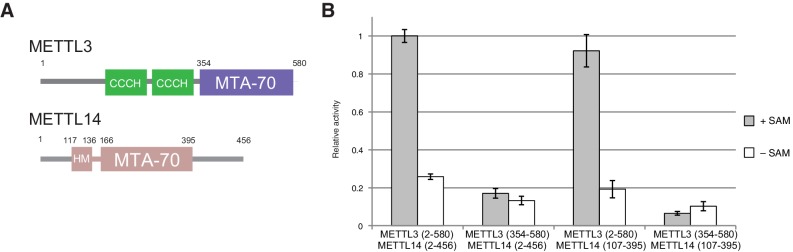
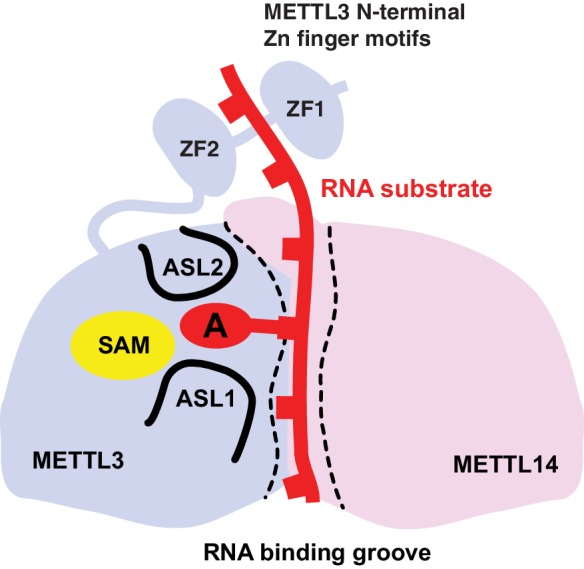
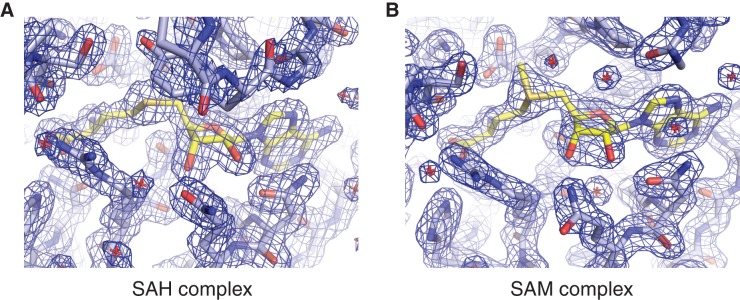
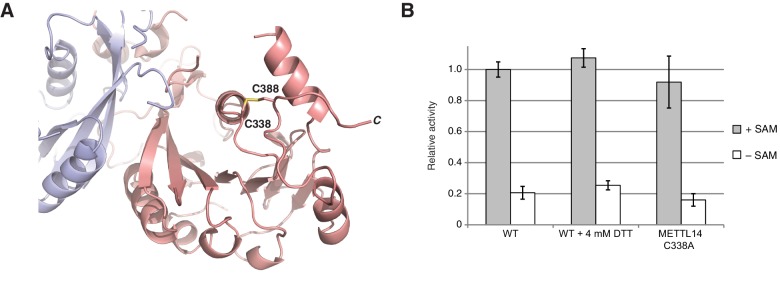
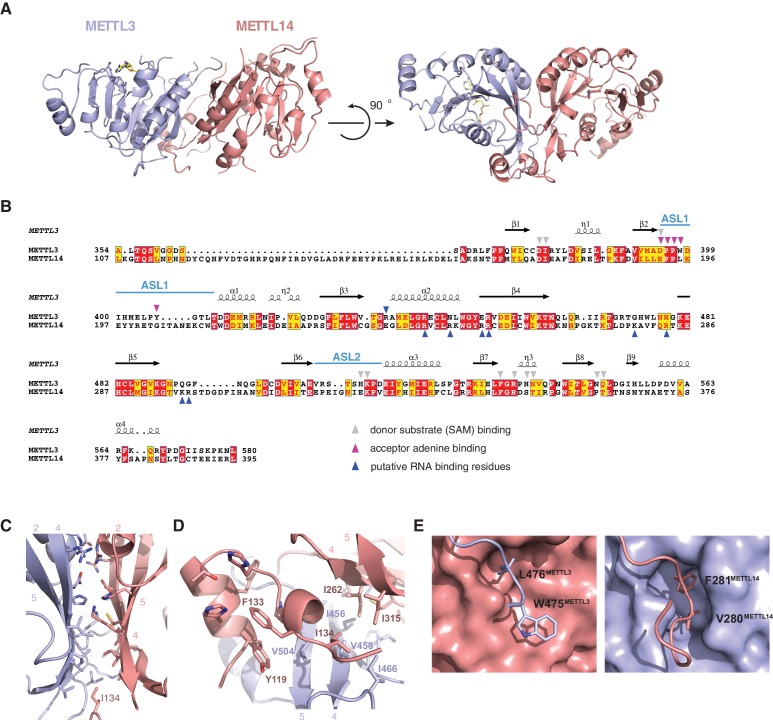
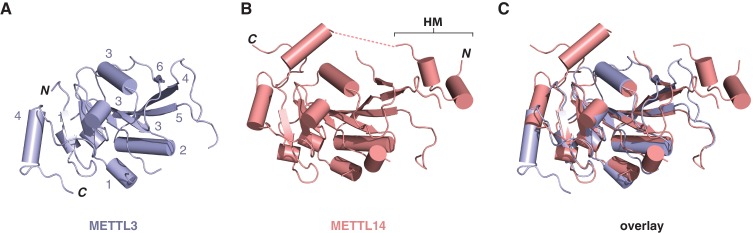
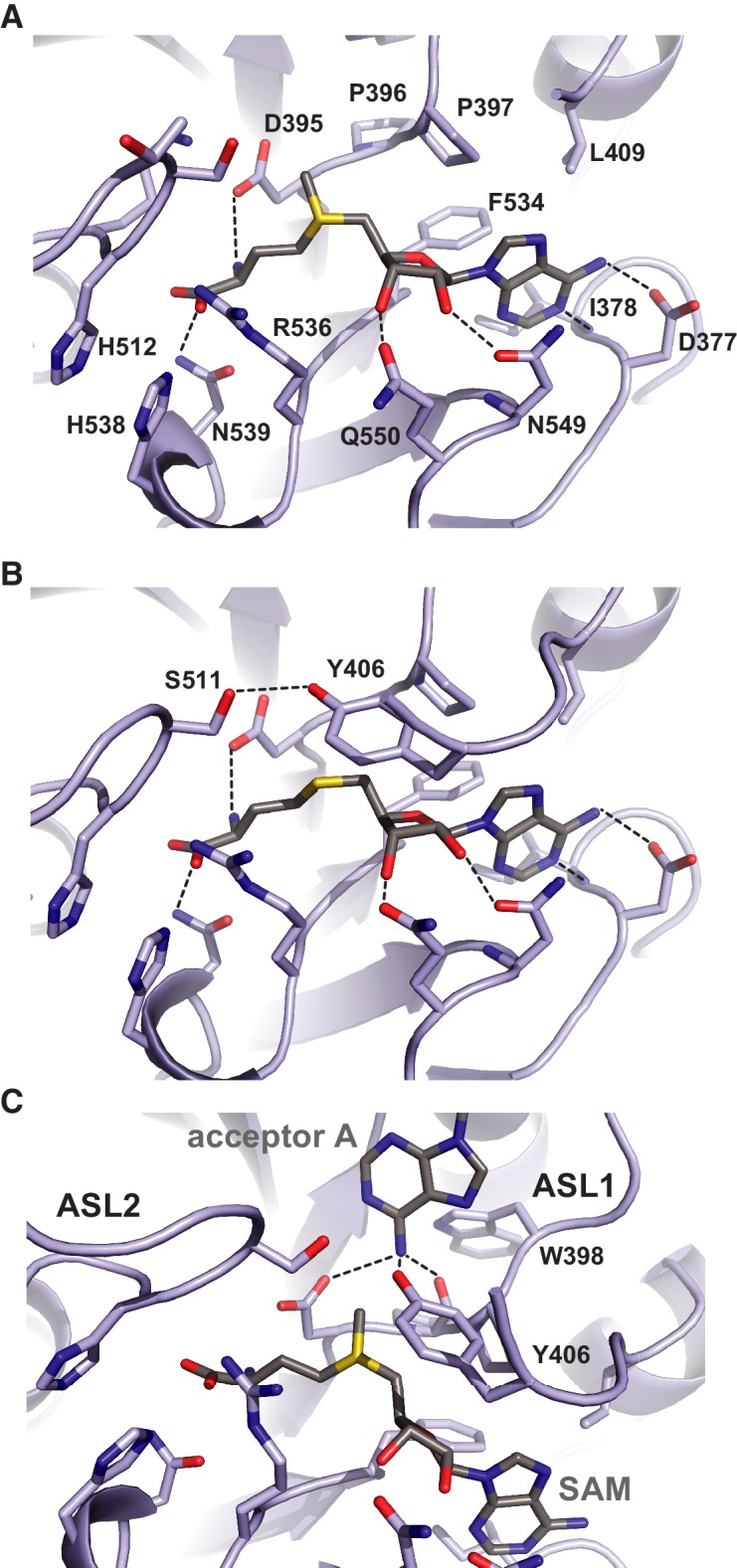
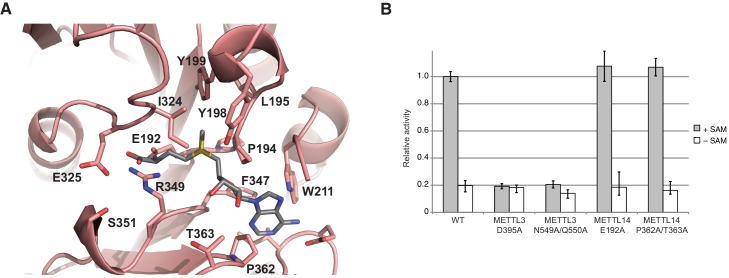
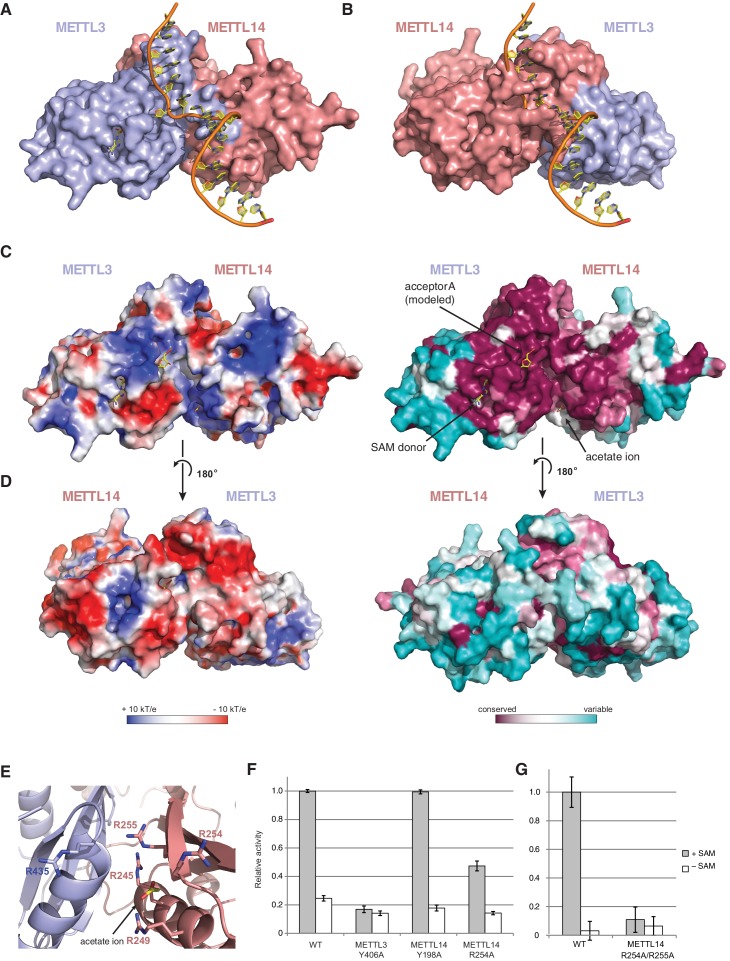
Methylation of adenosines at the N(6) position (m(6)A) is a dynamic and abundant epitranscriptomic mark that regulates critical aspects of eukaryotic RNA metabolism in numerous biological processes. The RNA methyltransferases METTL3 and METTL14 are components of a multisubunit m(6)A writer complex whose enzymatic activity is substantially higher than the activities of METTL3 or METTL14 alone. The molecular mechanism underpinning this synergistic effect is poorly understood. Here we report the crystal structure of the catalytic core of the human m(6)A writer complex comprising METTL3 and METTL14. The structure reveals the heterodimeric architecture of the complex and donor substrate binding by METTL3. Structure-guided mutagenesis indicates that METTL3 is the catalytic subunit of the complex, whereas METTL14 has a degenerate active site and plays non-catalytic roles in maintaining complex integrity and substrate RNA binding. These studies illuminate the molecular mechanism and evolutionary history of eukaryotic m(6)A modification in post-transcriptional genome regulation.
腺苷在N(6)位置的甲基化(m(6)A)是一种动态且丰富的表观转录组标记,在众多生物过程中调节真核RNA代谢的关键方面。RNA甲基转移酶METTL3和METTL14是多亚基m(6)A书写复合体的组成部分,其酶活性显著高于单独的METTL3或METTL14的活性。这种协同效应背后的分子机制尚不清楚。在这里,我们报道了包含METTL3和METTL14的人类m(6)A书写复合体催化核心的晶体结构。该结构揭示了复合体的异二聚体结构以及METTL3对供体底物的结合。基于结构的诱变表明,METTL3是复合体的催化亚基,而METTL14具有退化的活性位点,在维持复合体完整性和底物RNA结合中发挥非催化作用。这些研究阐明了真核m(6)A修饰在转录后基因组调控中的分子机制和进化历史。