Iyigundogdu Zeynep Ustaoglu, Demir Okan, Asutay Ayla Burcin, Sahin Fikrettin
Department of Chemical Engineering, Faculty of Engineering and Natural Sciences, Adana Science and Technology University, 01180 Seyhan, Adana, Turkey.
Department of Genetics and Bioengineering, Faculty of Engineering and Architecture, Yeditepe University, 34755 Kayisdagi, Istanbul, Turkey.
Appl Biochem Biotechnol. 2017 Mar;181(3):1155-1166. doi: 10.1007/s12010-016-2275-5. Epub 2016 Oct 12.
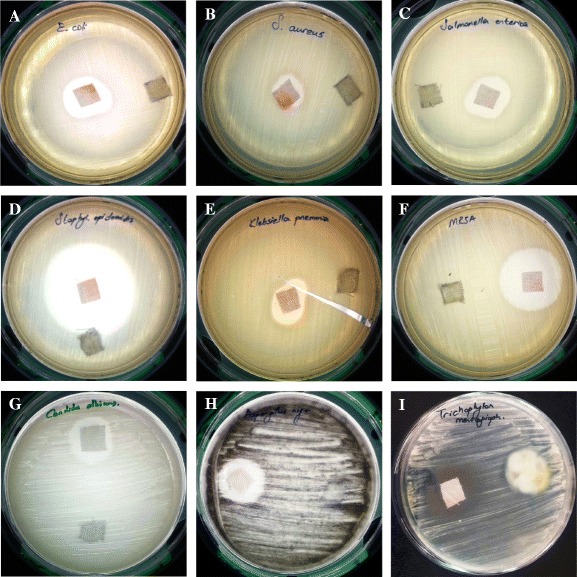
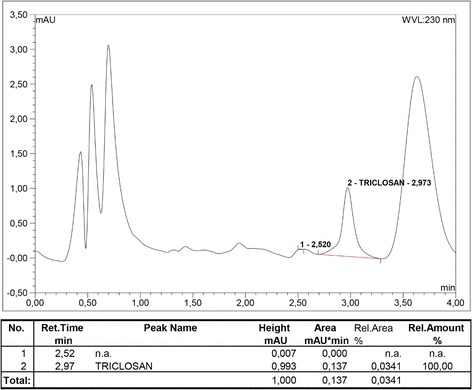
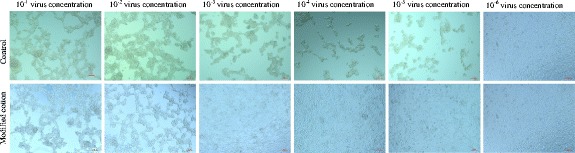
In conjunction with an increasing public awareness of infectious diseases, the textile industry and scientists are developing hygienic fabrics by the addition of various antimicrobial and antiviral compounds. In the current study, sodium pentaborate pentahydrate and triclosan are applied to cotton fabrics in order to gain antimicrobial and antiviral properties for the first time. The antimicrobial activity of textiles treated with 3 % sodium pentaborate pentahydrate, 0.03 % triclosan, and 7 % Glucapon has been investigated against a broad range of microorganisms including bacteria, yeast, and fungi. Moreover, modified cotton fabrics were tested against adenovirus type 5 and poliovirus type 1. According to the test results, the modified textile goods attained very good antimicrobial and antiviral properties. Thus, the results of the present study clearly suggest that sodium pentaborate pentahydrate and triclosan solution-treated textiles can be considered in the development of antimicrobial and antiviral textile finishes.
随着公众对传染病的意识不断提高,纺织行业和科学家们正在通过添加各种抗菌和抗病毒化合物来开发卫生织物。在当前的研究中,首次将五水合硼酸钠和三氯生应用于棉织物,以获得抗菌和抗病毒性能。研究了用3%五水合硼酸钠、0.03%三氯生和7%葡糖酰胺处理的纺织品对包括细菌、酵母和真菌在内的多种微生物的抗菌活性。此外,还对改性棉织物进行了针对5型腺病毒和1型脊髓灰质炎病毒的测试。根据测试结果,改性纺织品获得了非常好的抗菌和抗病毒性能。因此,本研究结果清楚地表明,五水合硼酸钠和三氯生溶液处理的纺织品可用于开发抗菌和抗病毒的织物整理剂。