Department of Dermatology, University of Cologne, Kerpenerstr. 62, Cologne 50937, Germany.
Center for Molecular Medicine Cologne (CMMC), University of Cologne, Robert-Koch-Str. 21, Cologne 50931, Germany.
Nat Commun. 2016 Oct 27;7:13226. doi: 10.1038/ncomms13226.
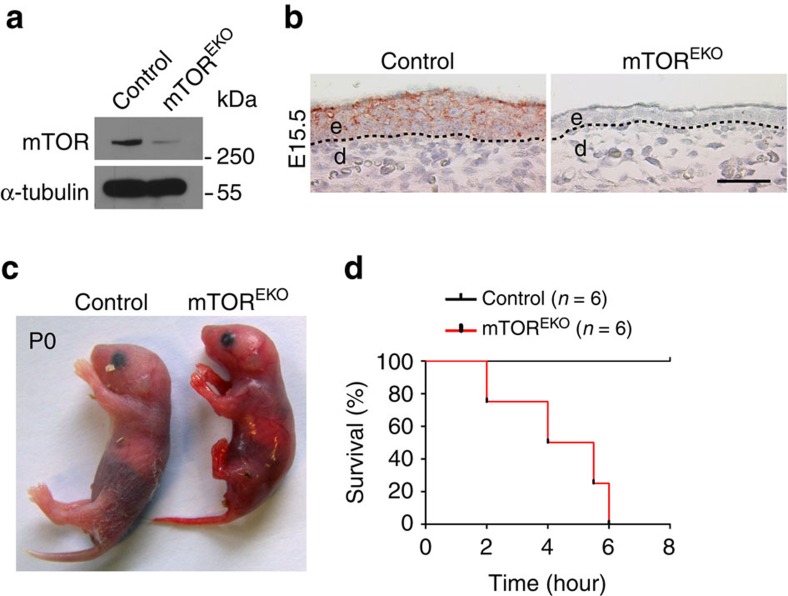
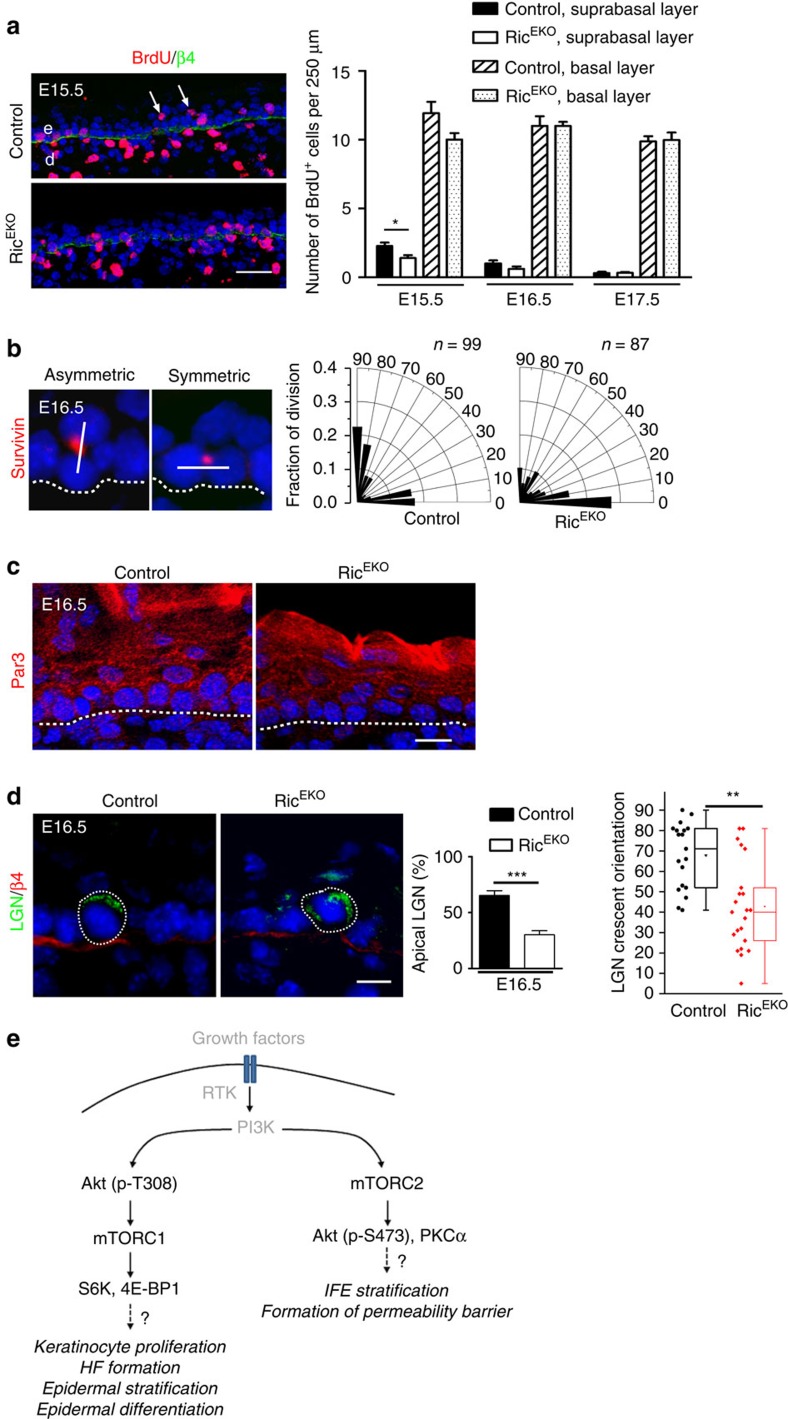
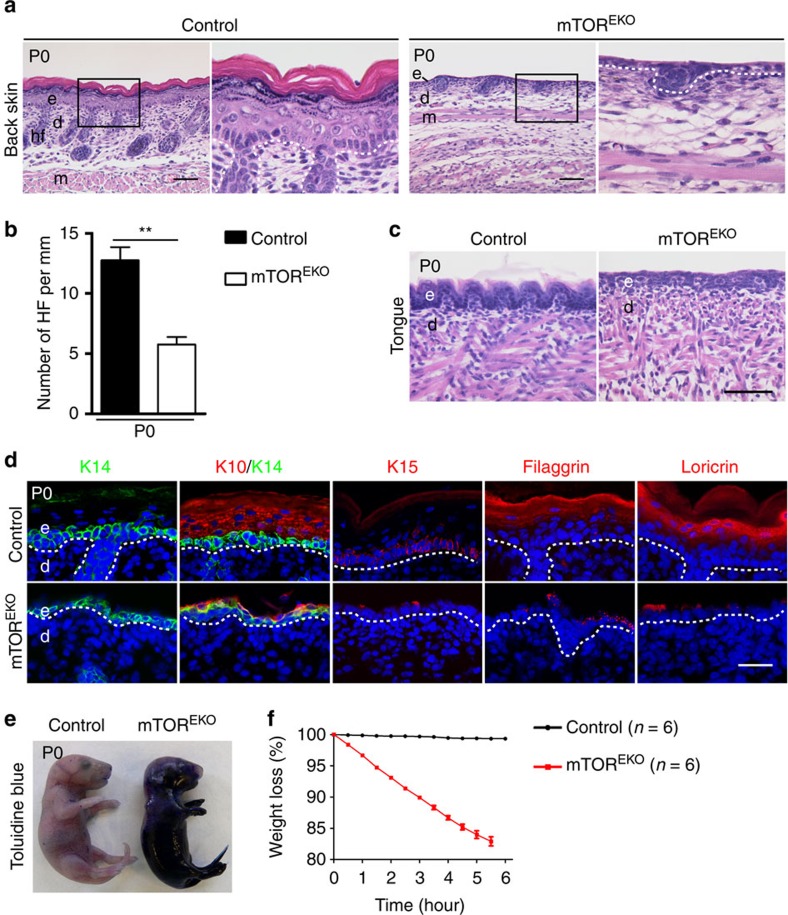
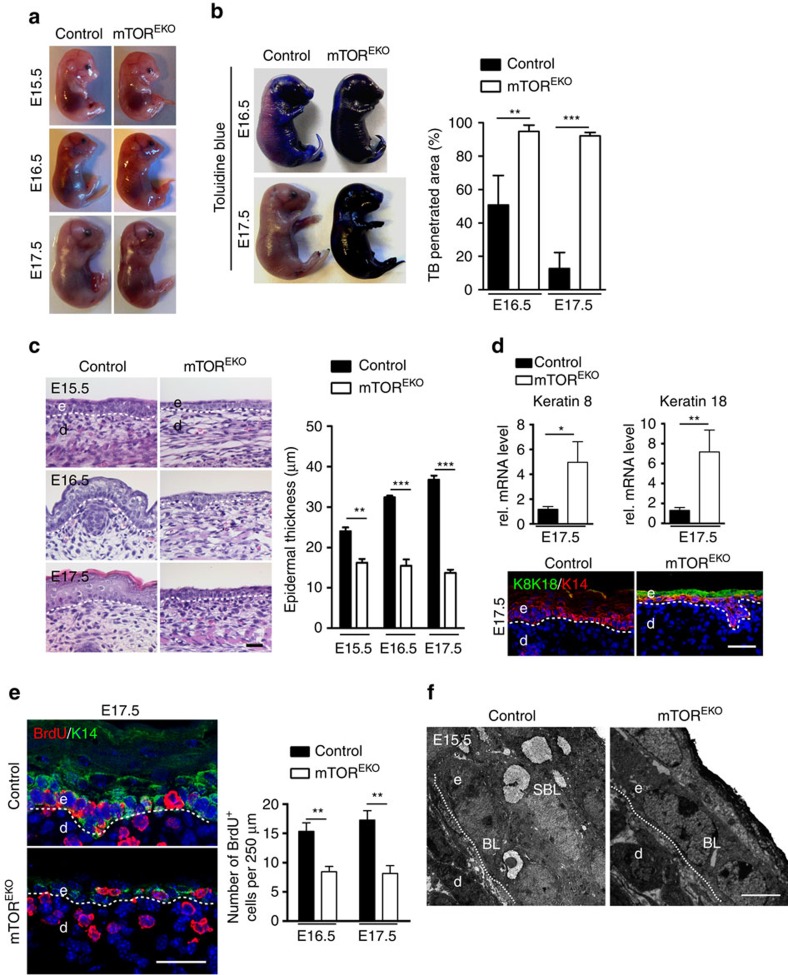
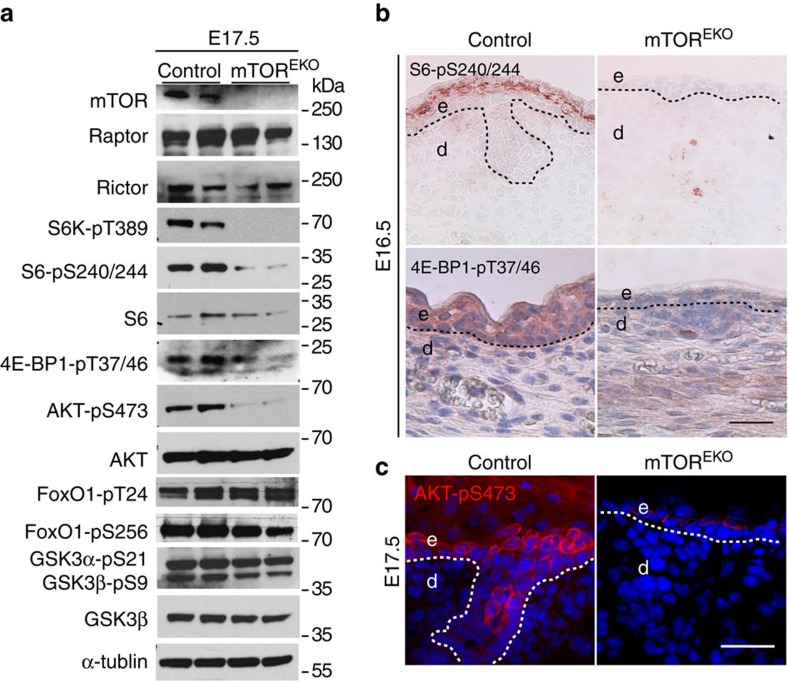
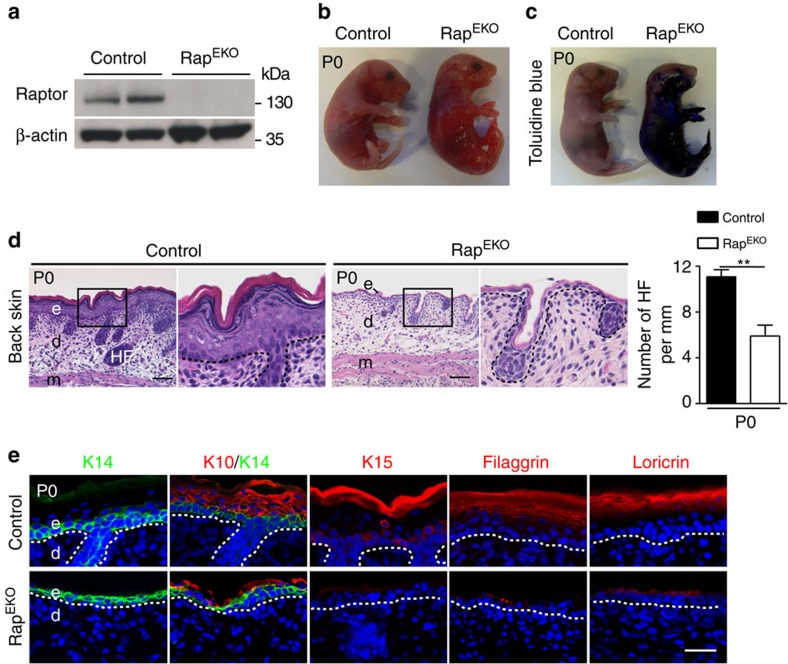
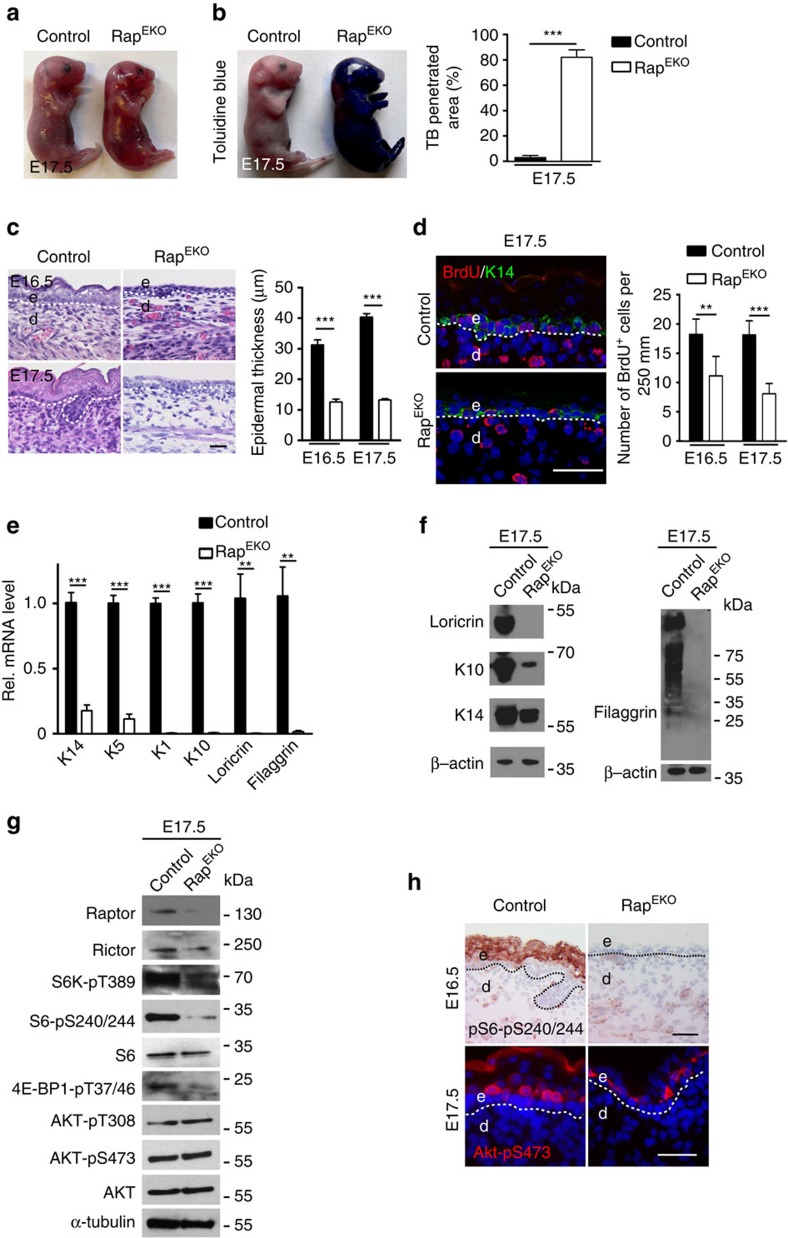
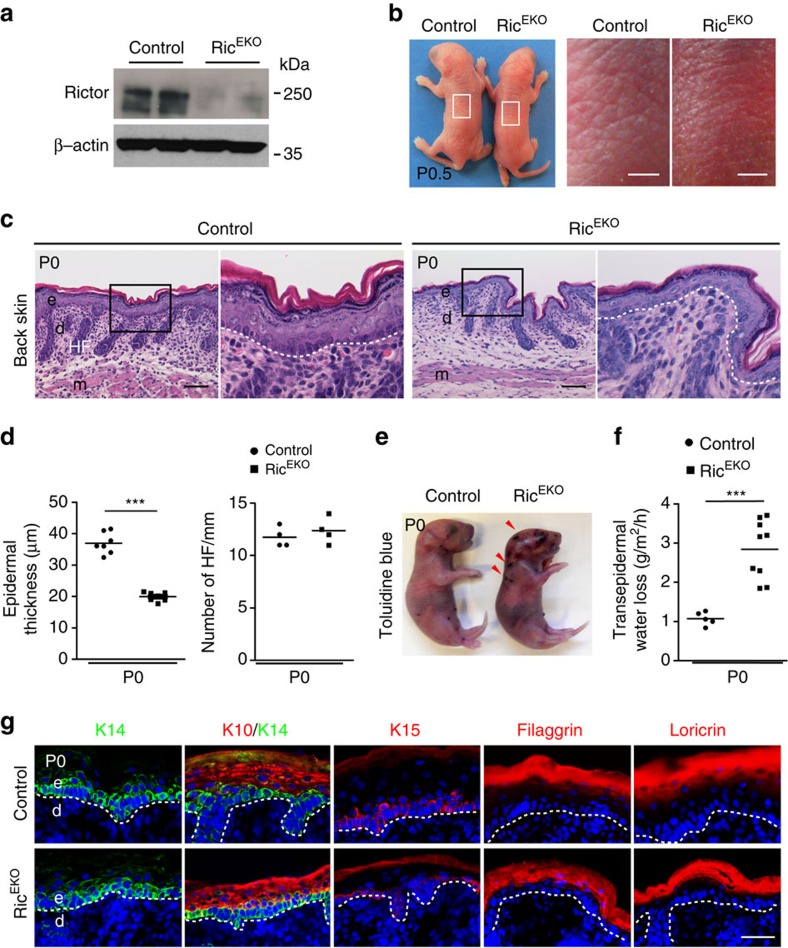
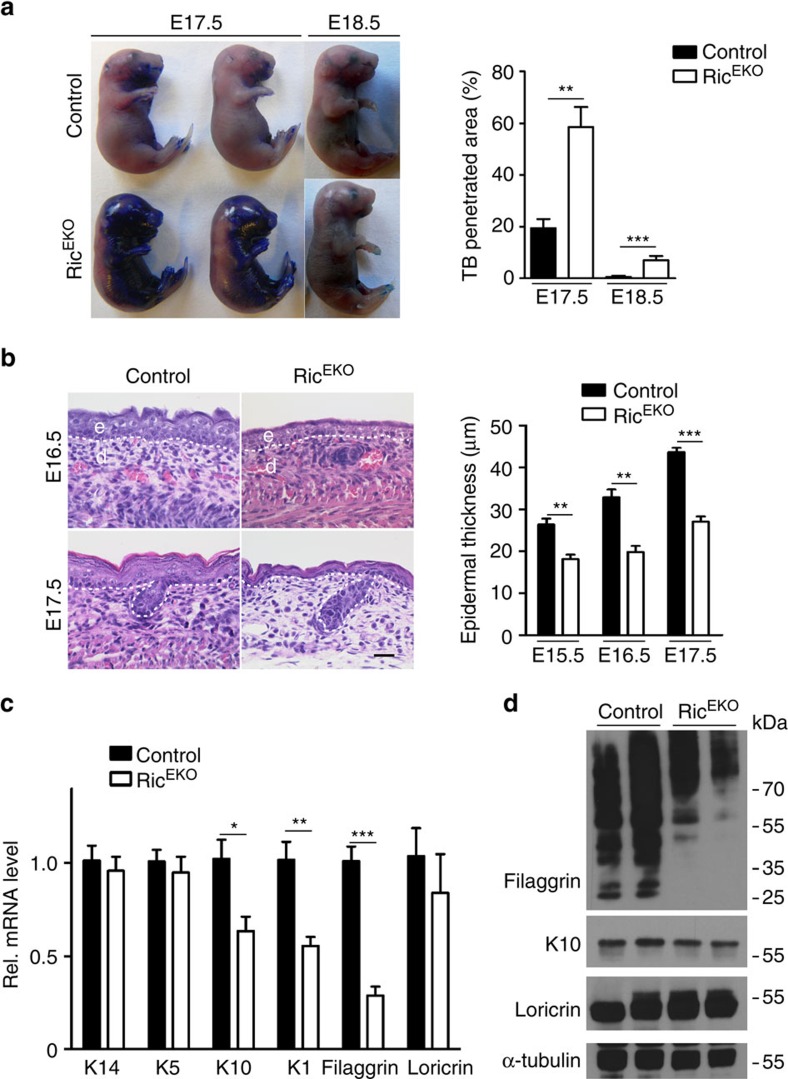
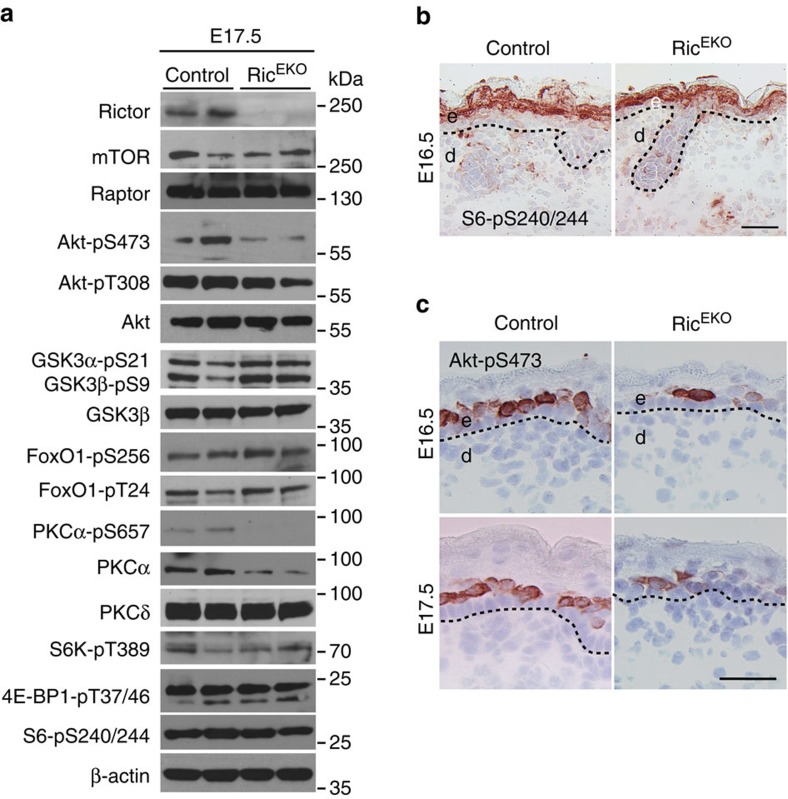
Mammalian target of rapamycin (mTOR), a regulator of growth in many tissues, mediates its activity through two multiprotein complexes, mTORC1 or mTORC2. The role of mTOR signalling in skin morphogenesis and epidermal development is unknown. Here we identify mTOR as an essential regulator in skin morphogenesis by epidermis-specific deletion of Mtor in mice (mTOR). mTOR mutants are viable, but die shortly after birth due to deficits primarily during the early epidermal differentiation programme and lack of a protective barrier development. Epidermis-specific loss of Raptor, which encodes an essential component of mTORC1, confers the same skin phenotype as seen in mTOR mutants. In contrast, newborns with an epidermal deficiency of Rictor, an essential component of mTORC2, survive despite a hypoplastic epidermis and disruption in late stage terminal differentiation. These findings highlight a fundamental role for mTOR in epidermal morphogenesis that is regulated by distinct functions for mTORC1 and mTORC2.
哺乳动物雷帕霉素靶蛋白(mTOR)是许多组织生长的调节剂,通过两种多蛋白复合物 mTORC1 或 mTORC2 来发挥其作用。mTOR 信号在皮肤形态发生和表皮发育中的作用尚不清楚。在这里,我们通过在小鼠中特异性敲除表皮 Mtor(mTOR)来鉴定 mTOR 作为表皮形态发生中的一个必需调节因子。mTOR 突变体是有活力的,但由于在早期表皮分化程序和缺乏保护性屏障发育方面的缺陷,出生后不久就会死亡。表皮特异性敲除 Raptor(编码 mTORC1 的必需成分)会赋予与 mTOR 突变体相同的皮肤表型。相比之下,尽管表皮 Rictor(mTORC2 的必需成分)缺乏,但新生鼠仍能存活,尽管表皮发育不全且晚期终末分化受到破坏。这些发现强调了 mTOR 在表皮形态发生中的基本作用,该作用由 mTORC1 和 mTORC2 的不同功能来调节。