Lv Shun, Wang Zhenzhen, Yang Xiufen, Guo Lihua, Qiu Dewen, Zeng Hongmei
State Key Laboratory for Biology of Plant Diseases and Insect Pests, Institute of Plant Protection, Chinese Academy of Agricultural Sciences Beijing, China.
Front Plant Sci. 2016 Dec 1;7:1818. doi: 10.3389/fpls.2016.01818. eCollection 2016.
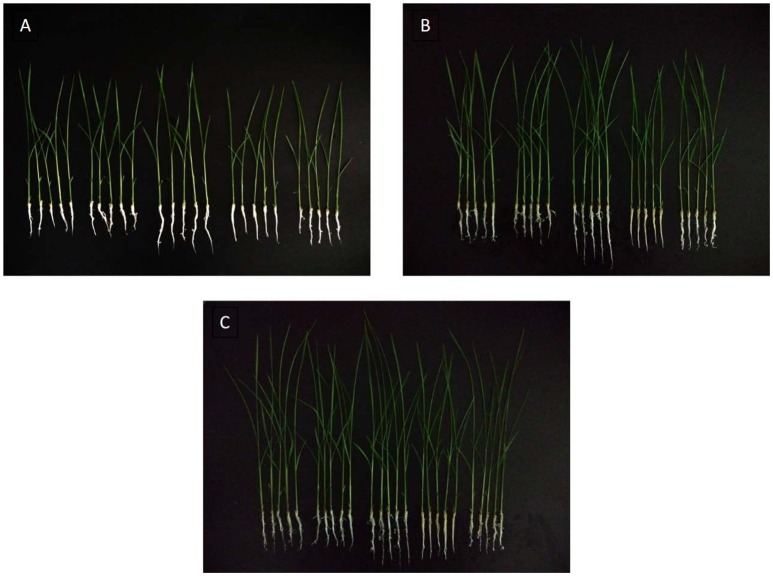
MoHrip1 is a protein elicitor isolated from and was found to induce blast-resistance in rice. To investigate the comprehensive functions of MoHrip1, next-generation sequencing (NGS)-based digital gene expression (DGE) profiling was performed to collect the transcriptional data of differentially expressed genes (DEGs) induced by MoHrip1. A total of 308 genes were identified with differential expression, and 80 genes were predicted to be induced specifically by MoHrip1. Among these 308 genes, a series of genes associated with the salicylic acid (SA) pathway, phytoalexin, transcription factors, and pathogen-related proteins were identified. Both the SA signaling pathway and the gibberellin (GA) pathway were activated, while the jasmonic acid (JA) signaling pathway was repressed. The contents of endogenous SA and GA and the morphological characteristics of the rice after treatment were measured to provide evidence supporting the predictions made based on the DGE data. The 80 genes mentioned above might be candidate genes for studying interactions with MoHrip1. The transcriptional data provided global effect information in rice induced by MoHrip1, and all the results demonstrated that MoHrip1 could induce pathogen resistance and promote plant growth by regulating the contents of SA and GA directly or indirectly.
稻瘟菌激发子1(MoHrip1)是一种从[具体来源未给出]中分离得到的蛋白激发子,被发现可诱导水稻产生抗稻瘟病能力。为了研究MoHrip1的综合功能,进行了基于新一代测序(NGS)的数字基因表达(DGE)分析,以收集由MoHrip1诱导的差异表达基因(DEG)的转录数据。共鉴定出308个差异表达基因,其中80个基因预计是由MoHrip1特异性诱导的。在这308个基因中,鉴定出了一系列与水杨酸(SA)途径、植保素、转录因子和病程相关蛋白相关的基因。SA信号通路和赤霉素(GA)信号通路均被激活,而茉莉酸(JA)信号通路受到抑制。测定了处理后水稻体内内源SA和GA的含量以及水稻的形态特征,以提供支持基于DGE数据所做预测的证据。上述80个基因可能是研究与MoHrip1相互作用的候选基因。转录数据提供了MoHrip1诱导水稻产生的全局效应信息,所有结果表明,MoHrip1可通过直接或间接调节SA和GA的含量来诱导病原体抗性并促进植物生长。