Liarzi Orna, Bucki Patricia, Braun Miyara Sigal, Ezra David
Department of Plant Pathology and Weed Research, ARO - the Volcani Center, Rishon LeZion, Israel.
Department of Entomology and the Nematology and Chemistry units, ARO - the Volcani Center, Rishon LeZion, Israel.
PLoS One. 2016 Dec 20;11(12):e0168437. doi: 10.1371/journal.pone.0168437. eCollection 2016.
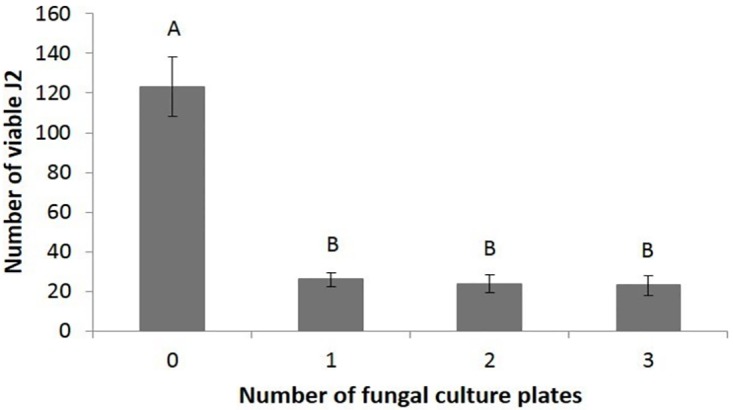
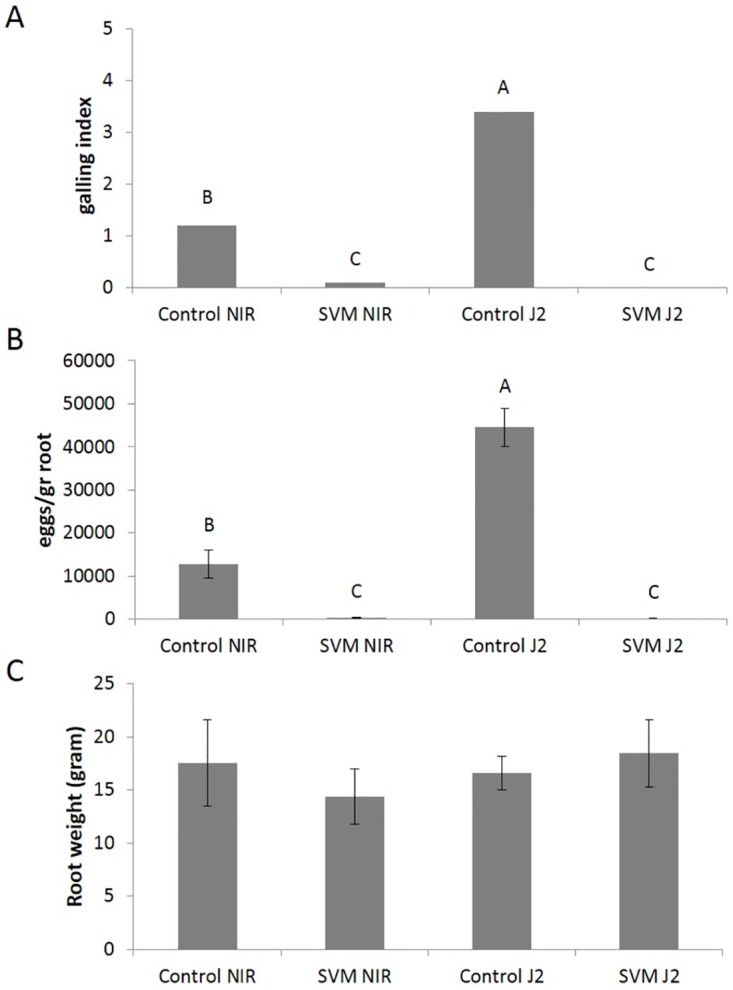
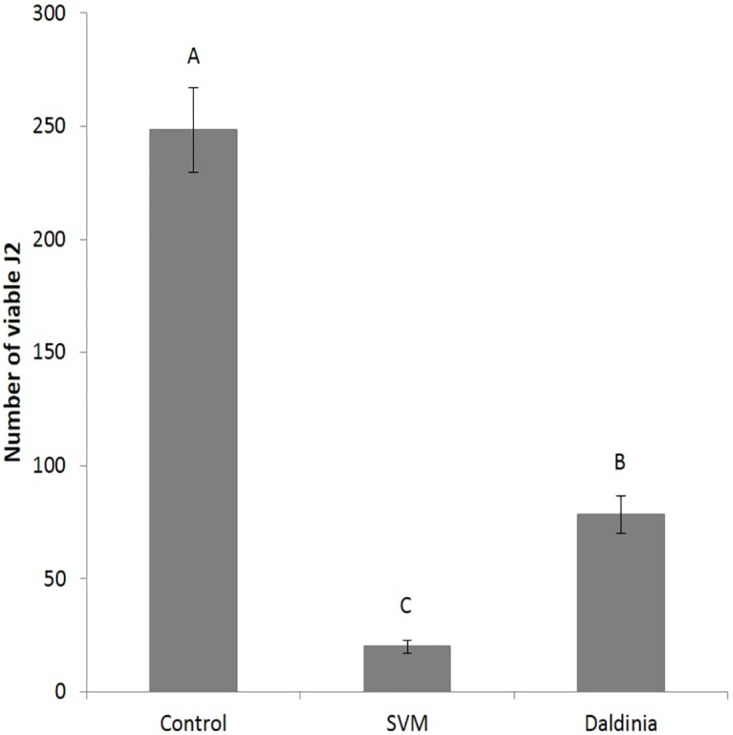
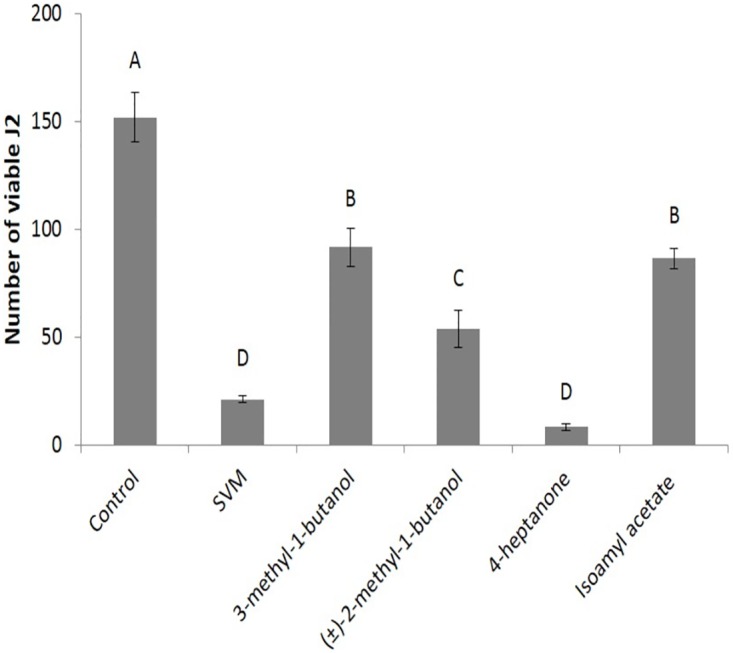
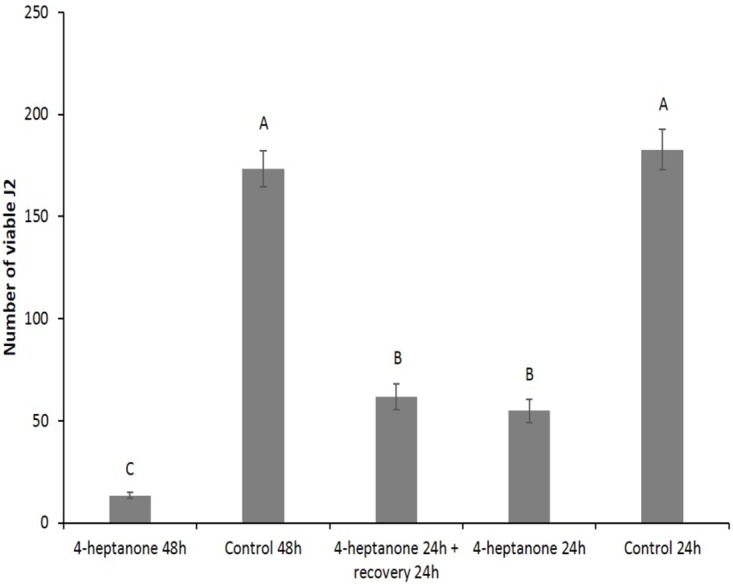
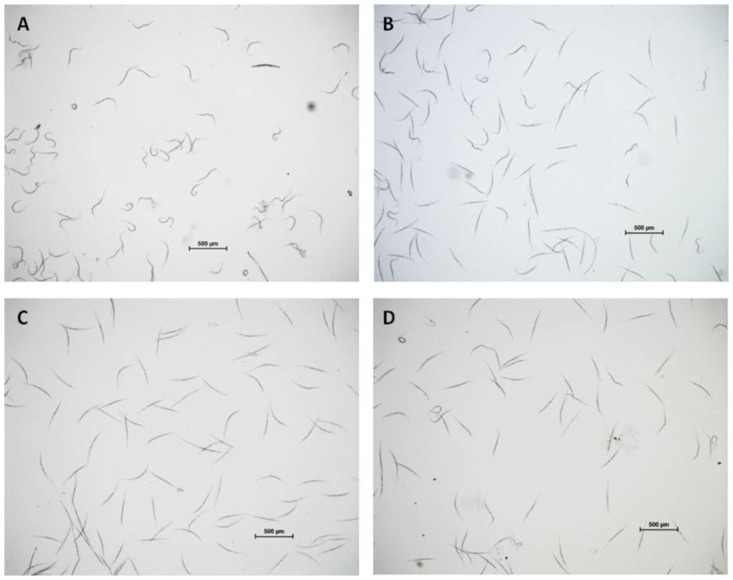
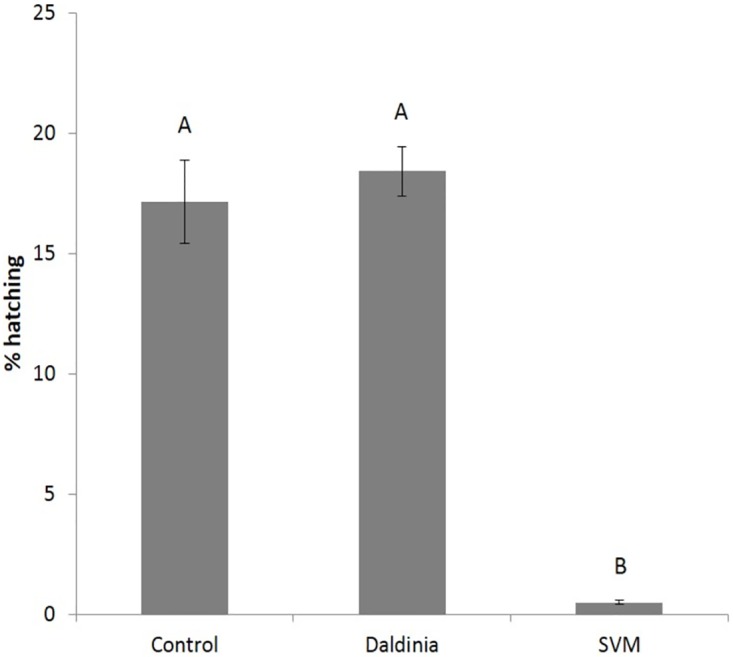
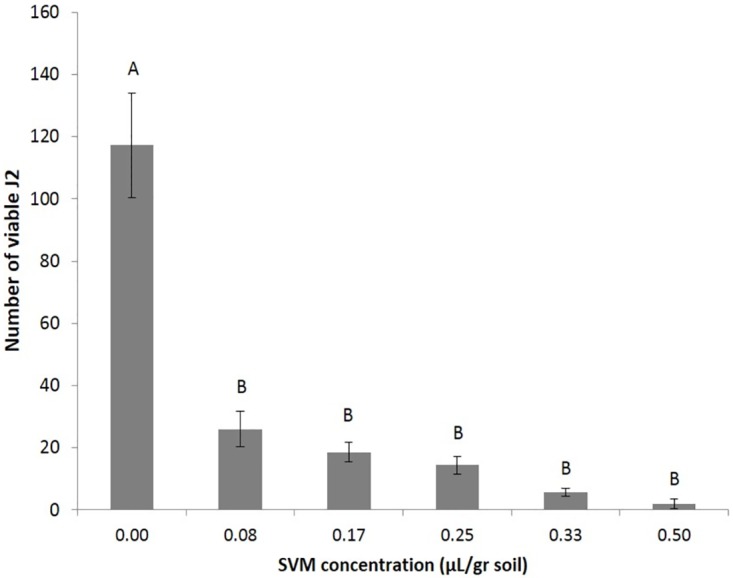
Plant-parasitic nematodes form one of the largest sources of biotic stress imposed on plants, and are very difficult to control; among them are the obligate parasites, the sedentary root-knot nematodes (RKNs)-Meloidogyne spp.-which are extremely polyphagous and exploit a very wide range of hosts. Endophytic fungi are organisms that spend most of their life cycle within plant tissue without causing visible damage to the host plant. Many endophytes secrete specialized metabolites and/or emit volatile organic compounds (VOCs) that exhibit biological activity. Recently, we demonstrated that the endophytic fungus Daldinia cf. concentrica secrets biologically active VOCs. Here we examined the ability of the fungus and its VOCs to control the RKN M. javanica both in vitro and greenhouse experiments. The D. cf. concentrica VOCs showed bionematicidal activity against the second-stage juveniles (J2s) of M. javanica. We found that exposure of J2s to fungal volatiles caused 67% reduction in viability, and that application of a synthetic volatile mixture (SVM), comprising 3-methyl-1-butanol, (±)-2-methyl-1-butanol, 4-heptanone, and isoamyl acetate, in volumetric ratio of 1:1:2:1 further reduced J2s viability by 99%. We demonstrated that, although each of the four VOCs significantly reduced the viability of J2s relative to the control, only 4-heptanone elicited the same effect as the whole mixture, with nematicidal activity of 90% reduction in viability of the J2s. Study of the effect of the SVM on egg hatching demonstrated that it decreased eggs hatching by 87%. Finally, application of the SVM to soil inoculated with M. javanica eggs or J2s prior to planting susceptible tomato plants resulted in a significantly reduced galling index and fewer eggs produced on each root system, with no effect on root weight. Thus, D. cf. concentrica and/or SVM based on fungal VOCs may be considered as a novel alternative approach to controlling the RKN M. javanica.
植物寄生线虫是对植物造成生物胁迫的最大来源之一,且极难控制;其中包括专性寄生线虫,即定居型根结线虫(RKNs)——南方根结线虫属——它们食性极广,可侵染种类繁多的寄主植物。内生真菌是一类在植物组织内度过其大部分生命周期且不会对寄主植物造成明显损害的生物。许多内生真菌会分泌特殊代谢产物和/或释放具有生物活性的挥发性有机化合物(VOCs)。最近,我们证明了内生真菌同心拟炭角菌能分泌具有生物活性的VOCs。在此,我们通过体外实验和温室实验研究了该真菌及其VOCs对爪哇根结线虫的防治能力。同心拟炭角菌的VOCs对爪哇根结线虫的二龄幼虫(J2s)表现出杀线虫活性。我们发现,将J2s暴露于真菌挥发物中会导致其活力降低67%,而施用由3 - 甲基 - 1 - 丁醇、(±)- 2 - 甲基 - 1 - 丁醇、4 - 庚酮和乙酸异戊酯按体积比1:1:2:1组成的合成挥发物混合物(SVM),可使J2s活力进一步降低99%。我们证明,尽管这四种VOCs中的每一种相对于对照都显著降低了J2s的活力,但只有4 - 庚酮产生了与整个混合物相同的效果,其杀线虫活性使J2s活力降低了90%。对SVM对卵孵化影响的研究表明,它使卵孵化率降低了87%。最后,在种植易感番茄植株之前,将SVM施用于接种了爪哇根结线虫卵或J2s的土壤中,可显著降低虫瘿指数,且每个根系上产生的卵数量减少,对根重无影响。因此,同心拟炭角菌和/或基于真菌VOCs的SVM可被视为防治爪哇根结线虫的一种新型替代方法。