Department of Chemistry and Biochemistry, University of Arkansas, Fayetteville, AR, 72701, USA.
Roy J. Carver Department of Biochemistry, Biophysics and Molecular Biology, Iowa State University, Ames, IA, 50011, USA.
Sci Rep. 2016 Dec 23;6:39920. doi: 10.1038/srep39920.
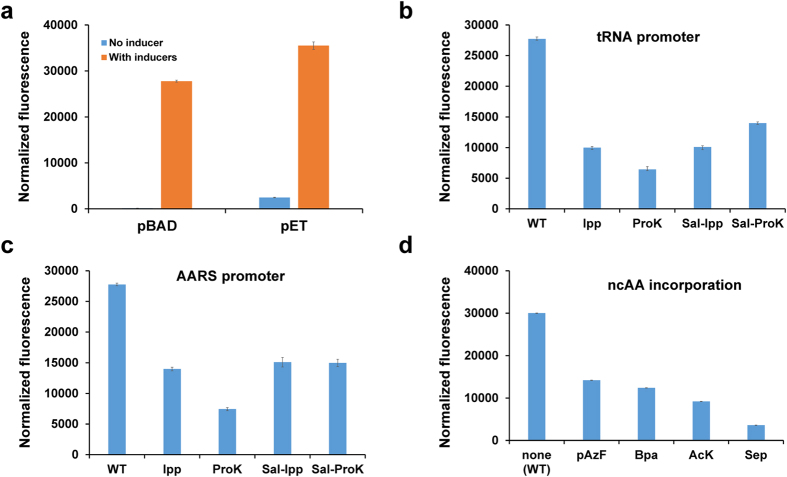
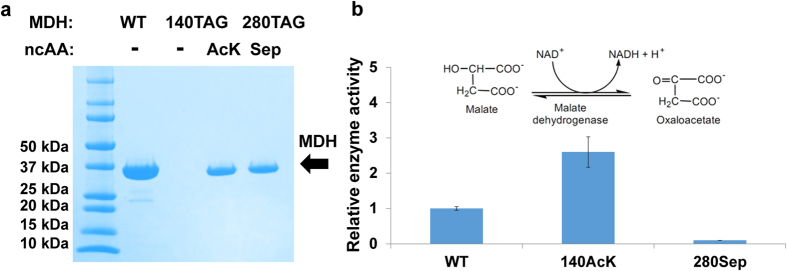
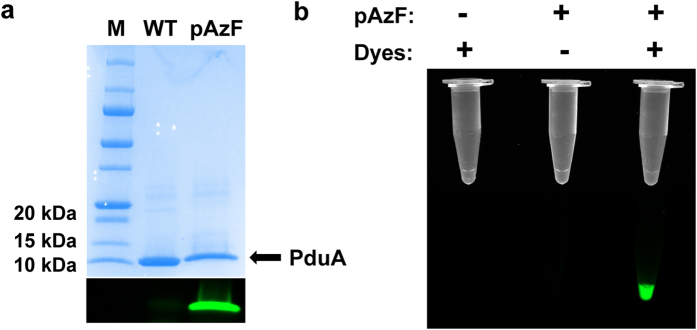
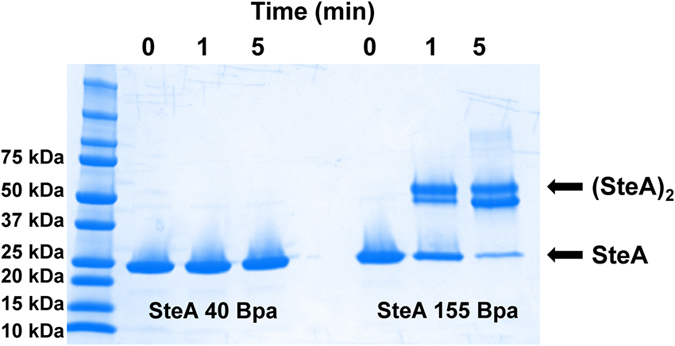
The diversity of non-canonical amino acids (ncAAs) endows proteins with new features for a variety of biological studies and biotechnological applications. The genetic code expansion strategy, which co-translationally incorporates ncAAs into specific sites of target proteins, has been applied in many organisms. However, there have been only few studies on pathogens using genetic code expansion. Here, we introduce this technique into the human pathogen Salmonella by incorporating p-azido-phenylalanine, benzoyl-phenylalanine, acetyl-lysine, and phosphoserine into selected Salmonella proteins including a microcompartment shell protein (PduA), a type III secretion effector protein (SteA), and a metabolic enzyme (malate dehydrogenase), and demonstrate practical applications of genetic code expansion in protein labeling, photocrosslinking, and post-translational modification studies in Salmonella. This work will provide powerful tools for a wide range of studies on Salmonella.
非天然氨基酸(ncAAs)的多样性赋予了蛋白质新的特性,可用于多种生物学研究和生物技术应用。遗传密码扩展策略,即共翻译地将 ncAAs 掺入到靶蛋白的特定位置,已在许多生物体中得到应用。然而,利用遗传密码扩展对病原体进行的研究却很少。在这里,我们通过将 p-叠氮苯丙氨酸、苯甲酰苯丙氨酸、乙酰赖氨酸和磷酸丝氨酸掺入到包括微隔间壳蛋白(PduA)、III 型分泌效应蛋白(SteA)和代谢酶(苹果酸脱氢酶)在内的选定沙门氏菌蛋白中,将该技术引入人类病原体沙门氏菌中,并证明了遗传密码扩展在沙门氏菌蛋白标记、光交联和翻译后修饰研究中的实际应用。这项工作将为沙门氏菌的广泛研究提供强大的工具。