Yadav Inderjit S, Sharma Amandeep, Kaur Satinder, Nahar Natasha, Bhardwaj Subhash C, Sharma Tilak R, Chhuneja Parveen
School of Agricultural Biotechnology, Punjab Agricultural University Ludhiana, India.
Regional Research Station, Indian Institute of Wheat and Barley Research Flowerdale, Shimla.
Front Plant Sci. 2016 Dec 23;7:1943. doi: 10.3389/fpls.2016.01943. eCollection 2016.
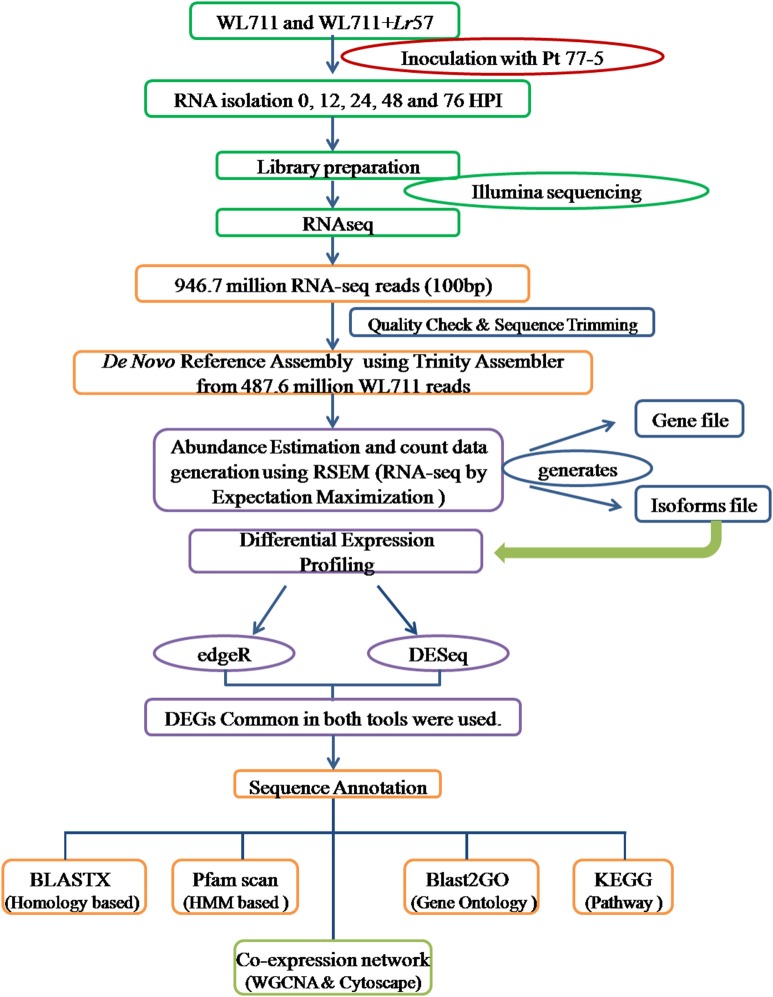
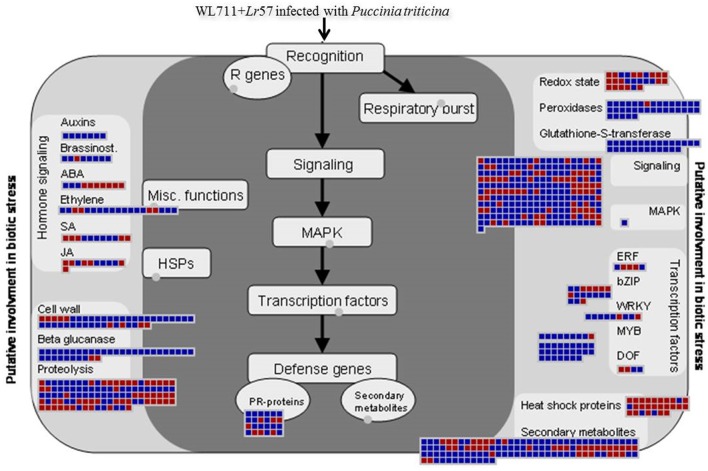
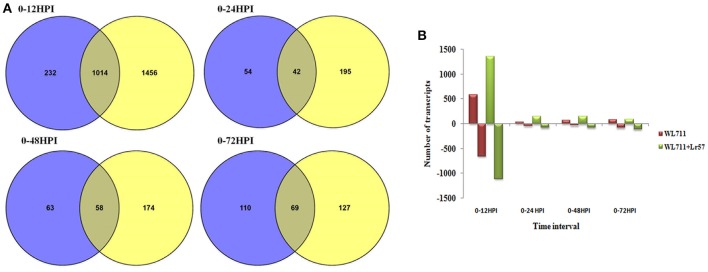
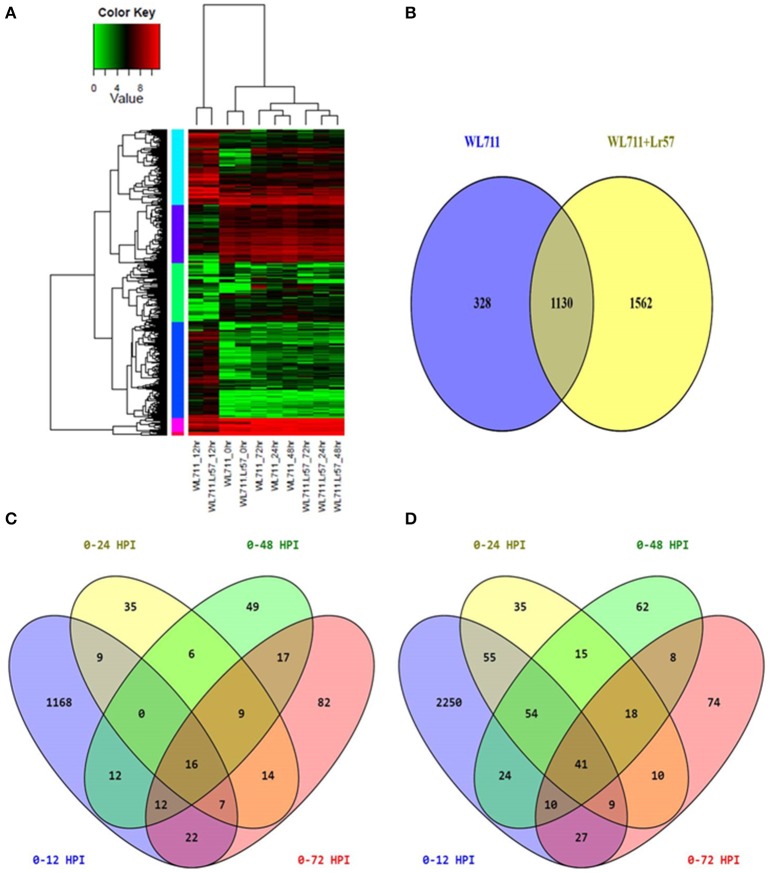
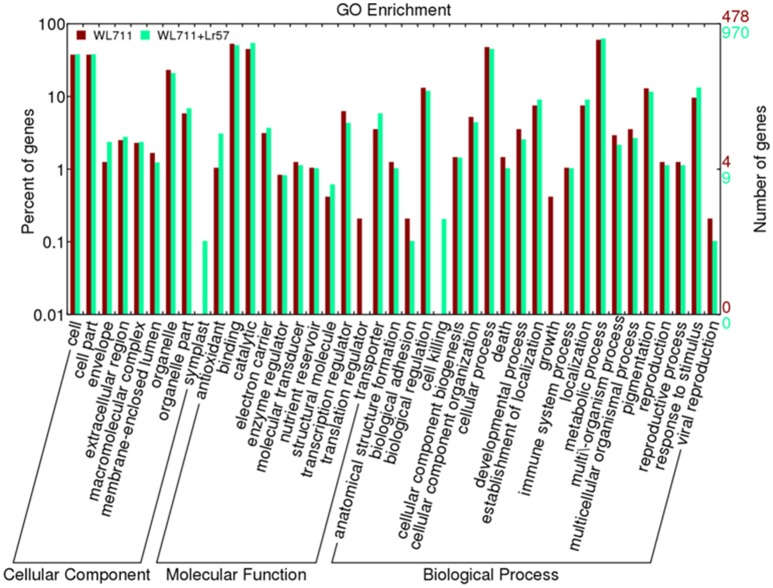
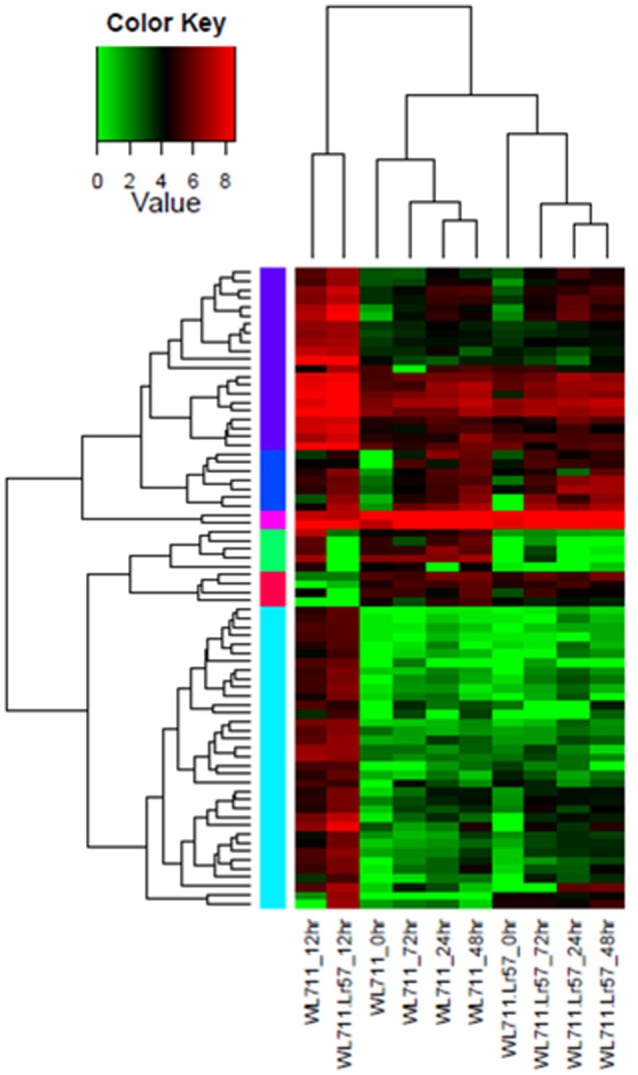
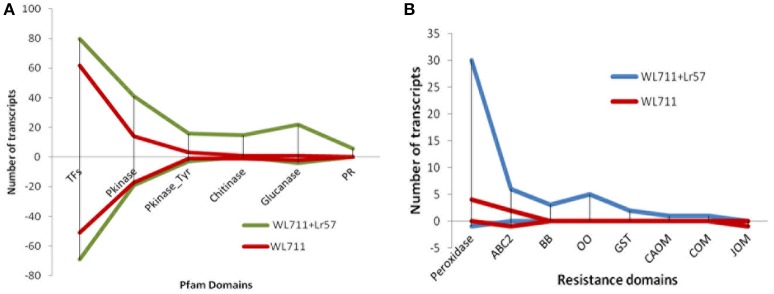
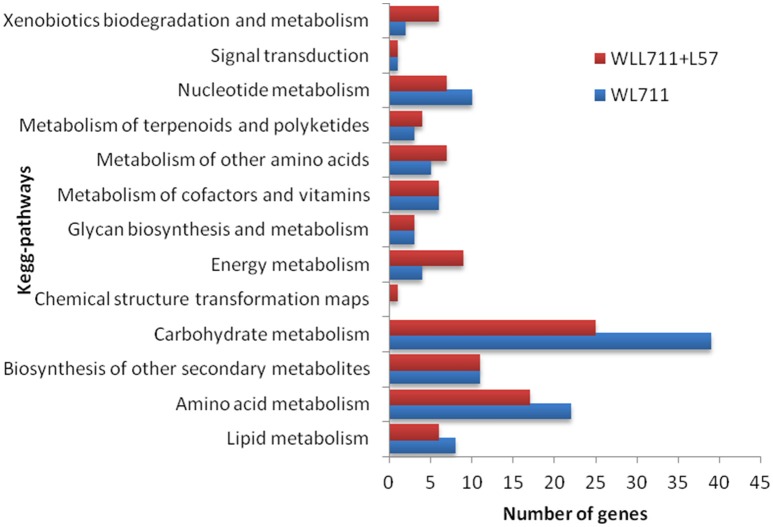
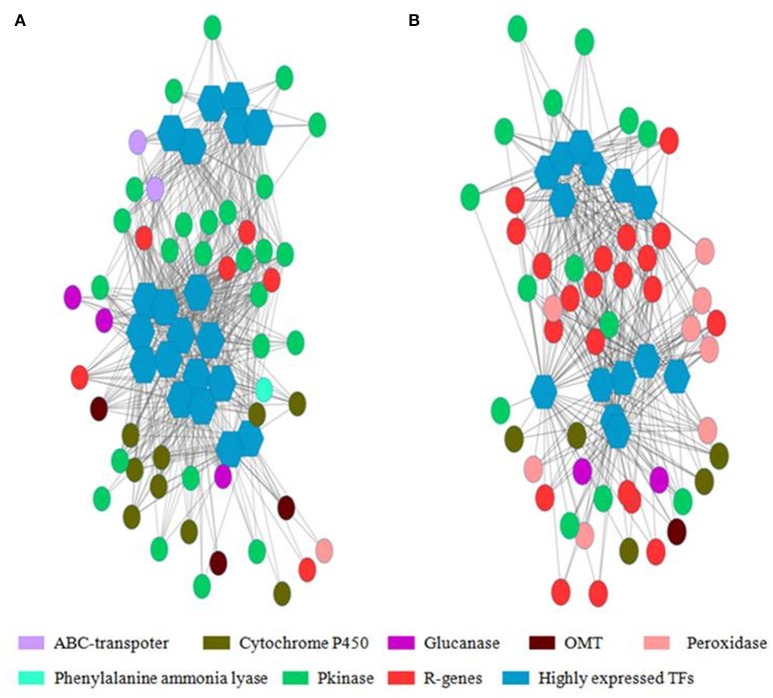
Leaf rust caused by () is one of the most important diseases of bread wheat globally. Recent advances in sequencing technologies have provided opportunities to analyse the complete transcriptomes of the host as well as pathogen for studying differential gene expression during infection. Pathogen induced differential gene expression was characterized in a near isogenic line carrying leaf rust resistance gene and susceptible recipient genotype WL711. RNA samples were collected at five different time points 0, 12, 24, 48, and 72 h post inoculation (HPI) with Pt 77-5. A total of 3020 transcripts were differentially expressed with 1458 and 2692 transcripts in WL711 and WL711+, respectively. The highest number of differentially expressed transcripts was detected at 12 HPI. Functional categorization using Blast2GO classified the genes into biological processes, molecular function and cellular components. WL711+ showed much higher number of differentially expressed nucleotide binding and leucine rich repeat genes and expressed more protein kinases and pathogenesis related proteins such as chitinases, glucanases and other PR proteins as compared to susceptible genotype. Pathway annotation with KEGG categorized genes into 13 major classes with carbohydrate metabolism being the most prominent followed by amino acid, secondary metabolites, and nucleotide metabolism. Gene co-expression network analysis identified four and eight clusters of highly correlated genes in WL711 and WL711+, respectively. Comparative analysis of the differentially expressed transcripts led to the identification of some transcripts which were specifically expressed only in WL711+. It was apparent from the whole transcriptome sequencing that the resistance gene directed the expression of different genes involved in building the resistance response in the host to combat invading pathogen. The RNAseq data and differentially expressed transcripts identified in present study is a genomic resource which can be used for further studying the host pathogen interaction for and wheat transcriptome in general.
由()引起的叶锈病是全球面包小麦最重要的病害之一。测序技术的最新进展为分析宿主以及病原体的完整转录组提供了机会,以便研究感染期间的差异基因表达。在携带叶锈病抗性基因的近等基因系和感病受体基因型WL711中对病原体诱导的差异基因表达进行了表征。在接种Pt 77-5后的0、12、24、48和72小时这五个不同时间点收集RNA样本。共有3020个转录本差异表达,其中WL711和WL711 +中分别有1458和2692个转录本。在接种后12小时检测到差异表达转录本的数量最多。使用Blast2GO进行功能分类将基因分为生物过程、分子功能和细胞成分。与感病基因型相比,WL711 +显示出更多差异表达的核苷酸结合和富含亮氨酸重复序列的基因,并且表达了更多的蛋白激酶和病程相关蛋白,如几丁质酶、葡聚糖酶和其他病程相关蛋白。用KEGG进行通路注释将基因分为13个主要类别,其中碳水化合物代谢最为突出,其次是氨基酸、次生代谢物和核苷酸代谢。基因共表达网络分析分别在WL711和WL711 +中鉴定出四个和八个高度相关基因的簇。对差异表达转录本的比较分析导致鉴定出一些仅在WL711 +中特异性表达的转录本。从整个转录组测序中可以明显看出,抗性基因指导了宿主中参与构建抗性反应以对抗入侵病原体的不同基因的表达。本研究中鉴定的RNAseq数据和差异表达转录本是一种基因组资源,可用于进一步研究叶锈病与小麦转录组的宿主-病原体相互作用。