Bawaskar Parag Himatrao, Bawaskar Himmatrao Saluba, Bawaskar Pramodini Himmatrao, Pakhare Abhijit Patilbuwa
Department of Medicine, Topiwala Medical College and BYL Nair Hospital, Mumbai, Maharashtra, India.
Bawaskar Hospital and Clinical Research Center, Mahad, Raigad, Maharashtra, India.
Indian J Endocrinol Metab. 2017 Jan-Feb;21(1):125-130. doi: 10.4103/2230-8210.196004.
Despite abundant sunshine, Vitamin D deficiency is prevalent in urban India. However, reports on analyzing Vitamin D status from rural Indian population are scanty. Here, we have evaluated Vitamin D status in patients attending outpatient department (OPD) in a rural Indian hospital setting.
A hospital-based cross-sectional study was conducted at a secondary level rural hospital in patients attending medicine OPD. After obtaining informed consent, demographic information was collected from consecutive adult patients along with 3 ml blood sample for Vitamin D analysis using electro chemiluminescene on cobas elecys E411 fully automated system. Vitamin D levels were compared across various groups by using Mann-Whitney or Kruskal-Wallis tests, and multiple linear regression analysis was performed to identify the predictors of Vitamin D level.
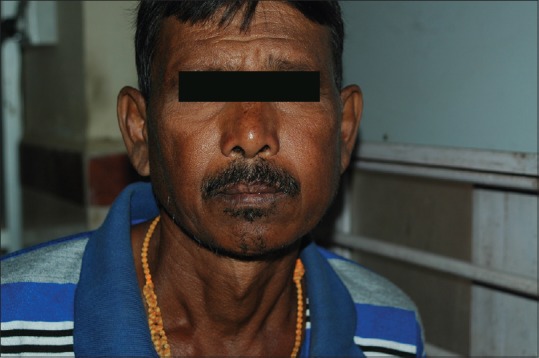
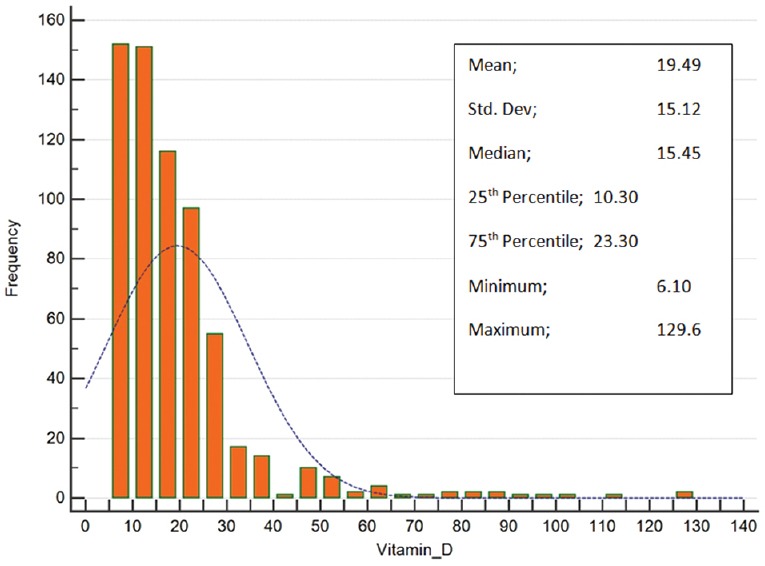
A total of 640 patients were enrolled in the study, and the prevalence of Vitamin D deficiency (<20 ng/ml) was found to be 65.4% with 95% confidence interval of 61.7-69.1%. On univariate analysis, Vitamin D levels were statistically significantly lower among younger age group, those who have dark complexion, wearing Burkha (veil), and those who were not adequately exposed to sunlight. After multiple linear regressions, dark complexion, wearing Burkha, inadequate exposure to sunlight, and presence of diabetes were identified as statistically significant predictors of Vitamin D deficiency.
We report a high prevalence of Vitamin-D deficiency in patients attending medicine OPD. Thus, patients with generalized complaints may be evaluated for serum Vitamin D levels.
尽管印度城市阳光充足,但维生素D缺乏在印度城市中普遍存在。然而,关于分析印度农村人口维生素D状况的报告却很少。在此,我们评估了印度一家农村医院门诊部(OPD)患者的维生素D状况。
在一家二级农村医院对内科OPD患者进行了一项基于医院的横断面研究。在获得知情同意后,收集了连续成年患者的人口统计学信息以及3毫升血液样本,使用cobas elecys E411全自动系统上的电化学发光法进行维生素D分析。通过Mann-Whitney或Kruskal-Wallis检验比较不同组的维生素D水平,并进行多元线性回归分析以确定维生素D水平的预测因素。
共有640名患者纳入研究,维生素D缺乏(<20 ng/ml)的患病率为65.4%,95%置信区间为61.7 - 69.1%。单因素分析显示,在较年轻年龄组、肤色较深、戴布卡(面纱)以及阳光照射不足的人群中,维生素D水平在统计学上显著较低。经过多元线性回归分析,肤色较深、戴布卡、阳光照射不足以及患有糖尿病被确定为维生素D缺乏的统计学显著预测因素。
我们报告了内科OPD患者中维生素D缺乏的高患病率。因此,对于有全身不适症状的患者,可能需要评估其血清维生素D水平。