Arenas Nelson E, Abril Diego A, Valencia Paola, Khandige Surabhi, Soto Carlos Yesid, Moreno-Melo Vilma
Faculty of Agricultural Sciences, Universidad de Cundinamarca, Diagonal 18 No. 20-29, Fusagasugá, Cundinamarca, 252211, Colombia.
Department of Biochemistry and Molecular Biology, University of Southern Denmark, Campusvej 55, 5230, Odense M, Denmark.
Trop Anim Health Prod. 2017 Apr;49(4):739-745. doi: 10.1007/s11250-017-1251-6. Epub 2017 Mar 11.
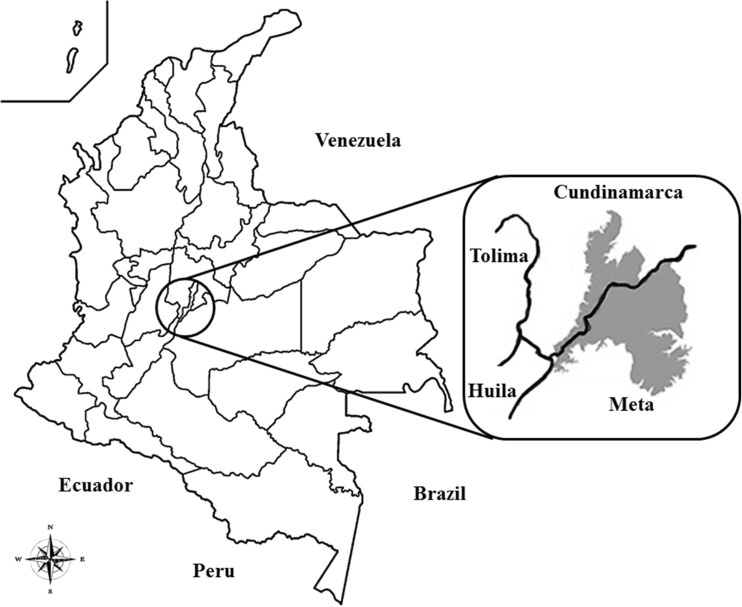
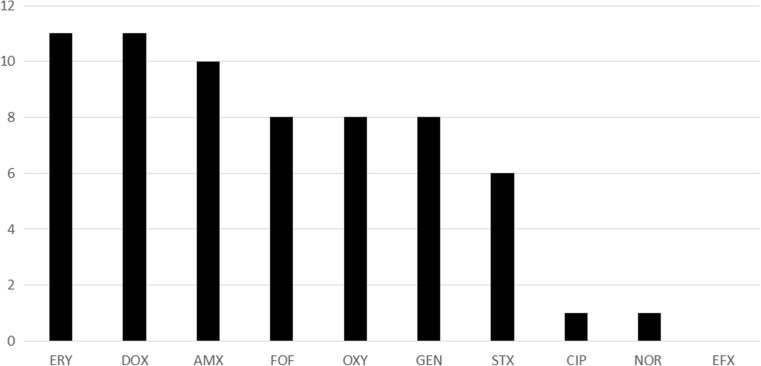
Hazardous practices regarding antibiotics misuse, unsanitary milking procedures, and the commercial sales of raw milk and unpasteurized dairy products are currently being practiced by livestock farmers in the Sumapaz region (Colombia). The purpose of this study was to screen for food-borne and zoonotic pathogens associated with local livestock practices. We evaluated 1098 cows from 46 livestock farms in the Sumapaz region that were selected by random. Of the total population of cattle, 962 animals (88%) were tested for bovine TB using a caudal-fold tuberculin test and 546 (50%) for brucellosis by a competitive ELISA. In the population tested, 23 cows were positive for Brucella sp. representing a 4.2% seroprevalence and no cases of bovine tuberculosis were found. In addition, food-borne contamination with Escherichia coli and Staphylococcus aureus was assessed together with antibiotic susceptibility for ten different antibiotics in milk samples from 16 livestock farms. We found that 12 of the farms (75%) were contaminated with these food-borne pathogens. Noteworthy, all of the isolated pathogenic strains were resistant to multiple antibiotics, primarily to oxytetracycline and erythromycin. Our findings suggest that livestock products could be a source of exposure to Brucella and multidrug-resistant E. coli and S. aureus strains as a result of unhygienic livestock practices in the Sumapaz region. Training in good farming practices is the key to improving safety in food production.
目前,苏马帕兹地区(哥伦比亚)的牲畜养殖户存在抗生素滥用、挤奶程序不卫生以及生牛奶和未经巴氏杀菌的乳制品商业销售等危险行为。本研究的目的是筛查与当地牲畜养殖行为相关的食源性病原体和人畜共患病原体。我们对苏马帕兹地区46个养殖场的1098头奶牛进行了随机抽样评估。在全部牛群中,962头(88%)通过尾褶结核菌素试验检测牛结核病,546头(50%)通过竞争ELISA检测布鲁氏菌病。在检测的牛群中,23头奶牛布鲁氏菌属呈阳性,血清阳性率为4.2%,未发现牛结核病病例。此外,还对16个养殖场牛奶样本中的大肠杆菌和金黄色葡萄球菌进行了食源性污染评估,并检测了对十种不同抗生素的药敏性。我们发现其中12个养殖场(75%)被这些食源性病原体污染。值得注意的是,所有分离出的致病菌株对多种抗生素耐药,主要是对土霉素和红霉素耐药。我们的研究结果表明,由于苏马帕兹地区不卫生的养殖行为,畜产品可能是布鲁氏菌以及多重耐药大肠杆菌和金黄色葡萄球菌菌株的暴露源。良好养殖规范培训是提高食品生产安全性的关键。