Lim Sung Jun, Ma Liang, Schleife André, Smith Andrew M
Micro and Nanotechnology Laboratory, University of Illinois at Urbana-Champaign, Urbana, Illinois 61801, USA ; Department of Bioengineering, University of Illinois at Urbana-Champaign, Urbana, Illinois 61801, USA.
Micro and Nanotechnology Laboratory, University of Illinois at Urbana-Champaign, Urbana, Illinois 61801, USA ; Department of Materials Science and Engineering, University of Illinois at Urbana-Champaign, Urbana, Illinois 61801, USA.
Coord Chem Rev. 2016 Aug 1;320-321:216-237. doi: 10.1016/j.ccr.2016.03.012. Epub 2016 Apr 19.
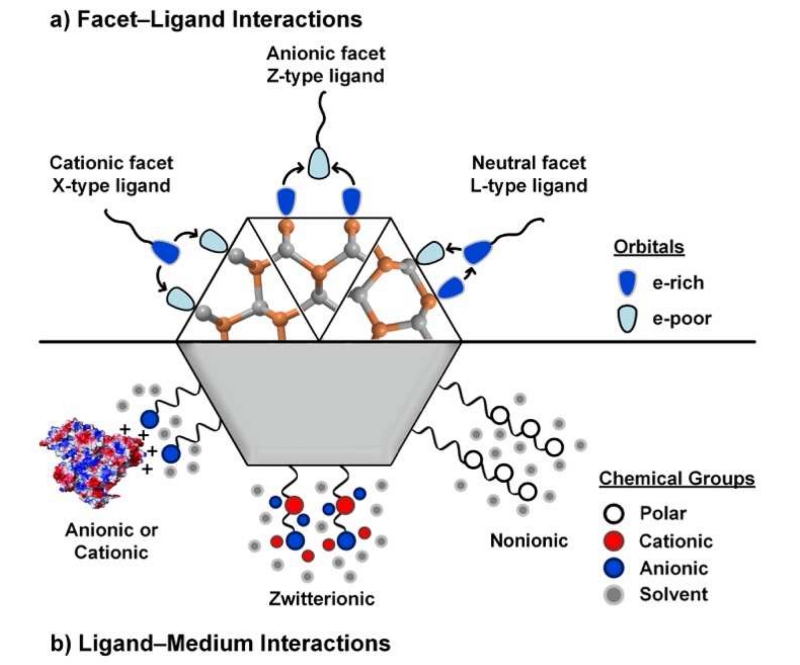
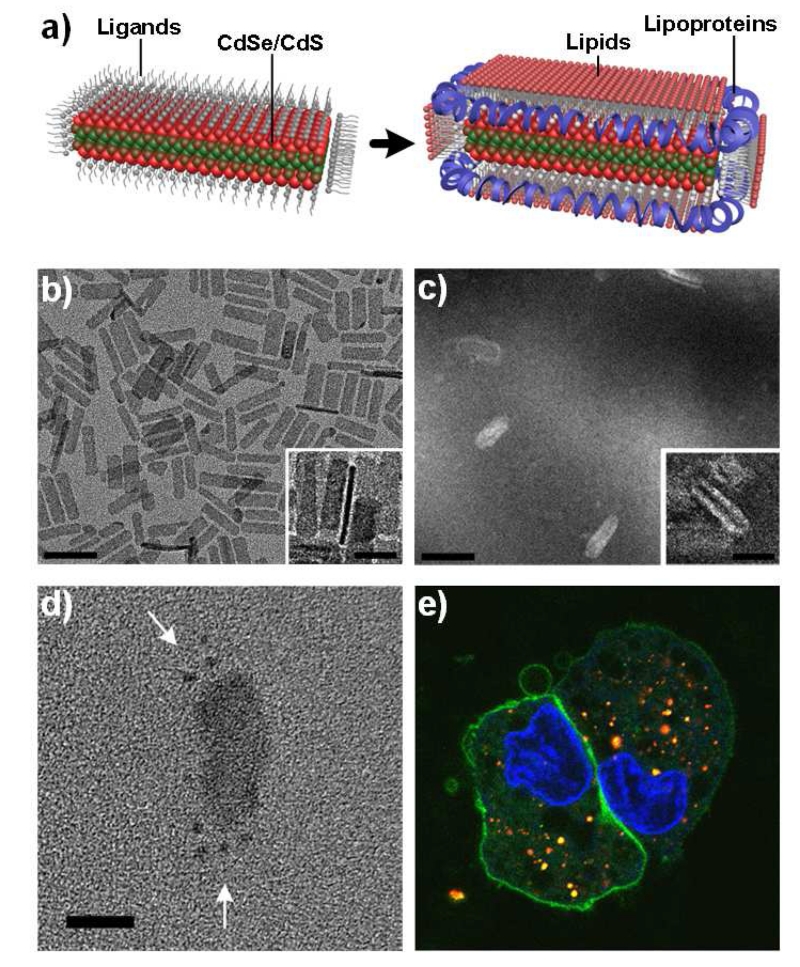
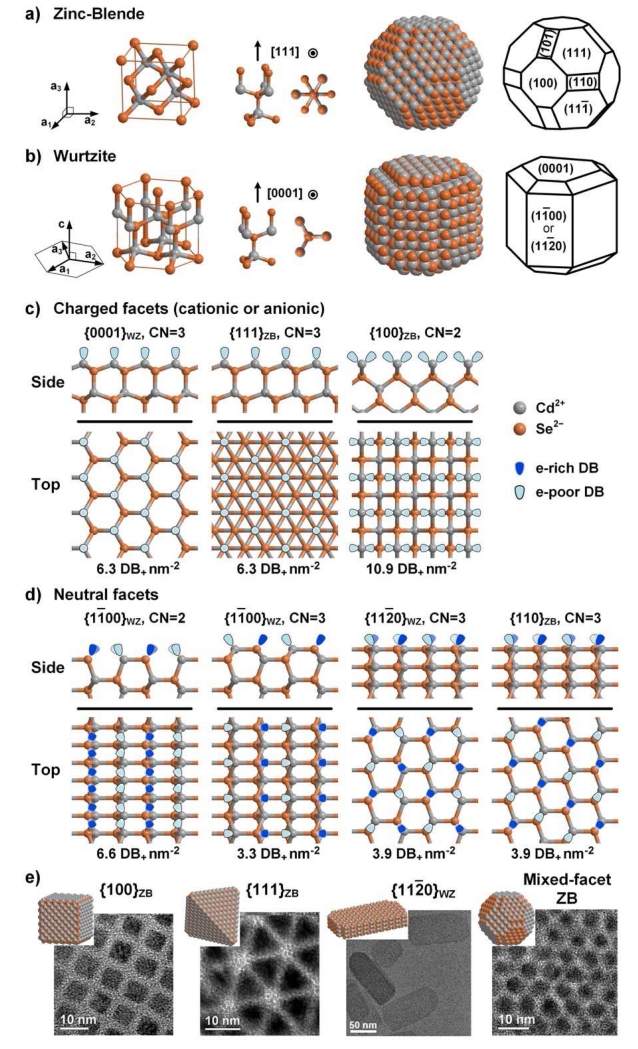
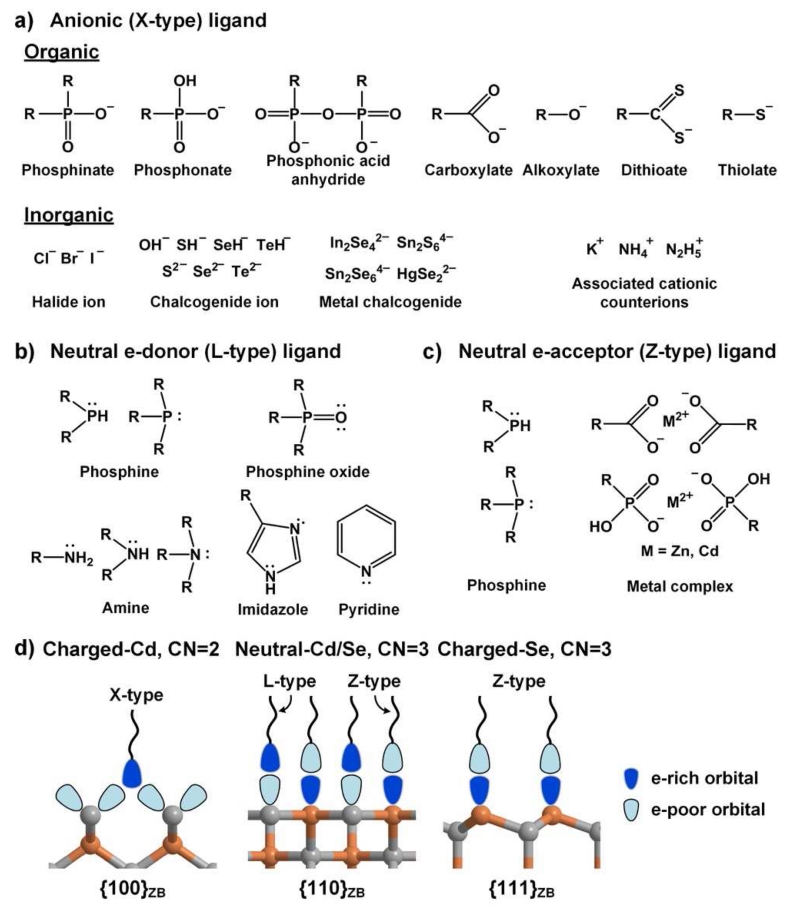
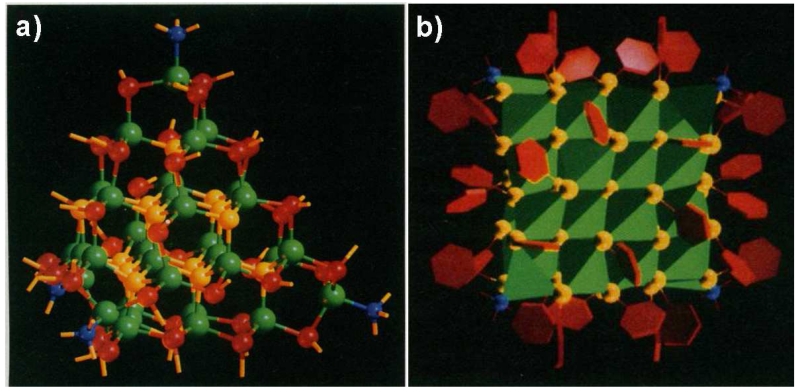
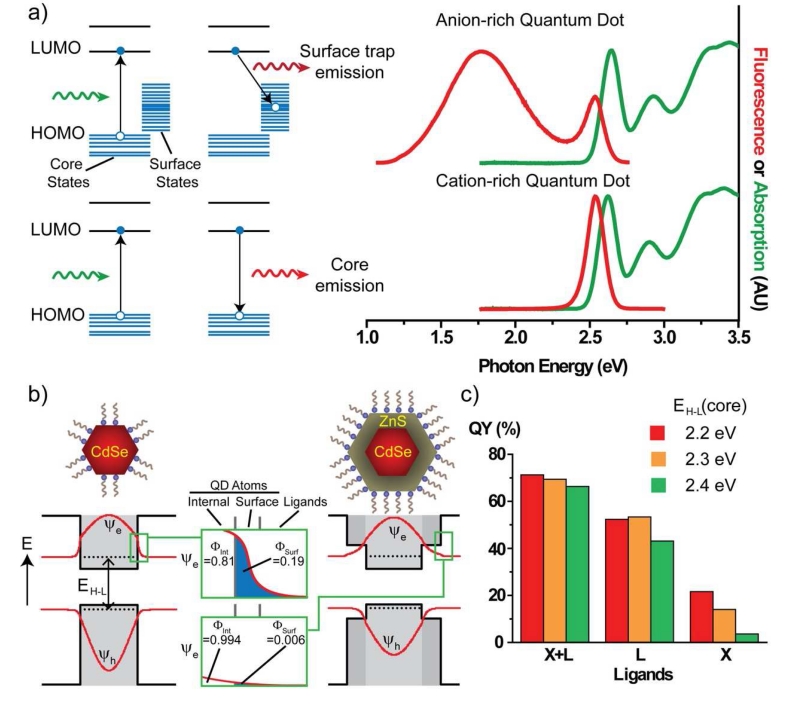
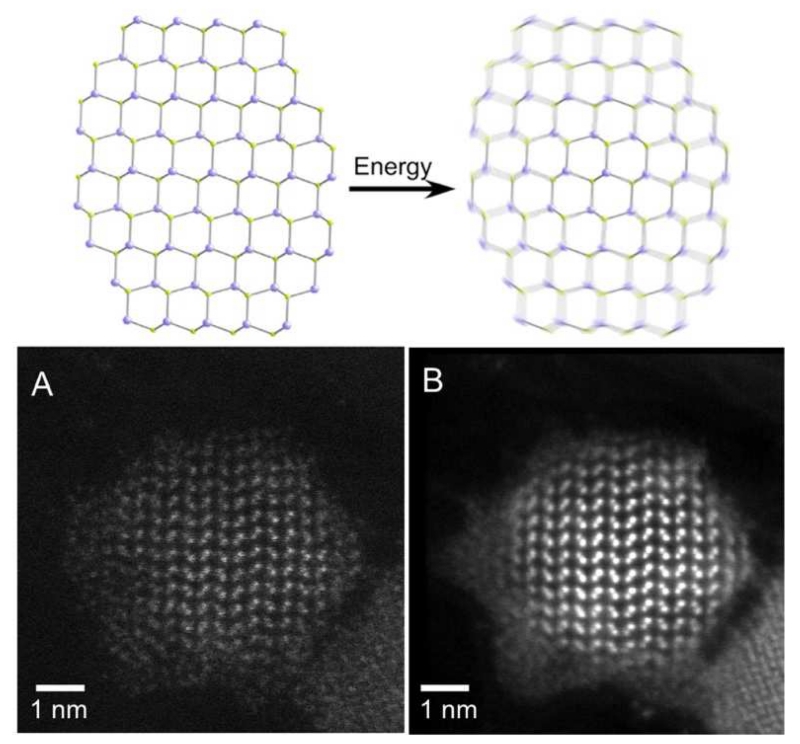
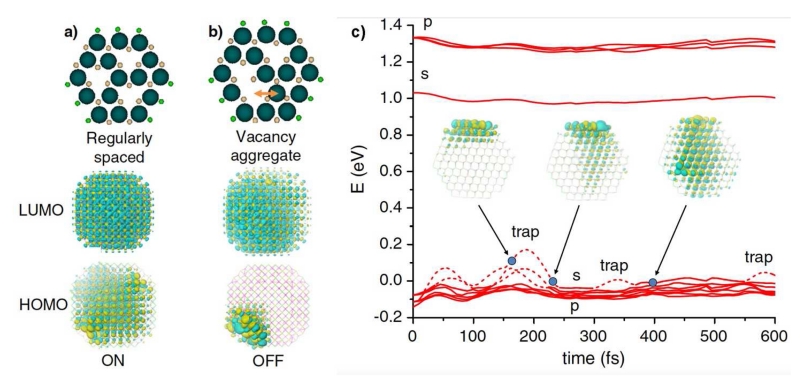
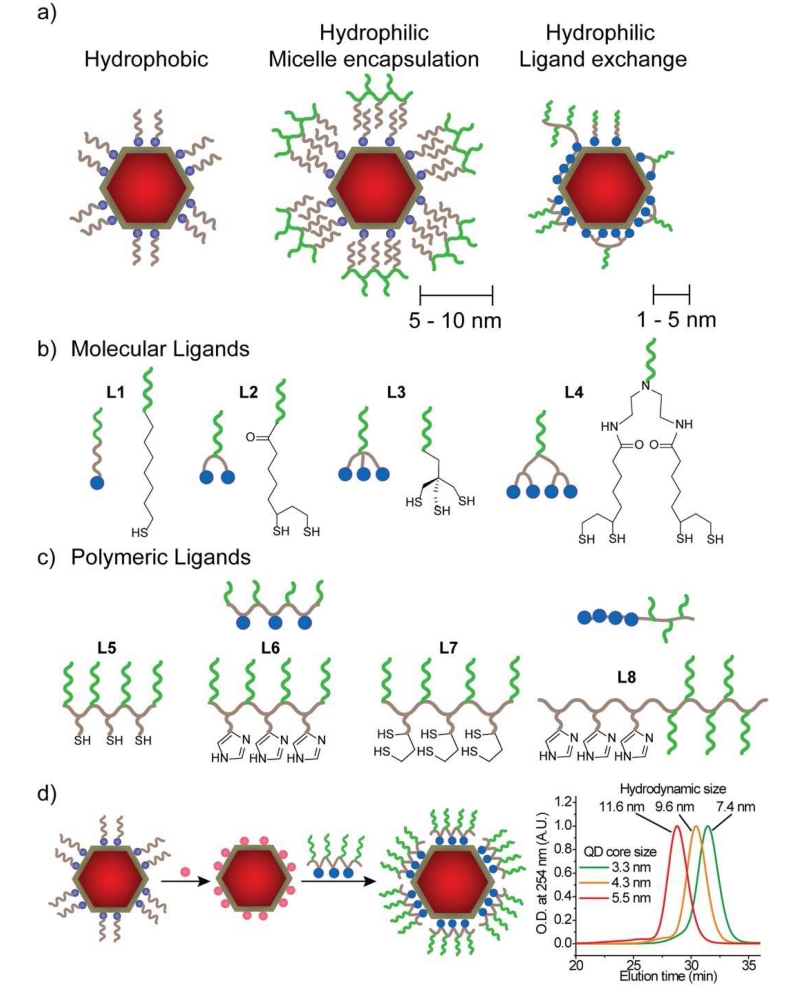
The surfaces of colloidal nanocrystals are complex interfaces between solid crystals, coordinating ligands, and liquid solutions. For fluorescent quantum dots, the properties of the surface vastly influence the efficiency of light emission, stability, and physical interactions, and thus determine their sensitivity and specificity when they are used to detect and image biological molecules. But after more than 30 years of study, the surfaces of quantum dots remain poorly understood and continue to be an important subject of both experimental and theoretical research. In this article, we review the physics and chemistry of quantum dot surfaces and describe approaches to engineer optimal fluorescent probes for applications in biomolecular imaging and sensing. We describe the structure and electronic properties of crystalline facets, the chemistry of ligand coordination, and the impact of ligands on optical properties. We further describe recent advances in compact coatings that have significantly improved their properties by providing small hydrodynamic size, high stability and fluorescence efficiency, and minimal nonspecific interactions with cells and biological molecules. While major progress has been made in both basic and applied research, many questions remain in the chemistry and physics of quantum dot surfaces that have hindered key breakthroughs to fully optimize their properties.
胶体纳米晶体的表面是固体晶体、配位配体和液体溶液之间的复杂界面。对于荧光量子点而言,其表面性质极大地影响发光效率、稳定性和物理相互作用,进而决定了它们在用于检测生物分子和生物成像时的灵敏度和特异性。然而,经过30多年的研究,量子点的表面仍然知之甚少,并且仍然是实验研究和理论研究的重要课题。在本文中,我们综述了量子点表面的物理和化学性质,并描述了设计用于生物分子成像和传感的最佳荧光探针的方法。我们描述了晶面的结构和电子性质、配体配位化学以及配体对光学性质的影响。我们还进一步描述了致密涂层的最新进展,这些涂层通过提供小的流体动力学尺寸、高稳定性和荧光效率以及与细胞和生物分子的最小非特异性相互作用,显著改善了量子点的性质。虽然基础研究和应用研究都取得了重大进展,但量子点表面的化学和物理方面仍存在许多问题,这些问题阻碍了全面优化其性质的关键突破。