Zhang Yuanyuan, Lu Taofeng, Han Lingxia, Zhao Lili, Niu Yinjie, Chen Hongyan
Laboratory Animal and Comparative Medicine, State Key Laboratory of Veterinary Biotechnology, Harbin Veterinary Research Institute, Chinese Academy of Agricultural Sciences, Harbin 150069, China.
Biomed Res Int. 2017;2017:4862861. doi: 10.1155/2017/4862861. Epub 2017 Mar 12.
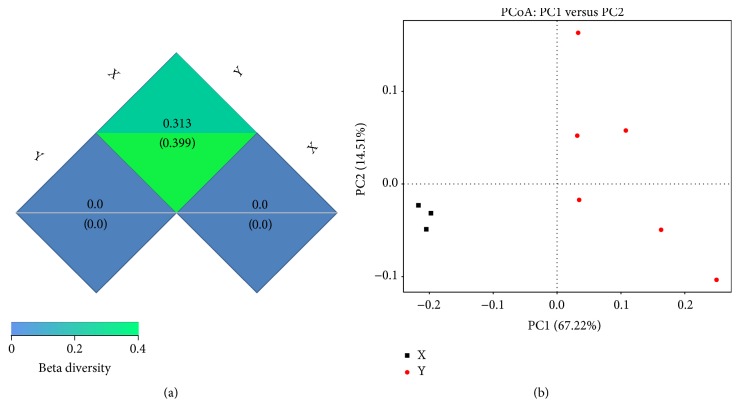
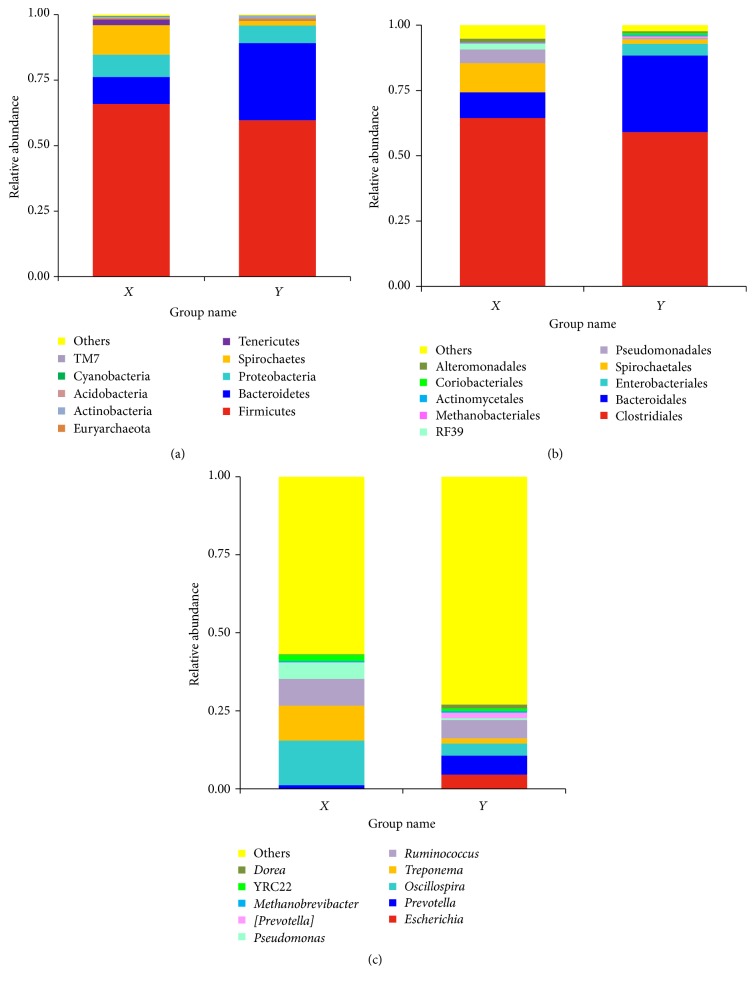
Constipation occurs frequently in both sows and humans, particularly, during late gestation. The microbial community of the porcine gut, the enteric microbiota, plays a critical role in functions that sustain intestinal health. Hence, microbial regulation during pregnancy may be important to prevent host constipation. The present study was conducted to determine whether L-glutamine (Gln) supplementation improved intestinal function and alleviated constipation by regulation of enteric microbiota. 16S rRNA sequences obtained from fecal samples from 9 constipated sows (3 in the constipation group and 6 in the 1.0% Gln group) were assessed from gestational day 70 to 84. Comparative analysis showed that the abundance of intestinal-friendly microbiota, that is, Bacteroidetes ( = 0.007) and Actinobacteria ( = 0.037), was comparatively increased in the 1.0% Gln group, while the abundance of pernicious bacteria, ( < 0.001) and ( = 0.011), was decreased. Dietary supplementation with 1.0% Gln may ameliorate constipation of sows by regulated endogenous gut microbiota.
便秘在母猪和人类中都很常见,尤其是在妊娠后期。猪肠道的微生物群落,即肠道微生物群,在维持肠道健康的功能中起着关键作用。因此,孕期的微生物调节对于预防宿主便秘可能很重要。本研究旨在确定补充L-谷氨酰胺(Gln)是否通过调节肠道微生物群来改善肠道功能并缓解便秘。从9头便秘母猪(便秘组3头,1.0% Gln组6头)粪便样本中获取的16S rRNA序列在妊娠第70天至84天进行评估。比较分析表明,1.0% Gln组中肠道有益微生物群,即拟杆菌门(= 0.0)和放线菌门(= 0.0)的丰度相对增加,而有害细菌,(< 0.0)和(= 0.0)的丰度降低。日粮中添加1.0% Gln可能通过调节内源性肠道微生物群来改善母猪便秘。