Yamori Yukio, Sagara Miki, Arai Yoshimi, Kobayashi Hitomi, Kishimoto Kazumi, Matsuno Ikuko, Mori Hideki, Mori Mari
Mukogawa Women's University Institute for World Health Development, Hyogo Japan.
Laboratory of Preventive Nutritional Medicine, Research Institute for Production and Development, Kyoto, Japan.
PLoS One. 2017 Apr 21;12(4):e0176039. doi: 10.1371/journal.pone.0176039. eCollection 2017.
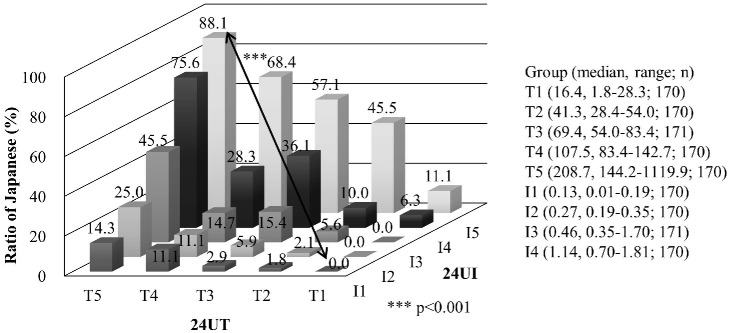
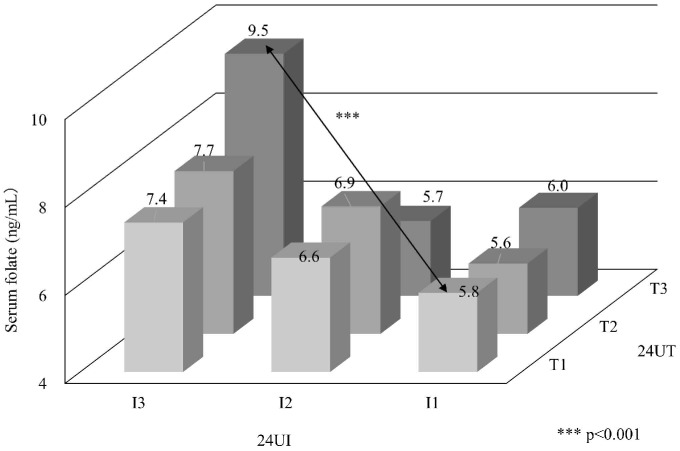
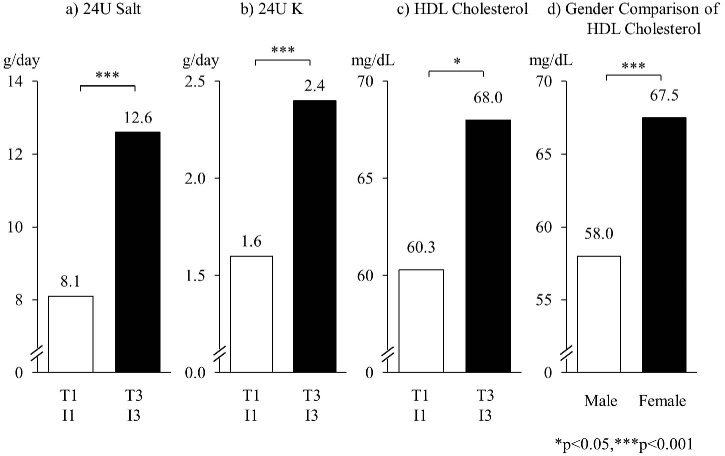
In the World Health Organization (WHO)-coordinated Cardiovascular Disease and Alimentary Comparison Study, isoflavones (I; biomarker for dietary soy) and taurine (T; biomarker for dietary fish) in 24-hour-urine (24U) were inversely related to coronary heart disease (CHD) mortality. High levels of these biomarkers are found in Japanese people, whose CHD mortality is lowest among developed countries. We analyzed the association of these biomarkers with cardiovascular disease risk in the Japanese to know their health effects within one ethnic population. First, to compare the Japanese intake of I and T with international intakes, the ratios of 24UI and 24UT to creatinine from the WHO Study were divided into quintiles for analysis. The ratio for the Japanese was the highest in the highest quintiles for both I and T, reaching 88.1%, far higher than the average ratio for the Japanese (26.3%) in the total study population. Second, 553 inhabitants of Hyogo Prefecture, Japan, aged 30 to 79 years underwent 24-U collection and blood analyses. The 24UT and 24UI were divided into tertiles and adjusted for age and sex. The highest T tertile, compared with the lowest tertile, showed significantly higher levels of high-density lipoprotein-cholesterol (HDL-C), total cholesterol, 24U sodium (Na) and potassium (K). The highest I tertile showed significantly higher folate, 24UNa and 24UK compared with the lowest tertile. The highest tertile of both T and I showed significantly higher HDL-C, folate, and 24UNa and 24UK compared with the lowest tertile. Thus, greater consumption of fish and soy were significantly associated with higher HDL-C and folate levels, possibly a contributor to Japan having the lowest CHD mortality and longest life expectancy among developed countries. As these intakes were also associated with a high intake of salt, a low-salt intake of fish and soy should be recommended for healthy life expectancy.
在世界卫生组织(WHO)协调开展的心血管疾病与饮食比较研究中,24小时尿样(24U)中的异黄酮(I;膳食大豆的生物标志物)和牛磺酸(T;膳食鱼类的生物标志物)与冠心病(CHD)死亡率呈负相关。在日本人中发现这些生物标志物的水平较高,而日本在发达国家中冠心病死亡率最低。我们分析了这些生物标志物与日本人心血管疾病风险的关联,以了解它们在同一族裔人群中的健康影响。首先,为了将日本人对I和T的摄入量与国际摄入量进行比较,将WHO研究中24UI和24UT与肌酐的比值分为五分位数进行分析。日本人的比值在I和T的最高五分位数中均最高,达到88.1%,远高于整个研究人群中日本人的平均比值(26.3%)。其次,对日本兵库县553名年龄在30至79岁的居民进行了24小时尿样采集和血液分析。将24UT和24UI分为三分位数,并对年龄和性别进行了调整。与最低三分位数相比,最高T三分位数的高密度脂蛋白胆固醇(HDL-C)、总胆固醇、24U钠(Na)和钾(K)水平显著更高。与最低三分位数相比,最高I三分位数的叶酸、24UNa和24UK水平显著更高。T和I的最高三分位数与最低三分位数相比,HDL-C、叶酸、24UNa和24UK水平均显著更高。因此,更多地食用鱼类和大豆与更高的HDL-C和叶酸水平显著相关,这可能是日本在发达国家中冠心病死亡率最低且预期寿命最长的一个原因。由于这些摄入量也与高盐摄入有关,因此建议低盐摄入鱼类和大豆以实现健康的预期寿命。